
The Wellness Rhythms That Changed My Everyday
If you've been around here for a while, you know I've written a lot about routines, morning rhythms, time management habits, the small daily rituals that keep life from feeling like a slow unraveling. What you might not realize is that I am not, by nature, a wellness person. I don't come by stillness easily. I am genuinely more likely to squeeze one more thing into my morning than I am to sit quietly with a lemon water and my intentions. Ask Graeme and Rebecka. They will absolutely confirm this.
So when I tell you that I have a handful of wellness practices that have genuinely stuck, that I miss when I skip them, that I've packed across multiple moves, that I fit into chaotic weeks not because they're luxurious but because I feel tangibly worse without them, I want you to know that's not a polished content angle. That's just the truth.
This post isn't about having a beautiful wellness routine. It's about what actually works when you're a real person with a full life, and what I've learned the hard way about what it costs to put yourself last.
A Note Before We Get Into It
I'm not a doctor, healthcare provider, or anything remotely close to a medical professional. Everything I'm sharing here is based purely on my own experience, what's made a meaningful difference in how I feel, what I've kept coming back to, and what I've tried to explain to Graeme while he looks at me like I've lost my mind. If you're considering any new wellness practice, supplement, or health routine, please do your own research and loop in a qualified healthcare provider who actually knows your history. My goal is simply to share what works for me and why.
The Honest Truth About Wellness Overwhelm
The wellness space can be genuinely exhausting. Every week, there's a new supplement, a new protocol, a new expert explaining that everything you've been doing is wrong and the answer is a $400 powder you've never heard of. I've fallen for some of it. I've also ignored a lot of it. What I've found is that the practices that actually stick are usually the simplest ones, the ones that fit into real life, not a fantasy version of it, and the ones that produce results I can actually feel.
The rituals below aren't things I do perfectly or every single day. Some are daily non-negotiables. Some are weekly. Some show up when life gets especially full, and my body starts sending strongly worded messages. But they've earned their place not because they're calming or luxurious, though sometimes they are, they've earned their place because I feel better with them than without them. Consistently, noticeably better.
Acupuncture
If you asked me where to start, one thing, first thing, no conditions, I would tell you to find a good acupuncturist and actually go.
I've been going to acupuncture for almost twenty years, and it has shown up for me through more seasons of life than I can count. Postpartum. The years Graeme went through chemo, when we were simultaneously trying to hold our family, our home, and our own bodies together through one of the hardest stretches of our lives. High-stress seasons of moving and transition that would test anyone's nervous system. And the quieter, more ordinary seasons in between, when the goal was simply to stay well and feel like myself. Acupuncture has been consistent through all of it, and it has delivered across every single one of those seasons in ways that nothing else quite has.
At its core, acupuncture works by stimulating specific points in the body to support the nervous system, reduce inflammation, and encourage the body's own healing response. Research has shown meaningful benefits across a wide range of areas, such as stress and anxiety, hormonal balance, immune function, sleep quality, chronic pain, and digestion, among others. What I find most compelling is that it doesn't just address symptoms; it works at the level of the body's regulatory systems, which is why it can look so different depending on the season you're in. During Graeme's chemo, it helped my body process grief and stress in a way that felt almost physical. During ordinary seasons, it keeps my immune system strong, my hormones balanced, and my sleep consistent. Same practice, very different jobs.
What I've come to appreciate most is what happens when you stick with it long enough to build a real relationship with a trusted practitioner. My acupuncturists have guided my supplement protocols over the years, helped me understand what my body actually needs in different seasons, and, this is the part I think gets most underestimated, significantly impacted how my body and mind process stress. Not just cope with it. Actually process it. There is a real difference between the two, and I have felt it clearly enough that this practice has never left my life, no matter what else has come and gone.
If there is one thing I tell anyone who asks where to invest in their health, it's this. If acupuncture is something you've tried once and set aside, or something that has always felt a little unfamiliar, I'd really encourage you to give it a genuine run with someone you trust. Be consistent. Pay attention over time. That's where the results live.
Sauna
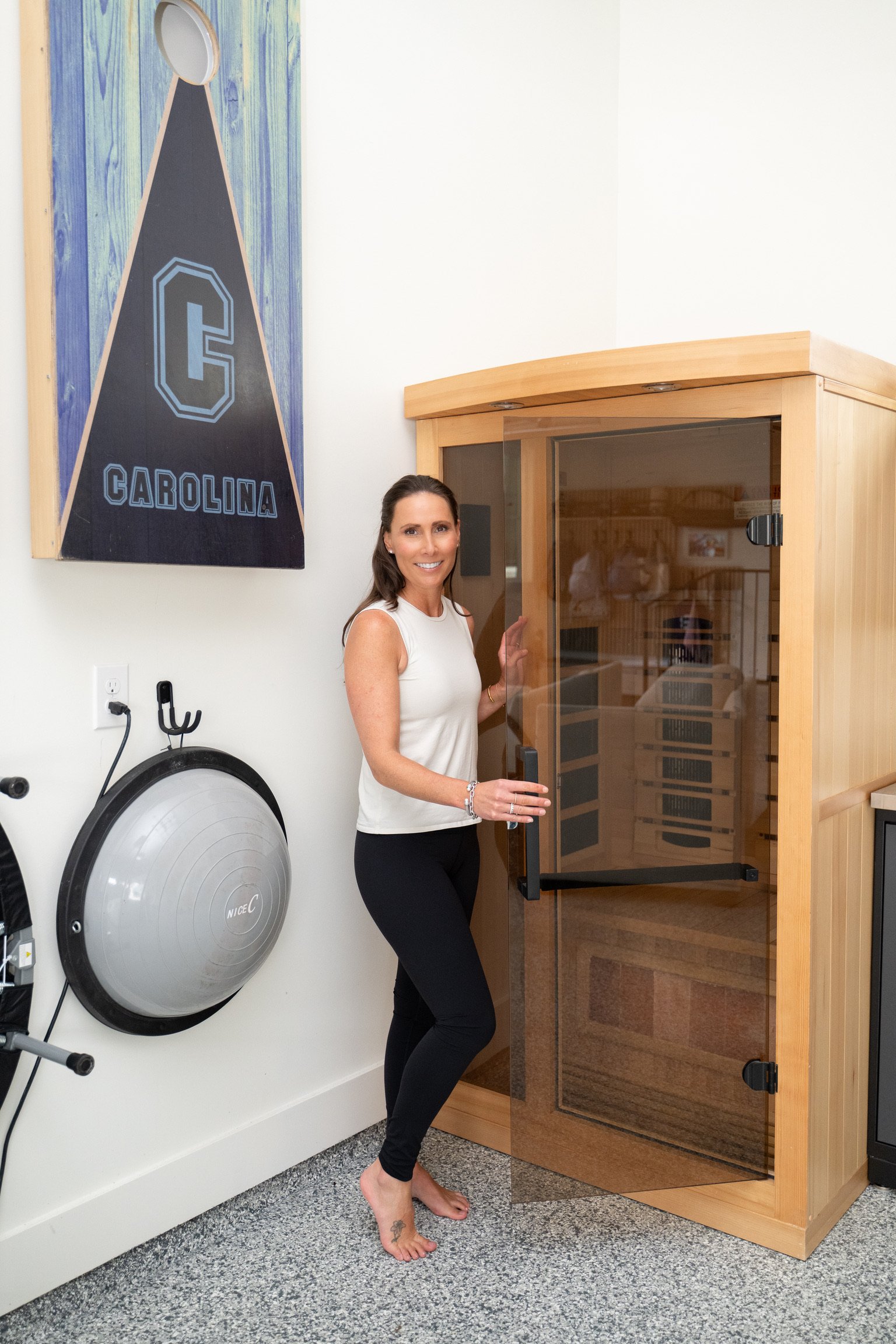
After acupuncture, if I had to choose one wellness tool that has truly earned its place in our lives, it would be our sauna, and I say that as someone who has moved it three times. We've had the same two-person infrared sauna for several years now. It started in our home gym in Charleston, followed us to a condo, and now lives in our Austin garage. Every time we've moved, we've taken it apart and reassembled it, and I want to be clear: it's genuinely more like a giant LEGO set than a complicated installation. Don't let the idea of a "home sauna" intimidate you. We've fit ours into a dedicated gym, a mudroom closet in a 1,500-square-foot condo, yes, that condo, and now a garage. Where there's a will, there's a way. And honestly, if something earns three moves across multiple states, it has absolutely earned its place. Research around regular sauna use continues to grow, particularly around cardiovascular health, circulation, and recovery. Some long-term studies have found associations between consistent sauna use and meaningfully improved heart health outcomes over time. But the benefits go further than that. Sweating is one of the body's primary detox pathways, and infrared sauna in particular is known for its ability to support deep tissue warmth that promotes toxin elimination through sweat. Regular use has also been linked to cortisol reduction, improved sleep quality, immune support (the temporary rise in body temperature mimics a mild fever response, which activates immune function), and clearer skin. For muscle recovery specifically, the increased circulation sauna promotes is genuinely hard to replicate with anything else, which is why you see so many athletes using it consistently. The sauna creates something increasingly hard to find in a full life: time with no agenda. No multitasking. No emails. No laundry is folded in the background. I bring a book, or I sit with my thoughts, and either way, I emerge feeling like a reset version of myself. A few things I've learned along the way: hydration matters more than you think, electrolyte replenishment is worth taking seriously, and showering immediately afterward is one of life's underrated pleasures.
Castor Oil Packs
This is probably the easiest wellness habit I've ever adopted, which is exactly why it's stuck. I have a very low tolerance for routines that require a lot of setup or disruption to my day, and castor oil packs require almost none.
I've used both traditional flannel wraps with castor oil and the newer disposable-style packs, and both have a place depending on the situation. What I love about this practice is that it layers onto the time I'm already spending lying down, reading, watching something, or going to sleep. You're not adding a new block to your day; you're just making an existing one more intentional. The active compound in castor oil, ricinoleic acid, has well-documented anti-inflammatory properties and is thought to support circulation and lymphatic flow in the tissues beneath where the pack is applied. Many practitioners recommend placing them over the liver area (right side of the abdomen), with the idea of supporting the liver's natural detox function, improving digestive motility, and helping the body metabolize hormones more efficiently. Research is still evolving, but the mechanism makes sense, and my own experience has been consistent enough that it's stayed in my routine for years.
Detox Baths
This one is exactly as simple and good as it sounds. A detox bath, my combination is activated charcoal powder, Epsom salt, and baking soda, is one of the easiest ways I know to support my body during a heavier wellness season, or just to close out a day that needs a hard reset. It's one of those rituals that feels genuinely indulgent while asking almost nothing of you logistically, which is basically my favorite category of wellness practice. Each ingredient pulls its weight. Epsom salt delivers magnesium, which most of us are chronically low on. Magnesium plays a role in over 300 enzymatic processes in the body, supports muscle and nerve function, and is closely tied to sleep quality and cortisol regulation. Absorbing it through the skin during a warm bath is one of the most effective delivery methods. Baking soda softens the water, is gentle on skin, and is thought to have a mild alkalizing effect that can support detox pathways. Activated charcoal works by binding to toxins and impurities, drawing them toward the skin's surface. It's the same mechanism used medically for poisoning, just in a much gentler, topical context. As with anything in this space, I'd encourage you to do your own research and check with a practitioner about what combination and frequency makes sense for your body specifically. What keeps detox baths in my regular rotation is the same thing that keeps castor oil packs around: the barrier to entry is almost zero. You're already planning to take a bath. This is just a more intentional version of it, and on the evenings when I actually make the time for it, I always, always feel better.
Lymphatic Drainage & Cupping
If you've read my morning routine post, you may have heard me mention this before. Gua Sha and cupping have become some of my most consistent practices, and a huge part of that is thanks to Lauren Roxburgh, whose programs introduced me to the concept of supporting the body's natural lymphatic pathways through movement, breathwork, and intentional self-care. Her studio is a genuinely excellent resource: studio.laurenroxburgh.com
One of the most important things I learned early on is that lymphatic drainage doesn't need to be aggressive; the system actually responds best to gentle pressure. Here's why this matters so much: the lymphatic system is essentially the body's drainage network. It removes cellular waste, carries immune cells throughout the body, and regulates fluid balance in tissues. Unlike the cardiovascular system, lymph has no dedicated pump; it depends entirely on movement, breathing, and manual stimulation to flow properly. When it gets sluggish, the effects show up in ways most of us recognize: puffiness, fatigue, skin congestion, and a general feeling of heaviness. Supporting lymphatic flow through drainage work and cupping helps the body clear that backlog, which is why the results, reduced puffiness, clearer skin, and more energy, are often visible fairly quickly.
Common areas people focus on include the neck, underarms, behind the knees, the abdomen, and along the body's main lymphatic pathways. This practice has become less about any one outcome and more about body awareness, spending a few minutes every day actually paying attention to how I feel. That said, I do notice real differences in puffiness, skin appearance, and overall energy when I'm consistent about it. As someone who has personally chosen not to do Botox, I genuinely believe that facial massage, cupping, and regular Gua Sha have made a meaningful difference in how my skin looks and feels, which is a side effect I'll take.
Oil Pulling
This one is almost suspiciously easy to maintain because it stacks so naturally onto something I'm already doing. Oil pulling, swishing oil in your mouth for several minutes before brushing your teeth, is something I do in the shower or while getting ready in the morning. It requires no extra time on the calendar, just a little habit stacking, which is something I write about a lot in my time management rhythms post because it's genuinely how I get anything to stick.
The practice works by essentially "pulling" bacteria and debris from between teeth and along the gumline. Research has shown it can meaningfully reduce the presence of Streptococcus mutans, one of the primary bacteria responsible for tooth decay, as well as support overall gum health and fresher breath. The oral microbiome connection to overall health is also worth noting: chronic oral bacteria have been linked to systemic inflammation, cardiovascular health, and immune function, which makes oral hygiene feel like a much bigger deal than just teeth.
One important practical note: do not spit the oil into your sink or down your drain. It can solidify and cause plumbing problems over time. Trash or toilet only, then brush your teeth as normal. Simple, easy, and honestly, one of those small additions that just makes my morning feel a little more intentional.
Rebounding
If you've spent any time in the wellness space lately, you've seen rebounding everywhere, and yes, it lives up to the hype, at least for me. What makes rebounding particularly interesting from a physiological standpoint is that the up-and-down motion is one of the most effective ways to stimulate lymphatic flow; the repeated change in gravitational force actually opens and closes the one-way valves in the lymphatic system, encouraging fluid to move in a way that most other forms of exercise don't replicate as efficiently. Beyond lymphatic benefits, it supports cardiovascular health, has been shown to improve bone density through the mild impact loading, builds balance and coordination, and is genuinely low-impact on the joints in a way that makes it accessible even during recovery or higher-stress seasons. NASA has studied it for astronaut rehabilitation for a reason.
I keep my practice simple. Most days, I'm on the rebounder for about five minutes, experimenting with different movements and bouncing patterns. It's approachable in a way that a lot of exercise isn't, and I love that it doesn't require motivation so much as just showing up and moving. Lauren Roxburgh's programs have also been a wonderful companion here, especially during seasons when I'm being extra intentional about recovery.
The best routine is the one you'll actually do. For me, rebounding checks that box every time.
What I Keep Coming Back To
Writing this out, I noticed something: none of these practices are things I do primarily because they're relaxing. Some of them are, sure, but that's not why they've stuck. They've stuck because I feel better when I do them. My body functions better. My energy is more consistent. My skin looks better. My mind is clearer. And when I skip them during a busy stretch, I feel the absence in ways that are hard to ignore.
That's the whole story, honestly. Sustainable wellness, for me, at least, isn't built on what sounds like a good idea or what looks beautiful in a morning routine aesthetic. It's built on what delivers, consistently, in a real life with a full calendar and a natural tendency toward chaos. These practices deliver. And that's why they've earned their place.
If you're exploring what intentional self-care actually looks like in a life that isn't slowing down anytime soon, I think you'll find something useful in that list. Start with one thing. See how you feel. The rest tends to follow.
Keep Reading
The information shared in this post is based entirely on personal experience and is intended for informational and inspirational purposes only. It is not medical advice, diagnosis, or treatment. Please consult your physician or a qualified healthcare provider before starting any new health, wellness, detox, supplement, or self-care practice, especially if you are pregnant, nursing, managing a medical condition, or taking medication. Products and resources are shared because they've been meaningful in my own life. Individual results and experiences will vary. Listen to your body, seek professional guidance when it matters, and make choices that are right for you.
You don’t have to figure this out alone.
If you’ve been dreaming about a space that feels this good, one that’s beautiful and actually works for your real life, that vision is already in you. It just needs the right support to come alive.
Work with us at home
With love,
Christina
Have a question I didn’t answer? Leave it in the comments, I’ll check and respond.
Graceful Living is where we share the things that make life feel a little more intentional and a lot more beautiful. From thoughtful ways of living and everyday rituals to style inspiration, favorite recipes, travel moments, and the small joys that elevate the ordinary... this space is meant to inspire a life well lived.
If you love content that feels calm, curated, and life-giving, I’d love for you to be part of our inner circle.
By joining our Graceful Living subscriber list, you’ll receive our newest posts straight to your inbox, so you never miss a story, idea, or inspiration we share: thoughtful living, elevated everyday moments, style, recipes, travel, and joy, beautifully woven together.
Click the link below to subscribe and make sure you’re receiving our Graceful Living emails. I can’t wait to share more with you.

The Things We Use Every Day
And if you’d like to follow along with what Rebecka and I genuinely love, we’ve created shop pages that bring all of our favorites into one place. A simple way to explore what we consistently reach for in our own homes, whether you’re looking for inspiration or ready to try something new.
follow us on shop my
follow us on ltk
More Inspiration
Our Charleston Home Organization Our Purely Organized Service GS Top 5 Pantries Meet Our Team More From Graceful Living