
The Camp Prep Checklist Every Parent Needs
Camp prep doesn't have to feel like a project you dread. Here's how to approach it with intention, a little joy, and a system that actually holds.
If there is one thing I have learned from years of organizing homes — and from sending my own kids to camp every summer, including out of state sleepaway camps — it is that the way you approach a project shapes the entire experience of it.
Camp prep is no different.

I will be honest with you: some summers, I have had plenty of margin to enjoy every bit of this process. Other summers, life has asked more of us than we expected. There were years when Graeme was going through chemotherapy, and the energy I had for anything beyond what was essential was thin. If you are reading this in a season like that — a season that is heavier, fuller, or just more tender than you anticipated — I want you to know that this framework was built with you in mind too. (If you want to know more about that chapter of our story, I shared it here in Introducing Graceful Living.)
What I have found, in the easy summers and the hard ones both, is that an intentional approach to camp prep is one of the most reliable ways to protect your joy in the process. Not because it eliminates all stress — it won't, and I am not going to promise that — but because it creates a pace that doesn't demand everything from you at once. It spreads the work across time so that no single window carries too much weight. And it frees up the final days before drop-off to feel like what they should: a meaningful send-off, not a finish line you're sprinting toward.
That is what this system is built to do.
The framework I use breaks camp prep into three intentional checkpoints spread across the weeks before camp. Each one has a clear focus. Each one is completely manageable on its own. And when you work through them in order, drop-off day becomes something you can be fully present for — which, if you have ever watched your kid run toward their cabin without looking back, you know is the whole point.
I have also included what I call the Drop-Off Kit at the end — a concept I developed after enough move-in mornings to know exactly what you wish you had brought. More on that below.
The full checklist is downloadable at the end of this post. But first, let's walk through the system.
Why a Three-Checkpoint Camp Prep System Works
There is a real temptation to put camp prep off until it can't be put off anymore. Summer feels distant. The list feels long. And so it waits — until, suddenly, the calendar says two weeks, and you are doing everything at once.
The problem with compressing it all is that some things genuinely require lead time. Name labels take two to three weeks to arrive. Modest one-piece swimsuits in the right size sell out by June. A new trunk needs to be ordered and shipped. The daily notes your child will actually treasure — the ones they will unfold on a hard day at camp — deserve to be written when you have something to give, not at midnight the night before a flight.
When the prep is spread across three checkpoints, something shifts. The tasks that require lead time get handled while there is still time. Everything else falls into a phase that is appropriately sized for it, so nothing feels urgent and nothing falls through the cracks.
This is the same principle I apply to any project I care about: break it into phases, assign the right work to the right window, and trust the rhythm you have built. Intentional does not mean perfect. It means thoughtful. It means you made a plan, you worked the plan, and you gave yourself grace when life asked for adjustments along the way. If you want to go deeper into how I approach this kind of planning personally, I wrote about it in Graceful Goals — the same heart behind this checklist.
Our team — a collective of professional organizers and lifestyle experts — has developed a complete Camp Prep Checklist that covers all three phases, plus the Drop-Off Kit, designed to work for any camp, any summer, any age.
We have also curated a Graceful Living Camp Shop with every product we actually recommend — from the clip fan that is the single most-appreciated item at any overnight camp, to name label services, trunk organizers, bunk décor, and more. Everything in one place.
Camp Prep Checkpoint One: Well in Advance
Six to eight weeks before camp
This phase is about doing the things that require lead time, making decisions while you have space to think clearly, and closing the door entirely on "I waited too long."
Medications and health paperwork.
Every camp handles medications differently, and the specifics matter. Most overnight camps require prescriptions to be in their original containers with only the exact number of doses needed for the session. Many require a doctor's note for vitamins. Some have specific policies around OTC medications and daily allergy pills. Contact the camp early, read their health policies carefully, and get all required forms submitted well before the deadline. This is not a last-minute task — it is one of the most common sources of delays at drop-off, and handling it early is a quiet gift to your future self.
Hard-to-find clothing.

Certain items are worth shopping for early because availability drops significantly once summer shopping season peaks. Modest one-piece swimsuits that meet camp dress code requirements, athletic shorts long enough to wear over a swimsuit, and water shoes with a heel strap — Crocs, Natives, and Keens are the standard — tend to sell out in popular sizes well before June. If your daughter might need period swimwear or period underwear at camp, add those to this phase as well. The quality options go quickly and the confidence they provide is worth planning ahead for.
Name labels.
Order them now. Quality iron-on or peel-and-stick labels take two to three weeks to arrive, and you will need more than you expect. Every shirt, every sock, every sheet, every shoe, the water bottle, the fan, the headlamp. If there is a surface, it gets a label. At overnight camp, everything looks identical, and labeled items come home. Unlabeled items do not.
The trunk — a full, honest assessment.
This is the step most families skip in the early phase and regret later. Pull the trunk out of storage and look at it with clear eyes. Is it structurally sound? Are the hinges intact, the latches working, the hardware holding? Is it under 15 inches tall — the standard clearance for fitting under a bunk bed? If you need to order a new one, now is the time to do it without pressure.
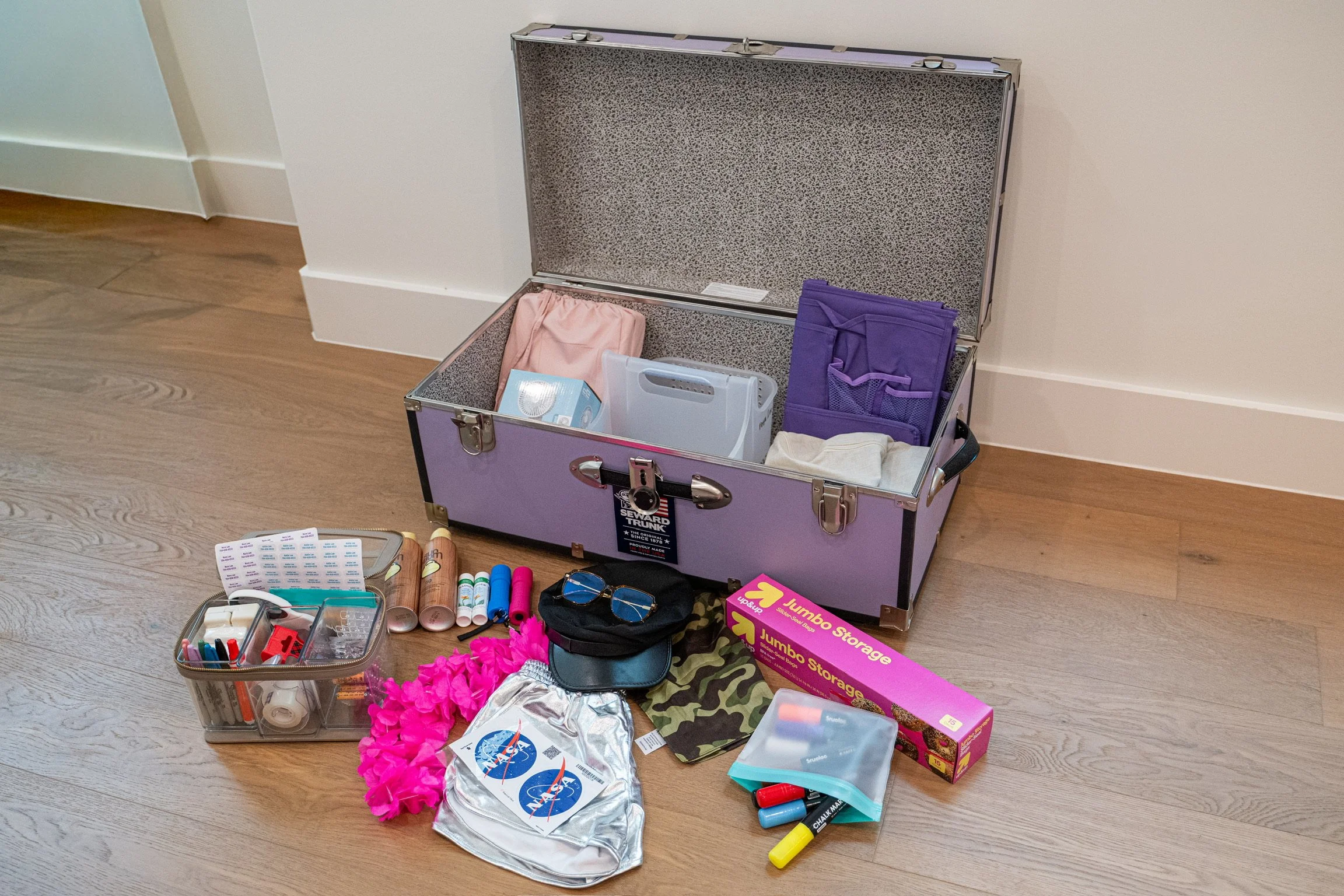
While you have the trunk out, check everything that belongs with it. Does the trunk organizer still fit properly? Is the bunk organizer in good shape? If you used over-the-door hooks or a bunk caddy last summer, do they still function the way they should? This is the moment to replace, refresh, or restock before any of it becomes a problem the night before drop-off.
And look at the labels. If you applied stickers last year, are they still clean and legible, or starting to peel? If you used vinyl labels — on the trunk, on a water bottle, on a caddy or organizer — do they still look sharp after a season of use?
A word on vinyl labels — and why they are worth doing right.
This is something our team feels strongly about, and camp is honestly one of the best cases for it. A custom vinyl label on a camp trunk does not just identify the trunk — it makes it theirs. A monogrammed lid, a name on the water bottle in a font they chose, their initials on a bunk caddy. These are small details that add up to a space that feels personal and intentional, not just packed and shipped.
We have a full Label Guide that walks through exactly how to create and apply custom vinyl labels step by step — whether you are outfitting a trunk for the first time, refreshing labels before another camp season, or customizing gear for a new summer. If you have ever wanted to do this and were not sure where to start, that guide is the place.
Registration and admin.
Cabin mate requests, online health forms, the camp app, money in the camp store account — these all have deadlines that arrive earlier than expected. Handle them here, while they are easy rather than urgent.
Camp Prep Checkpoint Two: A Few Weeks Before
Two to three weeks before camp
This is the heart of the prep — the shopping, the assembling, the fun decisions. With checkpoint one behind you, this phase has room to feel enjoyable rather than reactive. We think it genuinely can be, if you let it.
Theme night outfits.
Look up the themes for your session and start planning now. The most effective approach is a combination of thrift stores, Amazon, and dollar stores — theme night costumes do not need to be expensive, but they do need lead time, and they do need to meet the camp dress code. Every outfit, regardless of theme, still follows the same clothing guidelines. Plan for that from the beginning.
Clothing.
Use the camp's official list as your baseline. Standard targets: eight shirts, six pairs of shorts, ten sets of underwear and socks, two pajama sets. A few things worth emphasizing beyond the basics — pack a lightweight hoodie or sweatshirt even for summer camps, because cabins get cool at night. Designate one outfit as the official "wear and sacrifice" set for color wars, slip-n-slide days, or anything that ends in mud. And socks: pack more than the list suggests. They disappear at camp with remarkable consistency.
Bedding and bunk comfort.
This category is consistently underestimated, and getting it right makes a real difference in how settled and at-home your camper feels all week.
The non-negotiable foundation: a fitted sheet. Camp mattresses are plastic and thin, and a fitted sheet is what makes the bed feel like an actual bed. Add a sleeping bag or blanket, a pillow, and a small extra throw for bunk downtime.
Beyond the basics, 3 items that have earned non-negotiable status in our camp prep:
A lounge pillow — sometimes called a husband pillow or reading pillow — for sitting up comfortably during rest hour. Every camper who has one becomes the envy of the cabin.
An extra cozy throw blanket — something soft and personal that functions as both a comfort item and a small piece of home.
A custom photo blanket printed with photos of family, friends, and pets. This is the item that comes out during a hard moment at camp, and it is worth every penny of the investment.
Bunk décor.
The bunk is the one personal space a camper has all week, and personalizing it matters more than most parents realize. A garland, a pennant banner, a string of photos, something that reflects exactly who they are. You will use the Drop-Off Kit to hang it all on move-in morning. A Caboodle — yes, fully back in fashion and fully deserving of it — works beautifully as a mini organizer and vanity, corralling hair ties, chapstick, and small items in a way that stays tidy in a small space.
Lighting and power.
Two items that every experienced camp parent recommends and that almost never appear on an official packing list:
A battery-operated clip fan. This is, without question, the most appreciated comfort item at summer camp. Every camper who has one will tell you. Get a model with a clip. Buy more batteries than you think you need.
A headlamp rather than a standard flashlight. Hands-free is significantly more practical for nighttime cabin walks, and once you have sent one you will not go back.
Battery-operated string lights are worth including if your camp permits them — they make the bunk feel warm and personal in a way that matters during a week away from home.
Rest hour supplies.
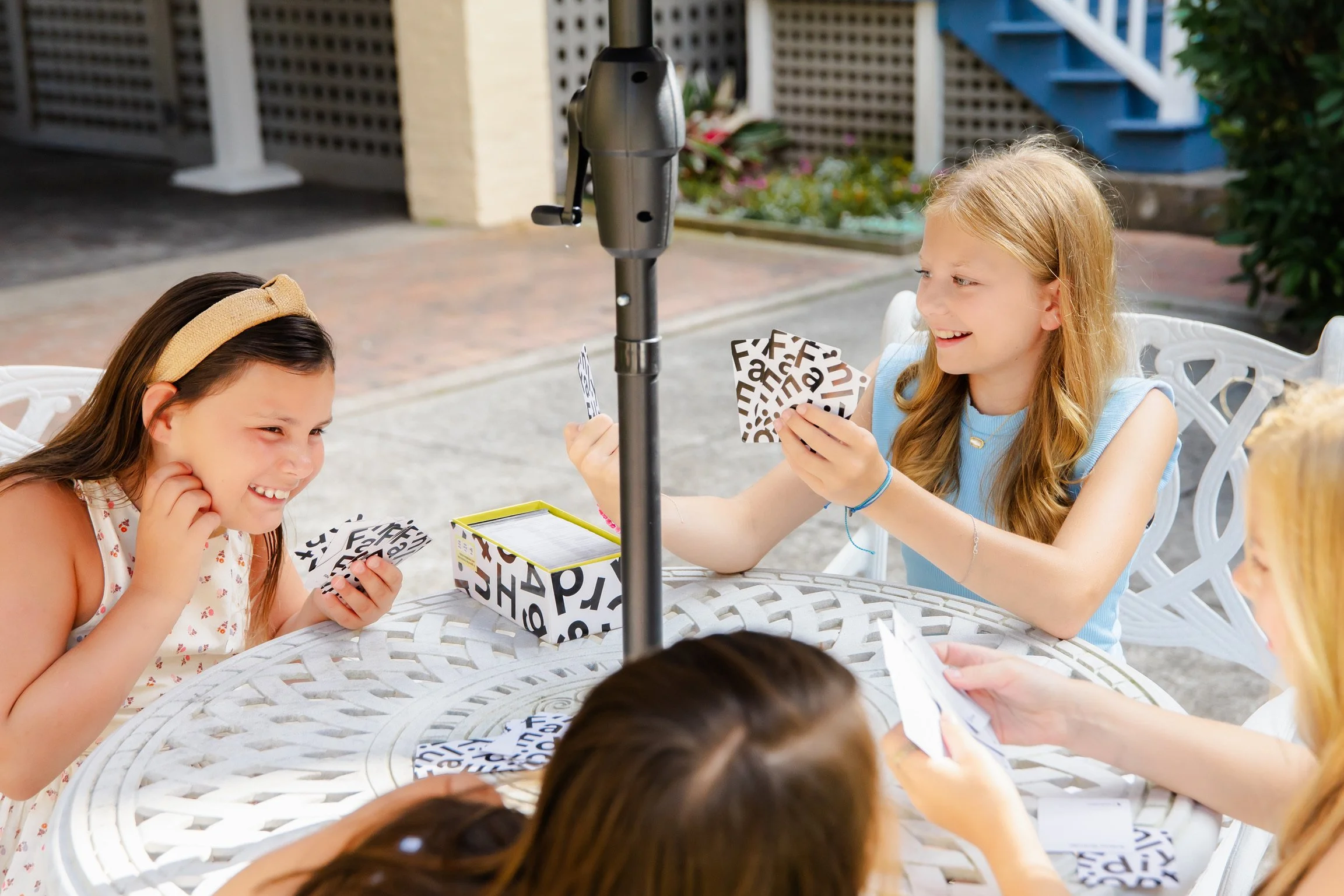
Rest hour is real, and it goes much better with a plan. The single most effective trick for actually receiving a letter from camp: pre-address and pre-stamp several envelopes — one for home, a few for grandparents or other people your camper loves. Add a stationery kit, a journal, colored pens, and a quiet activity: friendship bracelet kit, cross-stitch, bead project, or a deck of cards. A disposable or waterproof camera is a wonderful option for a child who loves to document things and cannot bring a phone.
Health and hygiene additions.
Beyond standard toiletries, sunscreen, and bug spray: a Tide To-Go stick for pre-treating clothes before laundry day, sting relief cream or hydrocortisone because bug bites are a guarantee, and moleskin or blister bandages for the friction that comes with new shoes and a week of high activity. Pack more hair ties than seems necessary. They will disappear.
Daily gifts and care package.
One small item per day — something your camper finds in their trunk each morning — is a tradition that costs very little and means a great deal. Plan and order these now so they are ready to assemble in checkpoint three without any last-minute sourcing.
Camp Prep Checkpoint Three: The Week Before
Final seven days
With checkpoints one and two complete, this phase is focused and intentional. A few dedicated evenings. Everything in its place. The final stretch feels like a countdown rather than a crisis.
Write the daily notes.
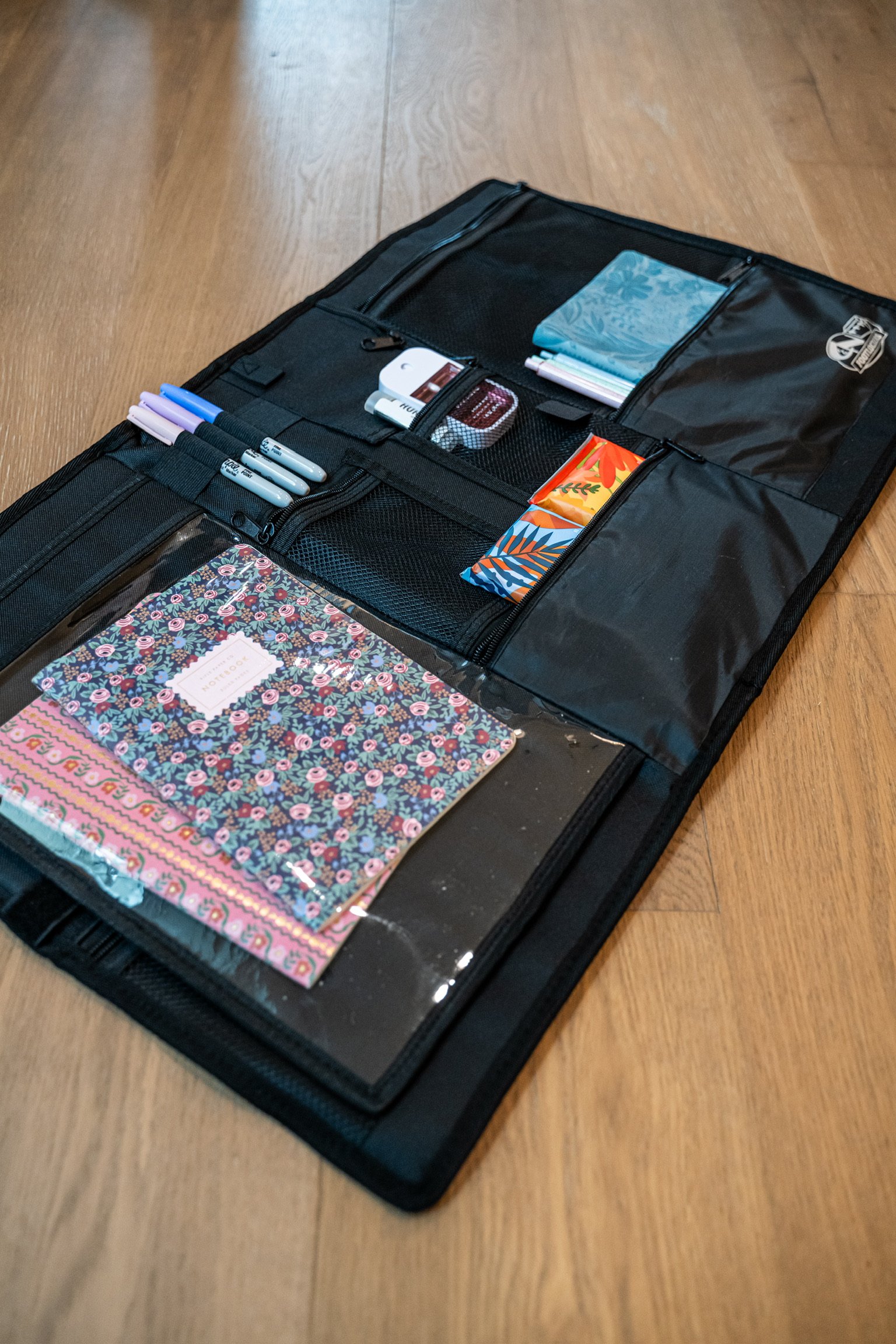
One note per day of camp, tucked in with each day's small gift or packed separately in the trunk. Write them now, while you have the emotional bandwidth to make them exactly what you want them to be — warm, specific, maybe a little funny. These are what they will read on a quiet afternoon, and they deserve to be written in a quiet moment. Most camps require all handwritten mail to arrive in the trunk at drop-off, so these cannot be sent later.
Write the goodbye note.
Separate from the daily notes — a single note tucked somewhere they will find it after you leave. In the pillow. Behind their first-day gift. Folded into the bunk décor. It does not need to be long. It just needs to be there.
Pack the trunk with intention.
The method we recommend: bag outfits by day in labeled zip-lock bags. One bag per day, everything from shirt to socks included. This keeps the trunk organized all week, makes it easy to find what belongs where, and ensures nothing gets worn multiple days running by default. Pack in logical layers, with the first day's items most accessible. Tuck a copy of the packing list inside the trunk so your camper has it when it is time to pack up and come home.
Set medications aside last.
In their own clearly labeled bag, completely separate from the trunk. These go directly to the camp nurse at drop-off and never go inside the trunk.
The Camp Drop-Off Kit
The concept I wish someone had shared with me sooner
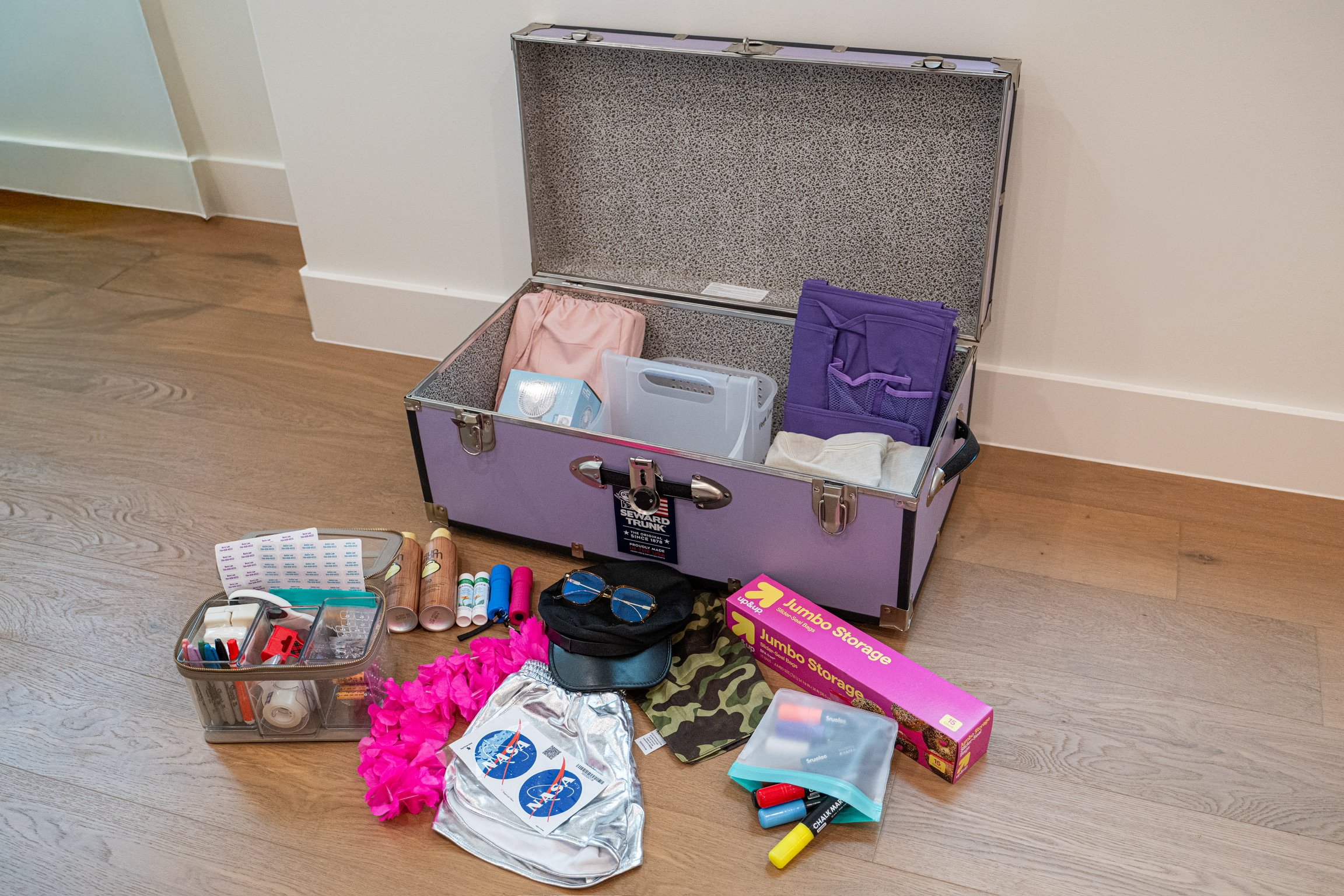
The Drop-Off Kit is a small bag or box that you bring to camp on drop-off day, use during bunk setup, and bring back home with you when you leave. It is not part of the trunk. It is your move-in crew kit, and it’s the thing that turns setup from reactive to intentional.
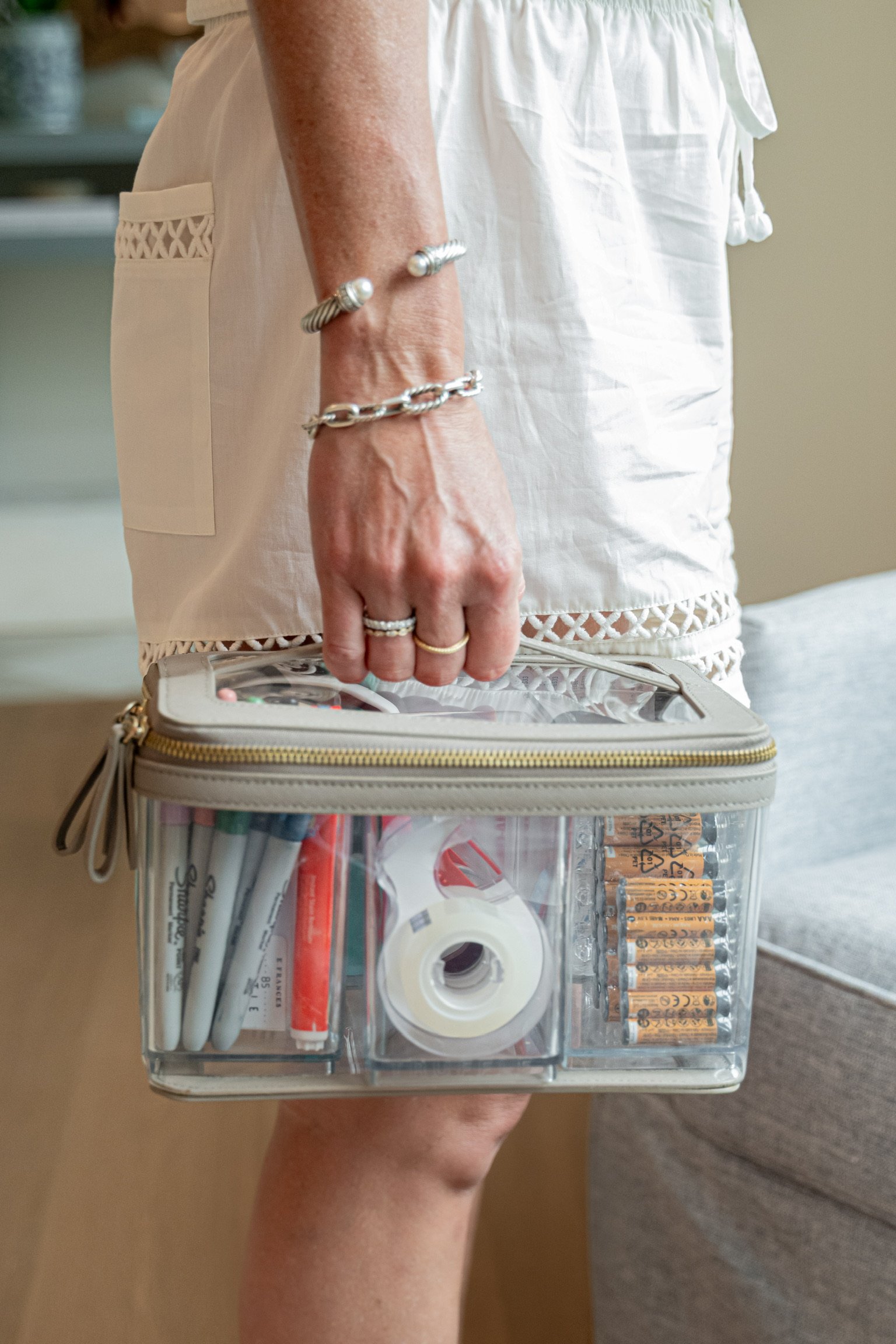
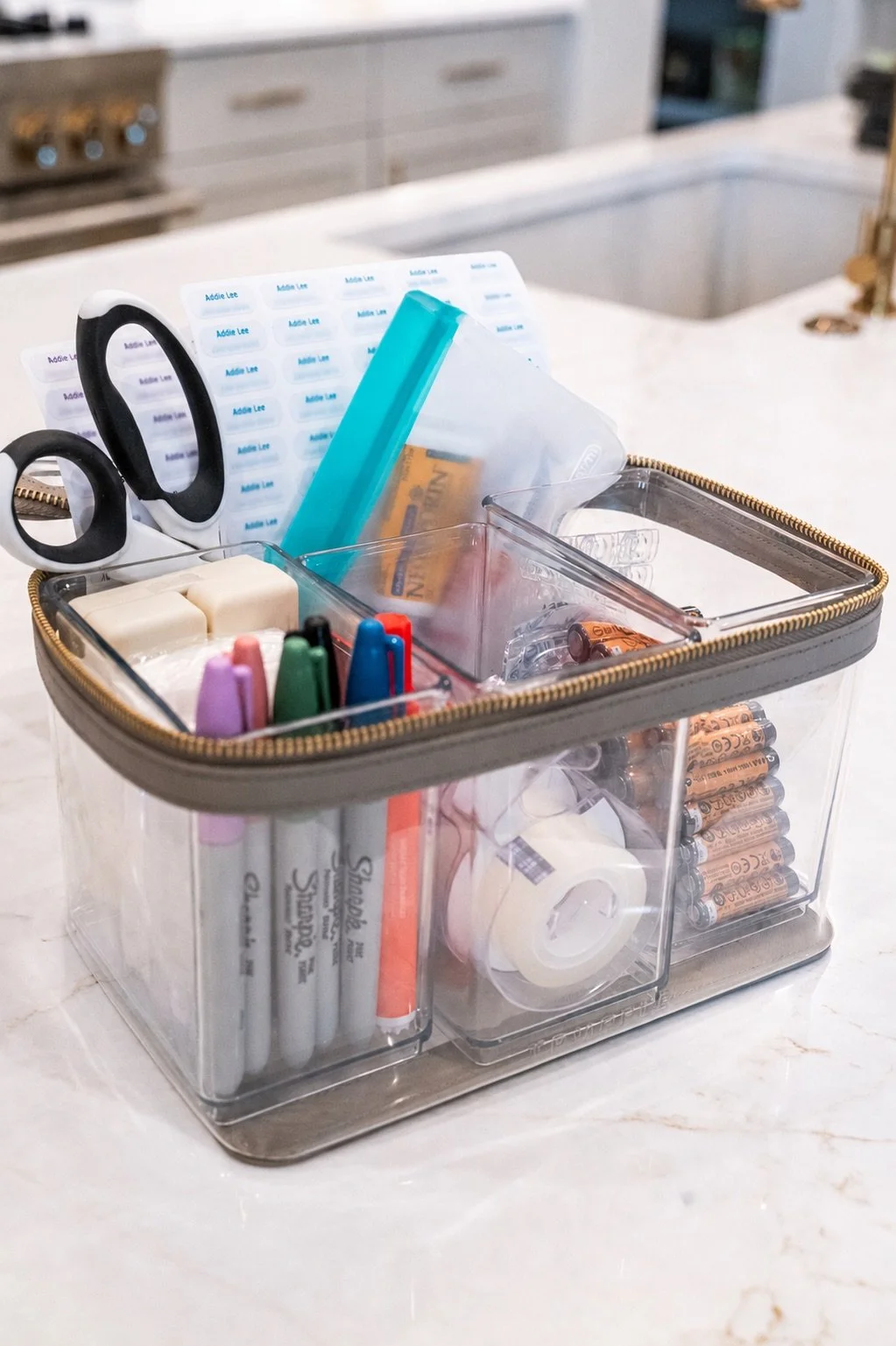
Here is what belongs in it:
Command strips (small and medium) and Command hooks — for hanging décor, lights, and organizers without damaging surfaces
Zip ties — for securing bunk organizers and mesh pockets to the bed frame
Duct tape — bring it; you will use it
Washi or painter's tape — for lighter décor applications
Sharpies in fine tip and chisel tip — for any last-minute labeling that needs to happen on-site
Scissors and safety pins
A pen and a notecard — for the goodbye note you will write right there before you walk out
Snacks and water for the drive home — you will be tired and tender; plan for it
When you arrive at drop-off with this kit in hand, the setup is easy. Nothing is missing. Nothing is improvised. The bunk looks exactly the way you imagined it. And you leave knowing you gave them the best possible start to their week.
Camp-Tested Advice from Our Team
Expert Tip: Make Their Pillow Easy to Spot
Send your camper with a pillowcase that stands out from the crowd. Camp cabins are full of identical white bedding, and a colorful, patterned, or personalized pillowcase makes it much easier for kids to identify their bed at a glance. It’s a simple trick that helps prevent mix-ups, keeps belongings from wandering, and makes their sleeping space feel a little more like home.
— Alyssa Thorpe, Professional Organizer & Lifestyle Expert

Expert Tip: family letters
This one requires a little coordination, but it is so worth it. A few weeks before camp, reach out to grandparents, siblings, cousins, a favorite aunt — anyone who has a special place in your camper's world- and ask them to write a short letter or card. Label each one with a day of the week and tuck them into the trunk before drop-off. It costs your people a stamp and ten minutes, and it gives your child something to look forward to every single morning.
Some of the most treasured camp memories aren't the activities; they're the quiet moments on the bunk reading a letter from grandpa.

Expert Tip: The Homesick Lotion
Pack a small bottle of lotion, lip balm, or rollerball scent your child already associates with home. Label it Homesick Lotion and tell them before drop-off: “Whenever you’re missing us, put some on and take a deep breath.”
It gives children something tangible to do with a feeling that can otherwise feel overwhelming, and the familiar scent serves as a powerful reminder of home. Whether it’s your favorite lotion, a familiar lip balm, or a scent they’ve grown up with, this small item can provide comfort during the moments they need it most. Pack it every year until they tell you they no longer need it.

Expert tip: the cabin gift
Here is a theme night secret that experienced camp parents know, and first-timers wish someone had told them: pack one small item for the entire cabin.
A pair of USA sunglasses for every girl on America night. Eye black sticks for the whole cabin on camo night. Glow necklaces for neon. Mini cowboy hats for country. It doesn't have to be expensive — dollar stores and Amazon are your best friends here, and it doesn't have to be elaborate. It just has to be shareable.
The result is that your camper walks into theme night with something for everyone, and that moment, watching her hand them out to her cabin, is exactly the kind of memory that defines a summer.

Expert tip: the trial run
Before the trunk leaves your house, do a full practice run together. Have your camper unpack everything completely, then repack it just as they’ll need to at the end of the week when it’s time to come home.
Walk through real-life situations: Where do dirty shoes go? What happens to a wet swimsuit? How do you find tomorrow’s outfit without digging through everything? Taking the time to review these systems ahead of camp helps campers feel more confident and keeps the trunk from becoming complete chaos by day two. It takes about twenty minutes, but it makes an enormous difference, especially for boys. Consider yourself warned. 🙂
The Bigger Picture
I believe how we approach the ordinary things in our lives, even a camp packing list, reflects something about how we want to live. Not perfectly. Not without effort. But with intention, with care, and with the kind of thoughtfulness that turns a chore into something that feels a little bit like love.
Camp prep, done this way, is one of those things. It is a series of small, deliberate acts spread out over weeks that culminate in a morning where you are not scrambling; you are present. Present for the cabin setup, for the goodbye hug, for watching your kid run toward something wonderful without looking back.
That is what this system is designed to give you. Three checkpoints. Clear categories. Everything in its place. And a drop-off morning that feels like the send-off your camper deserves.
Shop all of our camp recommendations → Graceful Living Camp Shop
Download the complete Camp Prep Checklist → Get the Checklist
Create custom vinyl labels for your camp gear → Get the Label Guide
Have a camp prep tip or a product you swear by? Leave it in the comments — this list gets better every year.
xo,
Christina
P.S. I’ll include a few affiliate links for the items I use and love, but I hope that the real inspiration comes from the activity itself: showing up with intention, embracing beauty in the everyday, and weaving joy into even the simplest routines.
Graceful Living is where we share the things that make life feel a little more intentional, and a lot more beautiful. From thoughtful ways of living and everyday rituals, to style inspiration, favorite recipes, travel moments, and the small joys that elevate the ordinary... this space is meant to inspire a life well lived.
If you love content that feels calm, curated, and life-giving, I’d love for you to be part of our inner circle.
By joining our Graceful Living subscriber list, you’ll receive our newest posts straight to your inbox, so you never miss a story, idea, or inspiration we share thoughtful living, elevated everyday moments , style, recipes, travel, and joy, beautifully woven together.
Click the link below to subscribe and make sure you’re receiving our Graceful Living emails. I can’t wait to share more with you.

The Things We Use Every Day
And if you’d like to follow along with what Rebecka and I genuinely love, we’ve created shop pages that bring all of our favorites into one place. A simple way to explore what we consistently reach for in our own homes, whether you’re looking for inspiration or ready to try something new.
follow us on shop my
follow us on ltk
More Inspiration
Our Charleston Home Organization Our Purely Organized Service GS Top 5 Pantries Meet Our Team More From Graceful Living