
The Gift of Less: How to Help Kids Appreciate What They Have Before the Holidays
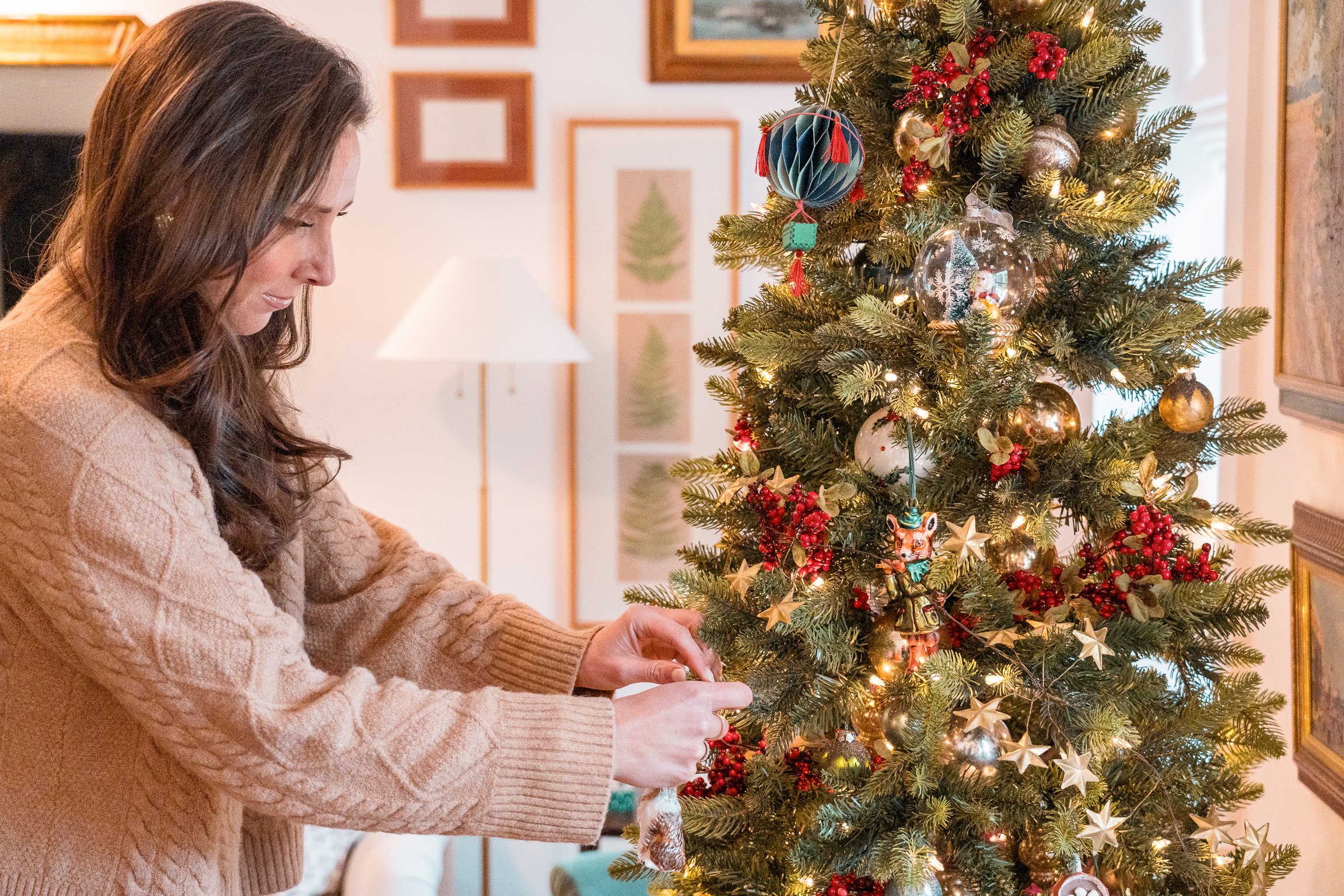
Why assessing what they already have might matter more than finding the perfect gift.
Every year as the holidays approach, the volume seems to turn up. The gift guides arrive. The wish lists grow. There are cookies to bake, traditions to uphold, parties to attend, gifts to wrap, and somehow a feeling that we should be making all of it more magical than we did the year before. At Graceful Living, we love the holidays. We love a beautiful gift. We love traditions, gathering around a table and finding something wonderful for someone we love. And yes, we will happily share our very favorite finds with you.
But as we began thinking about what we wanted to share with you this holiday season, I kept coming back to something else. I don't want our holiday content to become one more voice telling you to do more, buy more, or create more. What if, before we add anything this season, we begin by noticing what we already have? Not because less is inherently better. Our family has never been particularly minimalist. But because I want my daughters to learn something I am still practicing myself: There are seasons for gathering, and there are seasons for contentment. Learning to recognize which one you're in might be one of the greatest gifts we can give our children.
Before We Add, We Assess
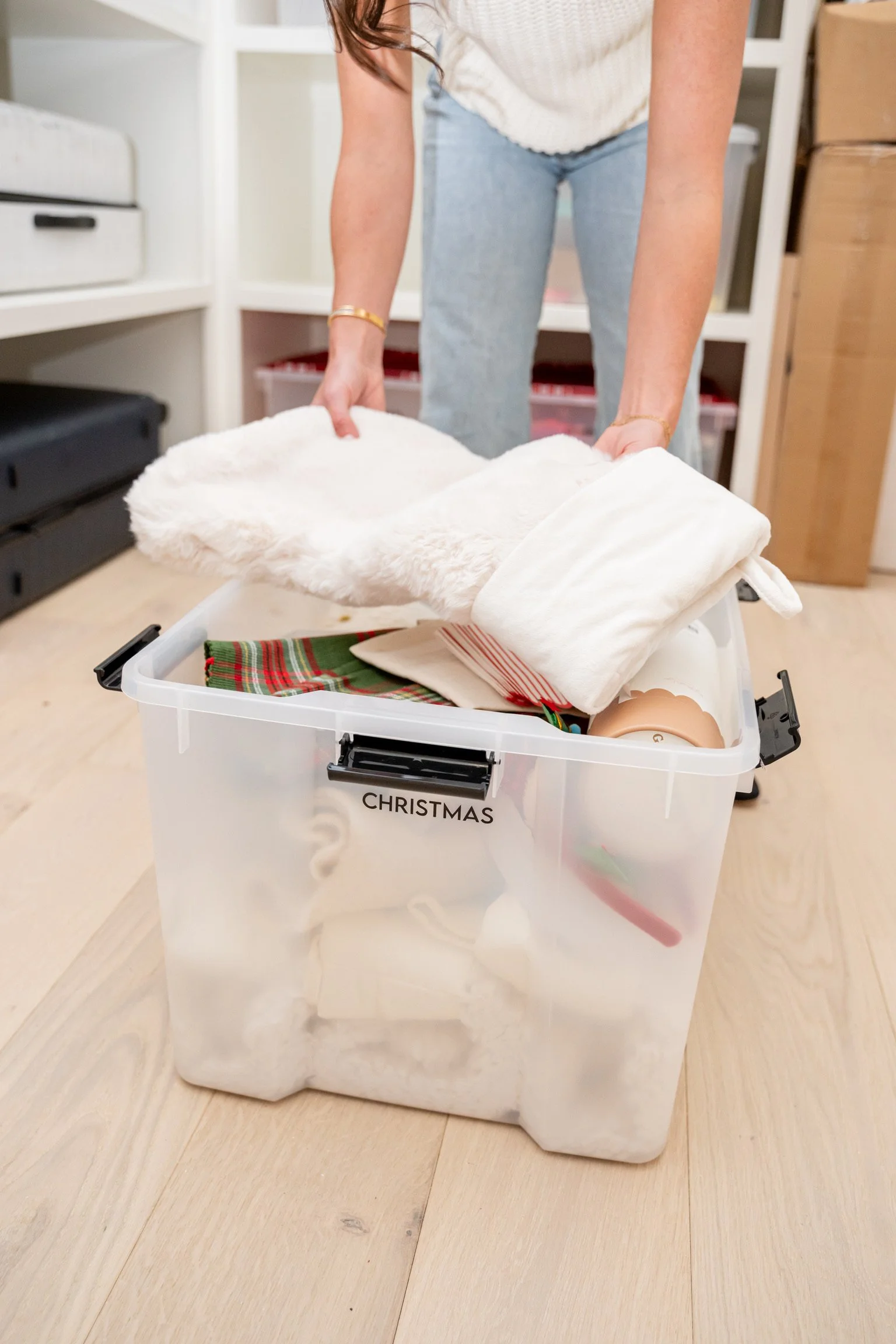
This is something we practice in organizing every day. When we feel dissatisfied with a space, our instinct is often to start shopping. We need another bin. Another basket. Another shelf. Another organizing product. But one of the first things we do at Graceful Spaces is much simpler: we assess what is actually there. Often, there is more than enough. We just couldn't see it.
The same principle can be incredibly helpful with our children before the holidays. Look at what they actually use, not only what they say they want.
Maybe the dolls haven't been touched in months, but the art supplies are practically worn down to nothing. Maybe everyone at school is talking about one particular gift, but when you look around your child's room, nothing about the way they actually spend their time suggests they'll enjoy it for long. That doesn't mean they aren't allowed to ask for the trending gift. It simply gives us an opportunity to help them notice their own patterns rather than automatically following everyone else's.
We do something similar with clothes every fall and spring. That's the same instinct behind everything we've learned about what an organized home actually changes for a family, assessing what's already there almost always turns up more than we remembered. Rather than starting with the vague feeling that the girls need clothes, I count. There are seven days in a week. How many days are they wearing athletic clothes? What do they need for church? School? Activities? How many jeans, shorts, tops, shoes and sandals actually support their lives right now?
Suddenly, need becomes something we can observe instead of something we feel. We start there. Then there is room for the wants. And there should be.
Editing Is a Muscle
When my girls were younger, we always did a bigger edit before Christmas. I usually did the first round myself: obvious trash, broken things and items we all knew they hadn't touched in forever. It removed some of the decision fatigue before they joined me.
Then they became active participants. And sometimes they didn't want to let go. That's okay. I believe we're raising children who will eventually need to become strong, independent adults. We can't remove every uncomfortable decision from their childhood and expect them to suddenly know how to make difficult choices at 18. I'm certainly not advocating forcing a child to give away something they deeply treasure. But I am comfortable allowing my children to experience some of the discomfort of editing. Because editing is a muscle.
Today, they're deciding which toys belong in their room. Someday they'll be deciding what belongs on their calendar, which is exactly the skill I write about in creating a calendar that supports the life you actually want. What they can afford. Which commitments deserve a yes. Whether they're buying something because they genuinely value it or because everyone around them has it.
Those are much bigger decisions. We get to start practicing with the little ones.
Caring for What We Have Is a Gratitude Practice
There's another part of this conversation that happens in our house all year, not just at Christmas. Taking care of what we've been given is one way we show gratitude for it. It's one of the reasons we have chores and reset days.
Cleaning your bedroom isn't only checking a box on the chore list. It is caring for the room you get to sleep in and the belongings inside it. Putting your clothes away is caring for something you have been given. Even unloading the dishwasher can remind us that we had food to eat, dishes to eat it from and a machine that washed them for us. Now, please don't misunderstand me. Sometimes somebody just needs to unload the dishwasher. But I want my girls to understand that gratitude isn't something we perform after receiving a gift. We show gratitude in how we care for something after we receive it.
A thank-you note is gratitude in December. Taking care of that gift in March is gratitude too. We still have the girls write thank-you notes because I want them to stop long enough to acknowledge that another person spent their time, money and thought choosing something for them. Research on gratitude in children actually supports this broader approach. Rather than simply instructing children to “be grateful,” psychologists encourage helping them notice what they've received and think about the intention of the person who gave it to them. That's what we're after.
Not children who know how to say they're grateful. Children who learn how to notice.
A Christmas List Is Not a Purchase Order
As the girls have gotten older, our Christmas lists have evolved.
They use tools like Elfster and Giftful now, which I love because they can add ideas throughout the year and carry them into birthdays. I don't put a strict limit on how many things they can add. A wish list can be just that, a place to wish. But it isn't an order form.
We'll casually talk about things they've added. Why do you want this? Where would it live? Do you already have something similar?
There are practical boundaries, too. You can't ask for a giant tumble track if we don't have somewhere to put a giant tumble track. One of my favorite benefits of a shared list when the girls were younger was being able to point grandparents toward something particularly meaningful to them. I never wanted Santa to get all the good gifts.
If one of my girls had been dreaming about something special, I loved allowing a grandparent to be the person who gave it to her, to share in the excitement and create that memory together.
Our Children May Need Different Lessons
This has become particularly apparent watching my two daughters grow up. Nora and Addie are only 53 weeks apart, but their natural relationships with money could not be more different.
Nora is a saver. Addie is a spender, or, perhaps more generously, our family's fun finder.
When they were little, they decided to pool their allowance money. This naturally made Nora the keeper of the purse strings and Addie the one dreaming up what they could do with it. I'll never forget following them through Target after Addie had spent weeks campaigning for a particular baby doll. Nora had finally agreed. “Okay,” she told her sister with all the seriousness of a tiny CFO, “I think we have enough money saved that I feel comfortable with this purchase.” People around us were already starting to smile at this little old-married-couple negotiation happening in the Target aisle. Then Addie found the baby clothes. No. They hadn't budgeted for those. Then came the blankets. Absolutely not. Finally, as they were getting ready to check out, Addie inspected the doll and discovered something important. “Oh! This baby pees, and it only comes with one diaper. I'm going to have to buy more diapers.” Nora threw her hands in the air. I laughed then, and I still laugh thinking about it.
But watching them has taught me something important: Our children don't all need the same lesson about money and possessions. Some need help learning to wait. Some need permission to enjoy. Most of us probably need a little of both.
Intentional Doesn't Always Mean Practical
As the girls have gotten older, they have their own money and use Greenlight to learn how to manage it. And my saver has taught me something too. In our family, I have something I call a lux budget, money specifically designated for something indulgent. Not groceries. Not savings. Not an emergency. Something completely unnecessary that I simply want to enjoy.
Nora eventually decided to create a lux budget of her own. She realized that because she naturally loves saving, she can feel guilty spending money even when she has been responsible with it. Earmarking money specifically for enjoyment gives her permission to spend it without having to justify every dollar. I love that. Because I don't want to raise children who are simply excellent at denying themselves. I want them to understand saving. I want them to understand generosity. I want them to live within their means. And I also want them to know how to enjoy something wonderful.
Intentional doesn't always mean practical.
Sometimes it means: I planned for this. I can afford this. I absolutely do not need it. I love it. And I'm going to enjoy it. There is room for generosity. There is room for need. And there is room for indulgence.
Sometimes the Gift Is What the Gift Makes Possible
Some of my favorite gifts we've given our girls haven't really been about adding another object at all.
In our new house, we prioritized creating a craft space under the stairs. It is cozy and a little magical, and it has become even better than I expected. The girls go there to make things, unwind, spend time with friends and recharge. We love investing in craft supplies because we've watched what those supplies make possible. We've done smaller versions of this over the years too: an art corner with little shelves, a reading swing with new books. It doesn't have to be an elaborate room.
Sometimes the gift is simply creating the place where something they already love can happen.
We've also given trips. One year we left for New York City the day after Christmas. We've given experiences, privileges, new apps, special dinners, visits from friends and homemade coupons, which can get very funny depending on what your children decide the coupon should entitle them to.
And then there was the year Nora wanted a box. Not a toy that came in a box. A box. We spent weeks hunting down a refrigerator box for her birthday, and she played with that thing for months in the basement of our Charleston home. It remains one of my sweetest gift memories.
The price of something has surprisingly little ability to predict the memory it will create.
And Sometimes the Experience Is the Gift
I once decided the girls needed the American Girl experience. I was fairly aware they might not become children who spent hours playing with their dolls. That wasn't entirely the point for me. I wanted the experience.
And if I'm being truthful, I probably approached that trip with the enthusiasm of someone taking her children to Disney World. They didn't suddenly become devoted American Girl children. But just last month, Addie pulled her doll out and started talking about the beautiful memories she has connected to it. That reminded me that we don't always get to decide how a gift will be valued.
Sometimes the toy gets played with every day. Sometimes it gets tossed aside. Sometimes what remains years later isn't the object at all. It's the memory wrapped around it. That releases us from some of the pressure to find the perfect gift. We can't engineer exactly how our children will receive something. We can simply give thoughtfully and with love.
Sometimes “New” Doesn't Require Buying Anything
When the girls were little, I also rotated toys. Not everything was accessible all the time. When something reappeared after being put away for a while, it could suddenly become exciting again.
That's another lesson I've carried into organizing: Sometimes we don't need more. We simply have so much that we can no longer see what we have. Editing, organizing and rotating can restore some of that visibility. Before you add something to your child's world this Christmas, consider helping them rediscover what's already there.
Make Room for Anticipation
One of the people who has influenced me in this area is my co-founder and friend, Rebecka. She grew up in Sweden, and I've always admired the contentment I see in the way she approaches consumption. When she and her family invest in something new, there has often been thought, waiting, planning and dreaming behind it.
Sometimes I've heard about a piece of porch furniture for a year before the porch furniture actually arrives. And when it finally does? It's exciting! There is something we've lost in our ability to see something, click something and have it sitting on our porch tomorrow. Anticipation can be part of enjoyment.
Historically, even the humble Christmas orange illustrates this. Citrus was once difficult and expensive to obtain in many colder places, which helped make an orange tucked into a Christmas stocking feel like a genuine seasonal luxury. I'm certainly not suggesting we cancel Christmas presents and hand everyone an orange. My children would have questions. But I love the reminder that luxury isn't necessarily about how much something costs. Part of what makes something special can be the fact that we don't have everything all the time.
A Budget Isn't About Making Christmas Smaller
Our family has a holiday budget, and as the girls have gotten older, they understand that. Budgets aren't particularly glamorous. But I have found that having one actually helps me enjoy giving more.
I also try to begin buying gifts around Thanksgiving, or even before, because I know something about myself. The closer I get to Christmas, the more susceptible I become to the feeling that I should buy one more thing. Another stocking stuffer. Another present. Something else because one child's pile suddenly looks smaller. Purchase. Purchase. Purchase. Starting earlier and knowing our budget gives me space to think.
Of course, this is coming from the same mother who once spent Christmas Eve driving around Austin looking for a Nintendo Switch that Nora had suddenly decided was the one thing she desperately wanted for Christmas.
So please hear this clearly: Intentional does not mean perfect. We're practicing too.
A Gift from us
We put together something we think will be an incredibly helpful resource, not only for this holiday season, but for the years to come.
Meet the Graceful Holiday Planner, a thoughtful place to plan and organize the details that make the season feel more intentional, from your gift list and holiday card addresses to travel checklists and everything you need to prepare your home for the holidays.
Download it, save it, and make it part of your holiday planning each year.
Let Your Children Participate in Giving, Too
Our family participates in opportunities to give throughout the year, including back-to-school and Christmas giving.
But as my girls have gotten older, I've realized there's a difference between doing something generous for our children and allowing them to participate in generosity themselves. If I select everything, purchase everything and drop everything off, I've checked the box. But they haven't necessarily experienced giving.
When there is an opportunity, let them help. Let them think about the person receiving. Let them choose. Let them use some of their own money when appropriate. Let generosity require something of them.
Because ultimately I hope my girls learn to start from generosity and need, and then make room for indulgence, rather than beginning with indulgence and seeing if anything is left.
Don't Turn This Into Another Holiday Checklist
And now I want to make one thing very clear. Please do not read this article and leave with ten more things you need to accomplish before December 25. That would defeat the entire point. You do not need to edit every closet. You do not need to establish a new allowance system. You don't need to create a craft room. You don't need to make your children write essays about gratitude or overhaul Christmas morning.
Choose what serves your family. Maybe you clean out the playroom together. Maybe you ask one better question when your child adds something to a Christmas list. Maybe you finally create a holiday budget. Maybe you involve your kids in giving this year instead of doing it for them. Maybe you intentionally buy the completely frivolous thing you've planned and saved for, and enjoy every second of giving it. Or maybe you look at the presents you've already purchased and decide: This is enough.
There Are Seasons for Gathering, and Seasons for Contentment
Our brains love new. There will always be another trend. Another launch. Another toy. Another pair of shoes. Another thing someone else has.
I don't want my daughters to grow up believing that wanting those things is bad. I want them to become women who can stop long enough to honestly assess: What do I already have? What do I need? What can I give? What would bring me genuine delight? And is this a season when I already have enough?
There will be seasons for gathering. Children grow like weeds and suddenly genuinely need an entire wardrobe. Families move. Needs change. There will be seasons when we've saved and waited and planned for something wonderful, and buying it should be celebrated. And there will be seasons when nothing is missing. Those are the seasons when I hope my girls have learned how to recognize contentment, the same recognition I wrote about in learning to carry what matters most. Because perhaps the gift of less isn't really about teaching our children to want less at all. Perhaps it's teaching them how to recognize enough. And then giving them the freedom to enjoy it.
Need a Little More Space This Holiday Season?
Sometimes recognizing what needs to happen is easier than finding the time to do it.
Graceful Spaces helps families edit, organize and reset their homes before the holidays, and helps put life back together afterward, when the gifts, decorations and holiday rush have all landed. Whether you want to prepare your home before everyone arrives or already know that January-you is going to appreciate some help getting everything back in order, our team would love to support you.
Give yourself the gift of space for living.
And from all of us at Graceful Spaces: buy what you love, give with joy, care for what you have, and leave a little room for living.
Graceful Living is where we share the things that make life feel a little more intentional and a lot more beautiful. From thoughtful ways of living and everyday rituals to style inspiration, favorite recipes, travel moments, and the small joys that elevate the ordinary... this space is meant to inspire a life well lived.
If you love content that feels calm, curated, and life-giving, I’d love for you to be part of our inner circle.
By joining our Graceful Living subscriber list, you’ll receive our newest posts straight to your inbox, so you never miss a story, idea, or inspiration we share: thoughtful living, elevated everyday moments, style, recipes, travel, and joy, beautifully woven together.
Click the link below to subscribe and make sure you’re receiving our Graceful Living emails. I can’t wait to share more with you.

The Things We Use Every Day
And if you’d like to follow along with what Rebecka and I genuinely love, we’ve created shop pages that bring all of our favorites into one place. A simple way to explore what we consistently reach for in our own homes, whether you’re looking for inspiration or ready to try something new.
follow us on shop my
follow us on ltk
More Inspiration
Our Charleston Home Organization Our Purely Organized Service GS Top 5 Pantries Meet Our Team More From Graceful Living