
How to Create Margin in a Busy Life Without Doing Less
What mono taught me about productivity, stress, and making room for what matters

I am really good at making things fit. Give me a complicated calendar, and I will find the pockets. Give me a busy week, and I will figure out how to make it work. I genuinely enjoy thinking about how to use my time well, how to create better systems, how to make mornings smoother, how to fit in the workout, the meeting, the school pickup, the dinner, the work, the friend, the trip.
I have written a lot about optimization because I believe in it. In fact, I recently wrote about creating a calendar that supports the life you actually want.
And then, this summer, I found myself lying on my couch with mono and ice packs while Graceful Living emails about routines and intentional schedules were still going out.
The irony was not lost on me. For a minute, I honestly wondered if I was a hypocrite. Was I really the person who should be telling anyone how to use their time well when my body had just forced me to stop using mine almost entirely?
After a few months of recovery, I don't think the lesson is that optimization is bad. I think I had just stopped one sentence too early.
Optimization should create margin. And what we do with that margin matters just as much as how we created it.
I Could Make It Fit. I Just Wasn't Leaving Much Room.
Looking back at the months before mono, life had been full. We had moved into our new home only a few months earlier. Then, Mr. Cheddars caused a flood. We had a family visit twice. Both of our girls had birthdays within a week of each other, which meant birthdays and birthday parties for a 12- and 13-year-old.
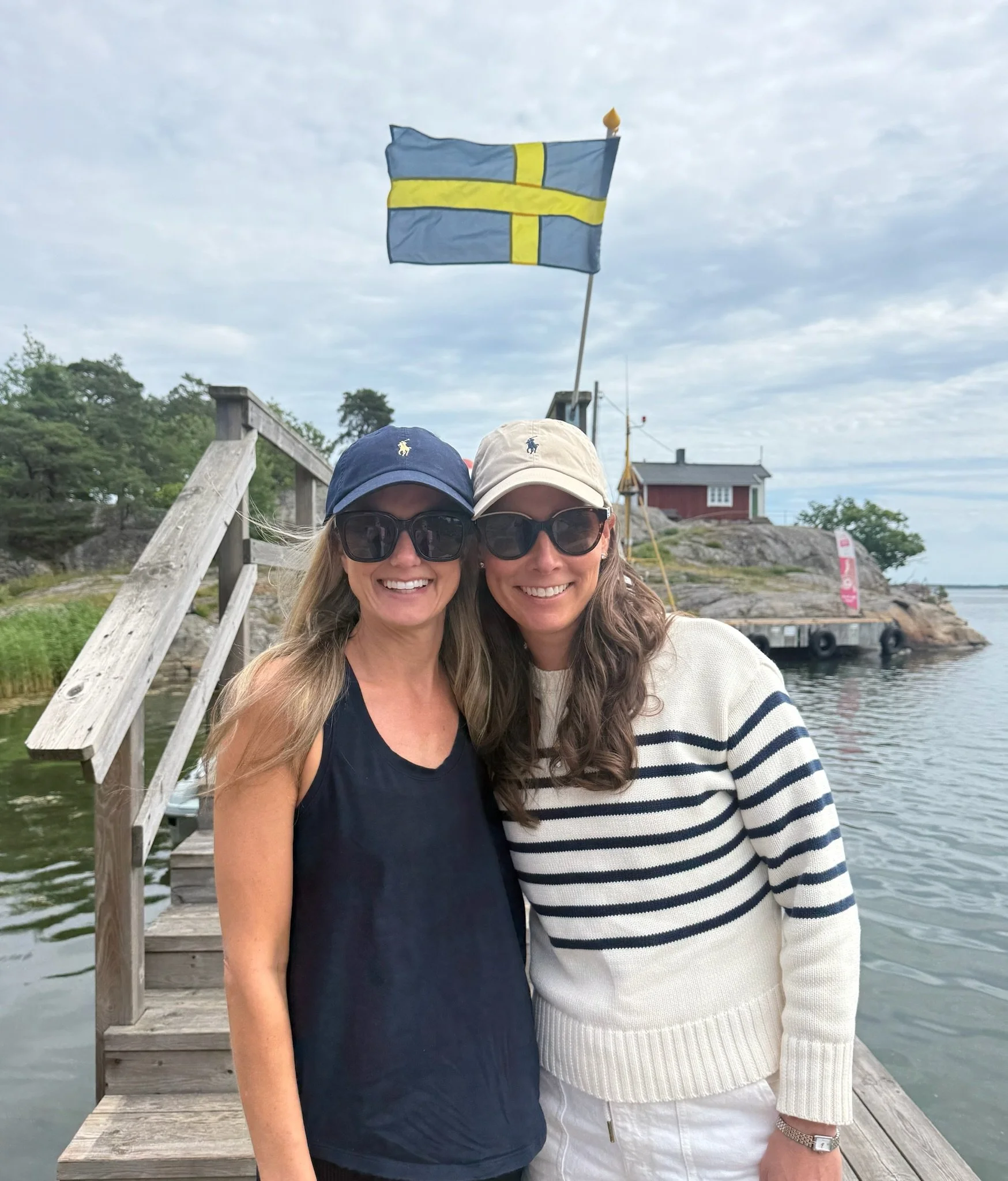
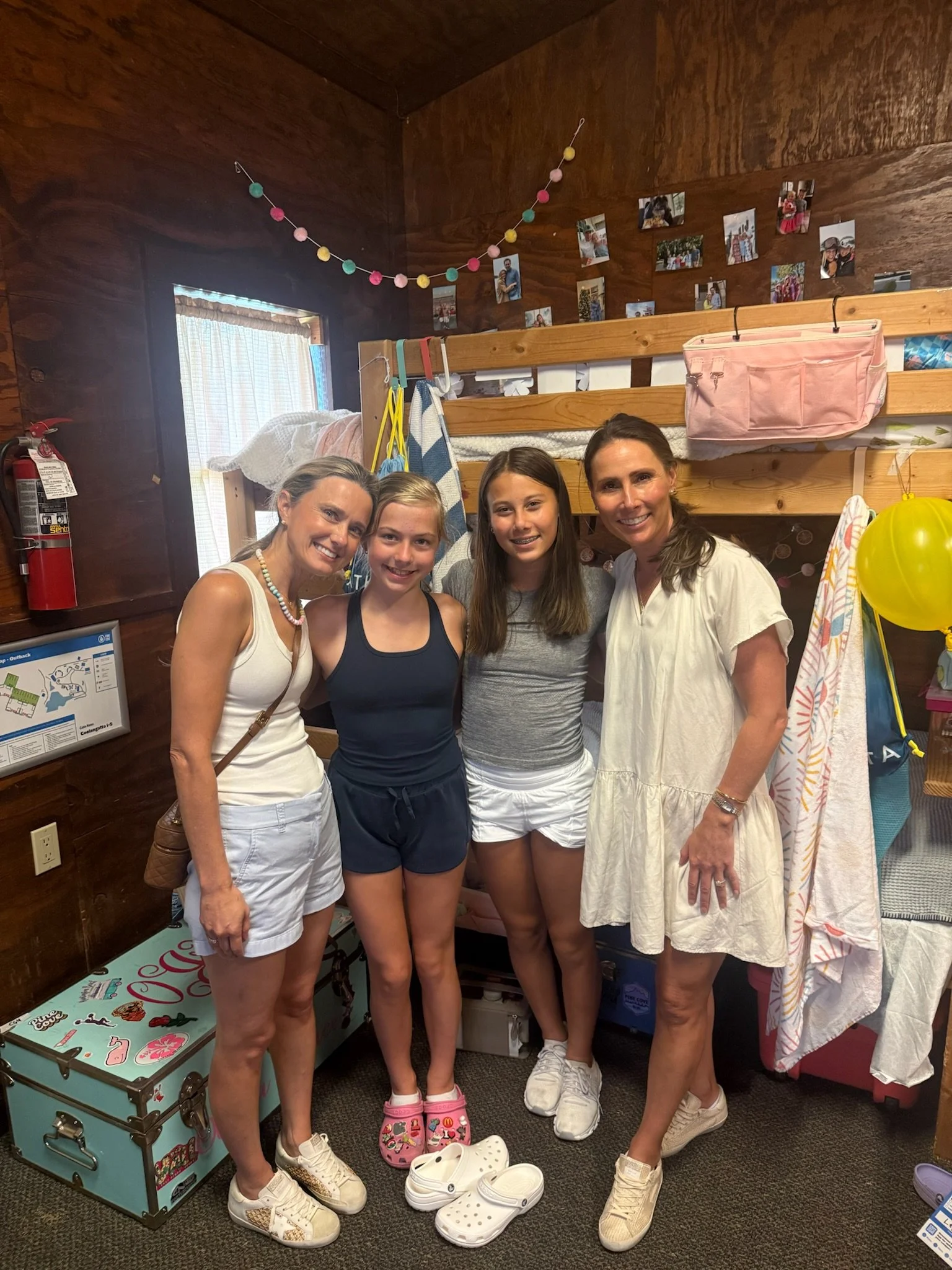
It was the end of school. My husband was traveling during conference season. We were going through organizational changes at Graceful Spaces. And then we were excitedly kicking off summer. A beach trip. Camp for the girls. A trip to Sweden with dear friends that was incredibly special. There were so many good things in that list. And I think that's part of why I missed what was happening.
We tend to recognize stress when life is obviously hard. We don't always recognize what change, excitement, travel, celebrations, decisions, logistics, and transitions ask of us, too.
I want to be careful here: I'm not a doctor, and I'm not saying my schedule caused my mono. This isn't medical advice or an explanation for why I became sick. It's simply what the experience made me notice about the way I had been living.
I was accounting for how much time everything required. I wasn't accounting for how much recovery everything required.
I've actually written before about why moving can feel so hard even when you do everything right. I understood that transition had a cost. I'm not sure I fully understood how long I needed to keep accounting for it. And I've realized I'd made this mistake before, just in a different way.
Years ago, when Graeme was going through chemotherapy, and our girls were little, there was no question that life was hard. We knew we were carrying something enormous. There was an obvious reason to accept help, create margin, and acknowledge that our capacity was different. I've shared more about that season and what it taught me about loving people well through hard things. But once the most intense part of his treatment was behind us, I wanted our life back.
I think I was too quick to assume that because the crisis was ending, the recovery was ending too. I understand that differently now. The crisis can end before the recovery does. And the opposite is true, too. Sometimes life is not hard. It is wonderful.
There are birthdays and travel and family and work you care about and opportunities you are grateful for and people you really do want to say yes to. But good things still require something from us.
I am not saying I should have canceled all of those things. I don't regret a full life. I just wish I had been more aware of what it was costing me to move from one thing straight into the next. The calendar tells us how long something takes. It doesn't tell us how much it takes out of us. That is a distinction I had not fully understood.
I'm Not Going to Tell You to "Slow Down"
If you're anything like me, you've heard all the sayings. You can't pour from an empty cup. Put your oxygen mask on first. You need to slow down.
They're not wrong. But they're not always particularly helpful either, because sometimes life does not slow down. The kids still need to get to school. The meeting still happens. Someone needs dinner. The deadline is real. The carpool exists. The family needs you. The business needs you. And sometimes we don't actually want a smaller life. I don't.
I love my family. I love my friends. I love our business. I love traveling. I love creating. I love having people in my home. I love making things happen. I don't think the answer is to stop caring about the things we care about. I think the better question is:
How do we build enough capacity to fully experience the life we have been given?
Because stress isn't going to disappear. There will be another difficult season. There will be another exciting season. There will be another school year, another opportunity, another transition, another unexpected thing.
We cannot optimize ourselves into a life where change stops happening, but we can become more intentional about how we move through it.
What Are We Optimizing For?
I've thought a lot about John Mark Comer's The Ruthless Elimination of Hurry in this season.
Not because I suddenly think we should all stop being productive. I don't. But I do think hurry has a way of convincing us that every opening needs to be filled. That is something I am very good at.
A meeting ends early? I can answer three emails. Thirty minutes opens up on the calendar? I can find six productive ways to use it. Does a system save me time? Great. I can add something else. And again, sometimes that's exactly what I want to do.
But if every bit of efficiency we create becomes another opportunity for output, have we really created freedom? Or have we just become more efficient at filling our lives? I don't want to stop optimizing. I want to get much clearer about what I am optimizing for.
Optimization is a tool. It is not the point. The point is what the tool makes possible.
A better morning routine can create a calmer conversation with my daughters. A more organized business can leave room for better ideas. A thoughtful calendar can create space for lunch with a friend. Planning well can help me be more present once I actually arrive.
The system should serve life. Life should not serve the system.
Do I Actually Know What Restores Me?
This has become one of the biggest questions for me.
Not: Do I rest enough?
But: What actually restores me?
Those are different questions.
I can lie on a couch and still be stressed. I can technically take time off and mentally work the entire time. And I can spend an hour with a friend, laugh until I lose track of time, and walk away feeling more like myself.
My Oura Ring has been surprisingly helpful in making me curious about this. I started noticing how much time I was spending in a stress state and how little time I sometimes spent in a restorative one.
I told my friends. They laughed and essentially said, "Oh, mine says I'm stressed all day too." We all felt a little validated. And then I thought, Wait. Why are we taking comfort in that? Something being common does not necessarily mean I want to accept it as normal. So I started paying attention.
What was happening when I actually felt restored? What was I doing? Who was I with? What brought my creativity back? What made me feel peaceful? What made me feel like me again? And one thing has made me smile every time I notice it.
Church keeps showing up as restorative.
Week after week. There is something beautiful about having this tiny piece of technology collect all this data about me, only to remind me of something my soul already knew. When I'm in church, worshipping, quieting my mind, turning my attention toward God instead of everything I'm responsible for managing—I can see the difference.
That has made me rethink restoration altogether. Restoration isn't simply the absence of work. Sometimes it's returning to the things that put everything else back in its proper place.
God. People. Love. Friendship. Family. Joy. Peace. Creativity. Presence. The things that remind me that my life is bigger than my output.
For me, restoration also looks like yoga. A walk. Sitting on my porch for 20 minutes between work and the next part of my day. Acupuncture, which has played an important role for me personally through many seasons of life. Fascia-focused work that I've returned to during this recovery. Sleep. Lunch with a friend.
Sometimes doing absolutely nothing useful. I'm trying to become a student of my own restoration. And I'm realizing I don't necessarily need another elaborate wellness routine. I need to stop carrying one thing directly into the next.
Sometimes that's a breath between meetings. A few quiet minutes in the car. Closing my laptop and actually acknowledging that work is finished. Sitting on the porch before I move from work into family life. Taking a moment to recognize that conversation really affected me, instead of immediately opening the next tab.
Sometimes it's five minutes. Sometimes it's yoga or church or lunch with a friend. Sometimes I need sleep. And sometimes the honest answer is that something actually needs to come off the calendar. I'm learning to pay attention.
As always, these are my personal experiences, not medical advice. Please work with your own healthcare professionals regarding illness, exercise, treatment, supplements, or recovery.
Just Because It Fits Doesn't Mean It Belongs
I got really good at making everything fit. But somewhere along the way, I stopped asking: Just because it fits, does it belong? That question has brought me back again and again to Ecclesiastes.
Ecclesiastes wrestles with so many of the things we spend our lives pursuing: work, accomplishment, wealth, pleasure, wisdom, striving. It asks us to confront the temporary nature of so much of what consumes our attention and remember what it means to receive our lives as a gift from God.
That perspective has felt especially important to me in this season. I could spend my whole life maximizing every hour. I could build the business. Make the money. Finish the projects. Run the house beautifully. Get everyone where they need to go. Answer every email. Use every opening. But if I arrive at the end of all of that having missed the people I love, lost touch with God, buried my creativity, or become too hurried to experience the life I worked so hard to build...
What exactly was I optimizing for?
There will always be another email. Another project. Another problem. Another opportunity. Another school year. There is no magical finish line where everything is finally done, and then we are granted permission to live.
We have to put the living inside the life we are already building.
I want my systems to make room for relationships. For worship. For joy. For peace. For spontaneous conversations with my girls. For dinner with friends that goes longer than planned. For creativity. For the particular gifts God gave me to contribute to the world. Because creativity isn't just painting or writing or designing something beautiful.
It's our ideas. Our humor. Our hospitality. Our problem-solving. Our curiosity. Our ability to notice another person and make them feel seen. It's the particular way each of us was created to show up in the world. And when every minute is spoken for, that part of us can slowly disappear underneath the schedule.
I don't want optimization to stifle my creativity. I want optimization to protect it.
So as we head back into school schedules, carpools, work, activities, and all the rhythms that come with fall, I'm still going to organize the calendar. I'm still going to create the systems. I'm still going to make things fit. But I'm going to be much more protective of the space that's left. Because my calendar knows what I have scheduled.
It doesn't know what I'm carrying into it. And instead of immediately asking what else can fit, I'm trying to ask something better: What do I want this space to make possible?
Am I Shaking It Off?
I'm working on all of this. I certainly haven't mastered it. But there is one thing that constantly reminds me to check in with myself: my puppy.
I've written before about what getting a puppy taught me about time, productivity, and letting go, and apparently, she isn't finished teaching me yet.
We'll be walking, and something will happen. A dog barks. A car gets too close. Something startles her. And then comes the giant, whole-body shake. Shake. And onward she goes. Back to sniffing. Back to exploring. Back to whatever is right in front of her. Every single time, I think:
Did I shake it off?
Am I still carrying that meeting? That worry? That conversation? That disappointment? Did I ever stop long enough to acknowledge what happened before carrying it into the next part of my day?
Sometimes my version of shaking it off is prayer. Sometimes it's church. Sometimes it's yoga, a walk, a good cry, laughing with a friend, or sitting quietly on my porch. Sometimes it's simply one long breath before I open the next door.
I'm learning what restores me. I'm learning to protect it. And I'm learning that the margin I work so hard to create doesn't always need to be spent.
I don't want a smaller life. I want enough of myself left to fully experience the life God has given me. I still want to optimize. I still want to plan. I still want to make things fit. I just want to be much more careful about what earns a place.
Maybe that's what I'm optimizing for now: Not how much I can make fit, but how much room I can preserve for what I never want to lose.
Now I Want to Hear From You
And I really mean that. Please don't be shy; I truly love hearing from our community here!
Graceful Living was never meant to be me standing on one side of a screen telling you how to live your life. I want this to be a community where we can learn from one another, and I know I'm not the only one figuring this out.
What has a full or difficult season taught you about yourself? And what have you discovered genuinely restores you and brings you back to who you were created to be?
Leave me a comment below. Tell me what's working, what you're still figuring out, or simply something this brought to mind.
Your answer may be exactly what another woman in this community needs to hear.
And if you're new here and these are the kinds of conversations you want more of, I'd love to have you stay awhile. Join our Graceful Spaces community for more Graceful Living conversations, Home Tours, guides, and the things we're learning along the way.
Because maybe creating a more graceful life isn't about fitting everything in.
Maybe it's about making room for what matters.
The Things We Use Every Day
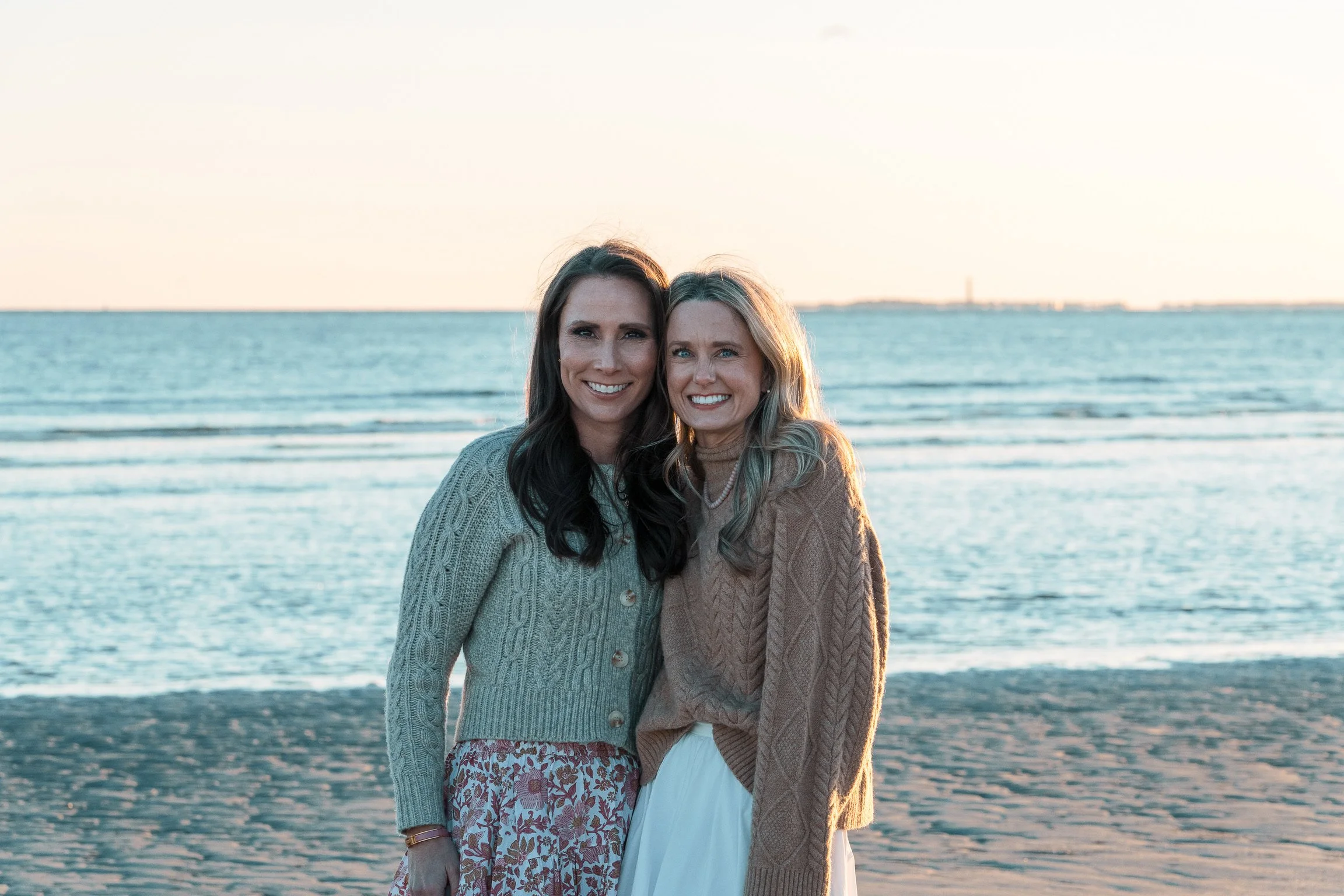
And if you’d like to follow along with what Rebecka and I genuinely love, we’ve created shop pages that bring all of our favorites into one place. A simple way to explore what we consistently reach for in our own homes, whether you’re looking for inspiration or ready to try something new.
follow us on shop my
follow us on ltk
More Inspiration
Our Charleston Home Organization Our Purely Organized Service GS Top 5 Pantries Meet Our Team More From Graceful Living