
Christina’s Kitchen Reveal: Love Where You’re Cooking From
When you’re feeding a family, the kitchen can start to feel like somewhere you’re always working and rarely enjoying. Even in a beautiful space, there are lunches to pack, groceries to put away, and dishes waiting for another turn. You want it to function. But you’d also like to enjoy being there.
That was the starting point for Christina’s kitchen. With lessons carried forward from two previous houses and a condo, our team created a layout around the way her family actually lives: what they use, who needs access, and how everything returns to its place.
The kitchen isn’t enormous, and much of its storage is high. Every accessible drawer and cabinet needed a thoughtful purpose. The kitchen also needed to work alongside the pantry and laundry room, with clear places for everyday routines and occasional entertaining.
What came from those decisions was more than an easier kitchen to maintain. Christina found herself wanting to cook in it.
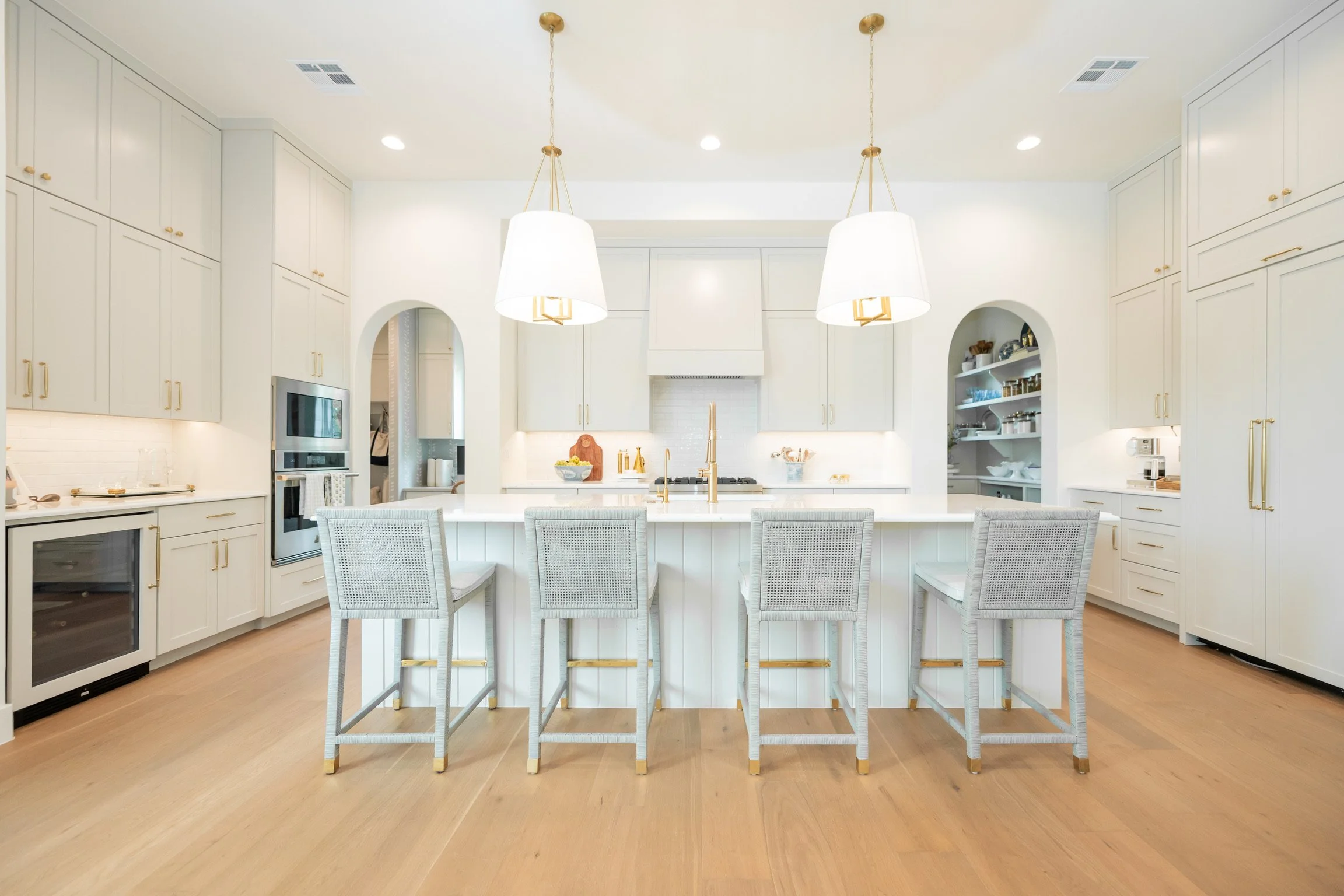
A Conversation With Christina: Learning to Enjoy the Everyday
What has surprised you most about how you use this kitchen?
I didn’t create this kitchen because I loved cooking. Having a kitchen that works so well has helped me learn to love cooking.
I’m learning to make gluten-free sourdough right now, so I love checking my starter and figuring out the next recipe to try. The girls love using their cookbook. I love seeing a pie on the counter or a cookbook left open because someone is making something. It feels like a place we all want to be. And because getting things out and putting them away is easy, using the kitchen doesn’t feel like such a commitment.
You’ve also talked about choosing a slower start to the day. What does that look like?
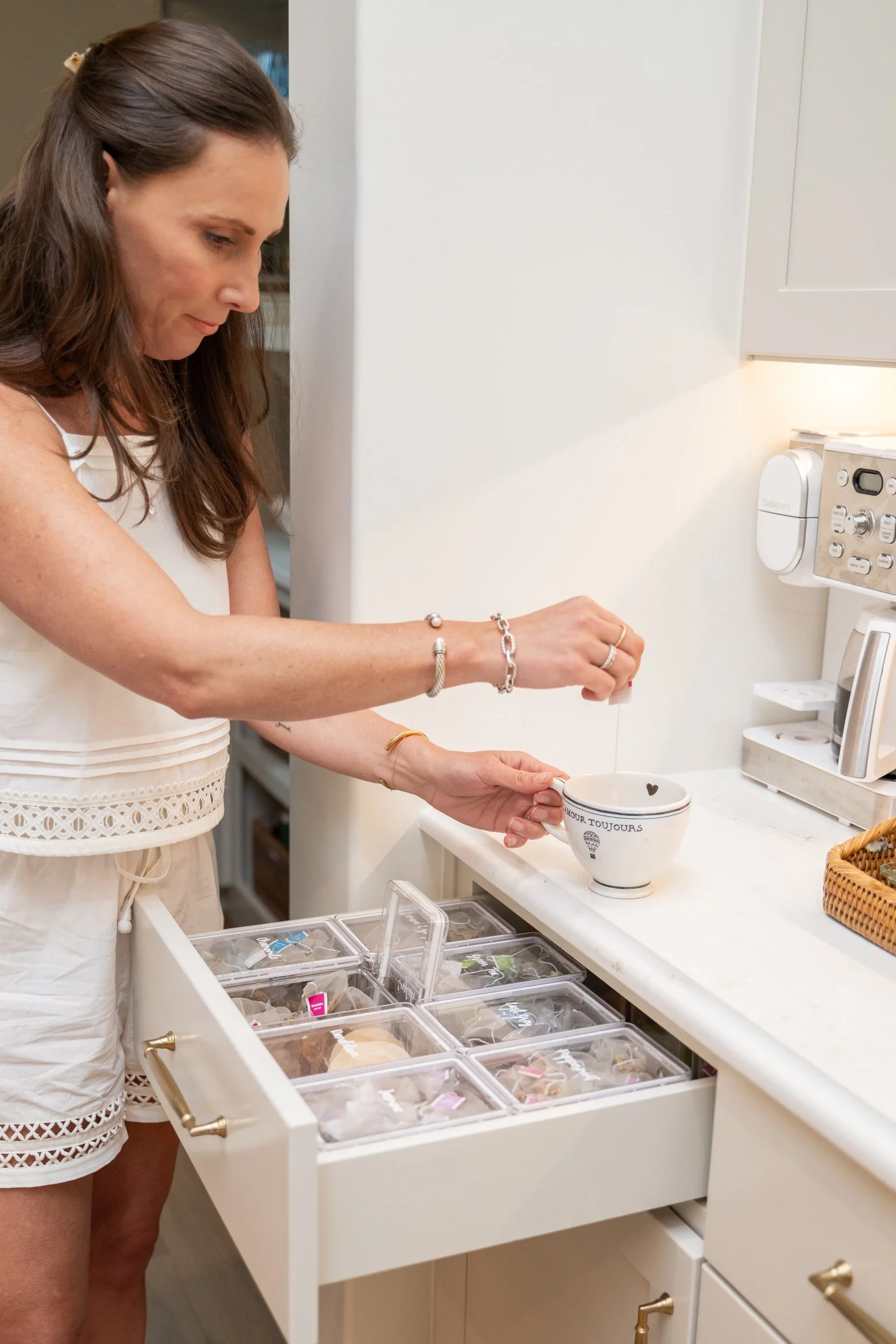
My days are full and move quickly, but I’m learning that the morning doesn’t have to begin at that same pace. I make tea with my kettle partly because it takes a little longer. I get a few minutes to wake up instead of rushing straight into everything. I check my starter. Sometimes I put on an apron before I start baking, which is funny because I never used to wear one. Now I enjoy that little transition into what I’m about to do.
And yes, I know “romanticizing your morning” can sound cliché. I probably would have rolled my eyes at it before. But I’m enjoying it, and I’m okay with that. I’m not pretending my whole day is leisurely. I’m finding a few moments where slowing down is possible and letting those moments be lovely.
How does that connect to what you’ve been learning during your recovery from mono?
It connects to this idea that I don’t have to optimize every minute. I’m learning to recognize the parts of my day where I can choose a different rhythm. Making tea is already part of my morning. Food needs to be prepared. There will be dishes. I can’t make every responsibility disappear, but I can make some of those moments more enjoyable.
Would I still rather be lying by the pool than doing dishes? Absolutely. But I’m grateful that washing fruit, making something with the girls, or trying another loaf of bread can feel good, too. I don’t need every ordinary moment to become something special. I just don’t want to rush past all of them.
I wrote more about what this season is teaching me here.
Did you feel this way about the kitchen in your temporary condo, too?
Absolutely. Once I learned how much it mattered to me to enjoy my spaces, I wanted to carry that into wherever we were living, even somewhere temporary. Meals were still going to be cooked. The girls still needed to be able to help. I wanted our family and anyone spending time with us to feel welcome and loved, and the kitchen was part of how I could offer that.
So we took care with it. We thought about where things belonged, how the girls could participate, and what would make it somewhere we enjoyed being. We weren’t waiting for our next house to make those everyday experiences matter. That’s something I’ve carried with me: I don’t need every feature of my ideal kitchen to make the kitchen I have feel welcoming. I want to enjoy the life we’re living there now. This is one of my favorite easy recipes that I made in the condo all the time!
The Systems That Make Room for Enjoyment
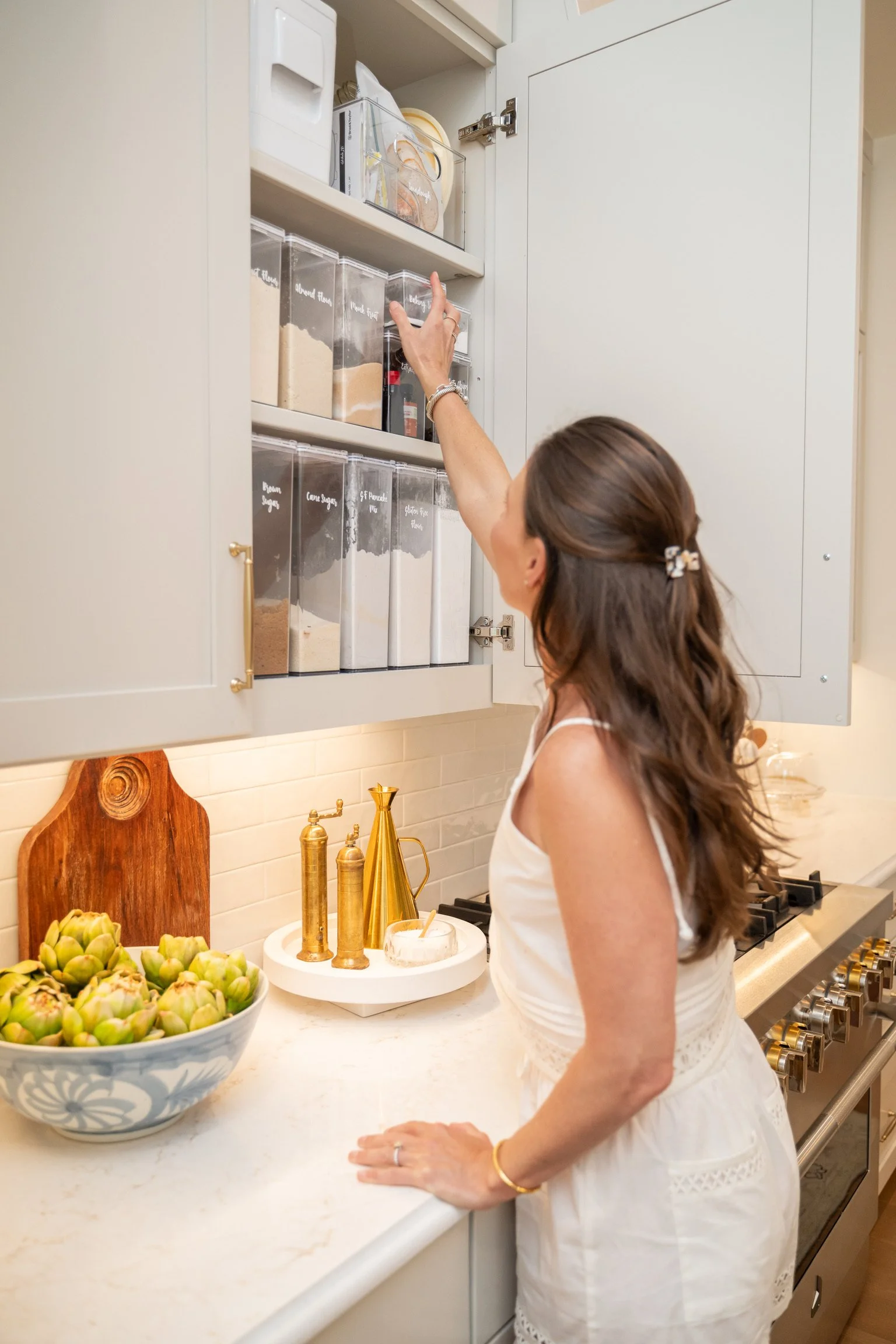
The size of a kitchen influences the choices we make, but it doesn’t determine whether the space succeeds. The more useful questions are whether it supports the people using it, makes everyday tasks manageable, and feels welcoming to the household. Your version may not involve bread or a kettle. It might be getting lunch packed without searching five cabinets, or knowing your children can help prepare a meal and put things away.
In Christina’s kitchen, editing created breathing room, zones supported each person’s routines, and carefully fitted products made things easier to reach and return. Those principles can be adapted to a temporary condo or a long-term family home.
Here’s how to apply that thinking in your own space.
Make Room for What You Love
One of the most common things we see in kitchens is simply too much being asked of the available storage. A drawer holds the utensils used every night alongside gadgets that haven’t been touched in years. A cabinet has everyday dishes tucked behind serving pieces. Putting something away requires rearranging what is already there. If this feels familiar, it doesn’t mean you’re bad at maintaining your kitchen. It may mean the space is holding more than it can comfortably support.
Before buying another organizer, or spending another year saying, “We really should renovate”, try experiencing one small part of your kitchen with less in it. Empty a drawer or cabinet. Put back the things you actually use and want in that space. Set the items you’re unsure about in a designated temporary spot, and live with the lighter arrangement before making your final decisions. You don’t have to decide the fate of every item immediately. Give yourself a chance to notice the difference. Can you see what you have? Reach for it easily? Put it away without pushing something else aside?
It often becomes easier to let go once you’ve experienced how much you enjoy the space with your useful, loved things in it. Keep genuinely seasonal pieces in mind, of course; not everything worthwhile is used every week. Editing isn’t about achieving the smallest possible collection. It’s about giving the things you enjoy enough room to be used. And if a renovation really is on your calendar, bring us into the conversation early. Our Building Luxury service helps you consider how your kitchen will function while you’re planning how it will look.
Create Zones Around Routines, Not Just Categories
Grouping similar things is a helpful beginning. But the next questions are what make a kitchen work for a particular family: Who uses this? What are they doing when they reach for it? What else do they need at the same time?
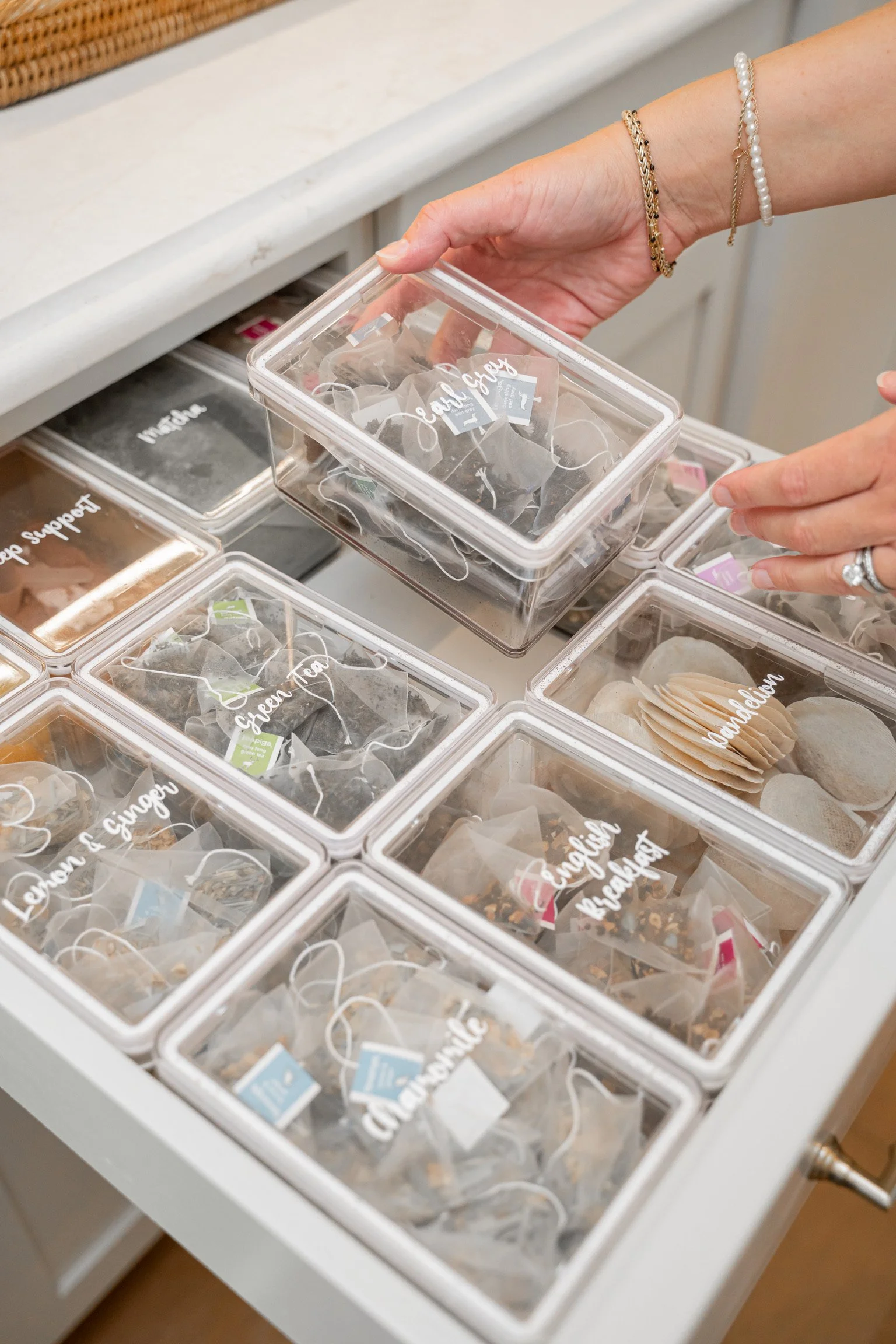
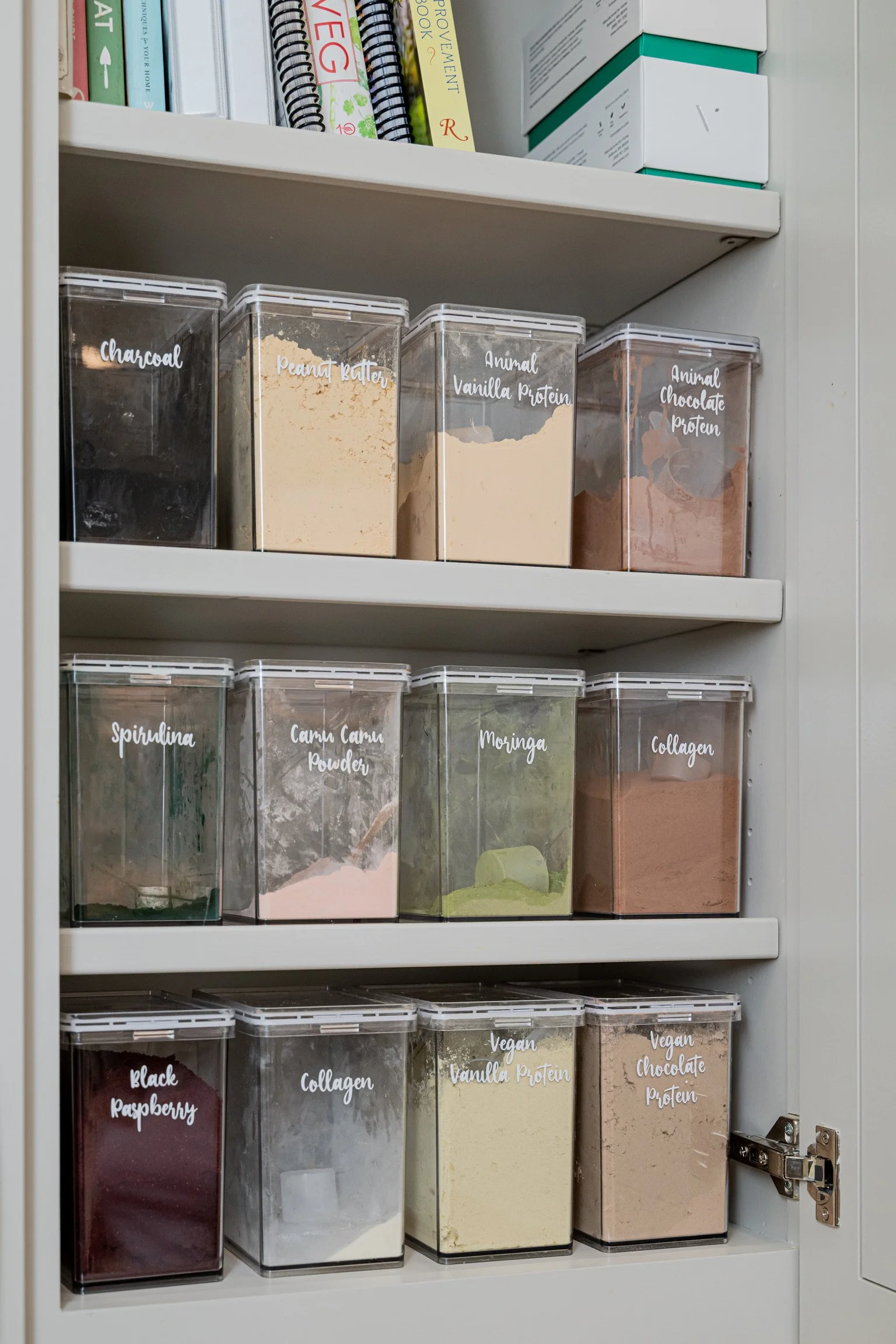
Christina’s kitchen has places for coffee and supplements, the girls’ baking, lunches and school needs, everyday dishes, food storage, cooking, and entertaining. Those zones don’t all follow an identical formula. They follow the family.
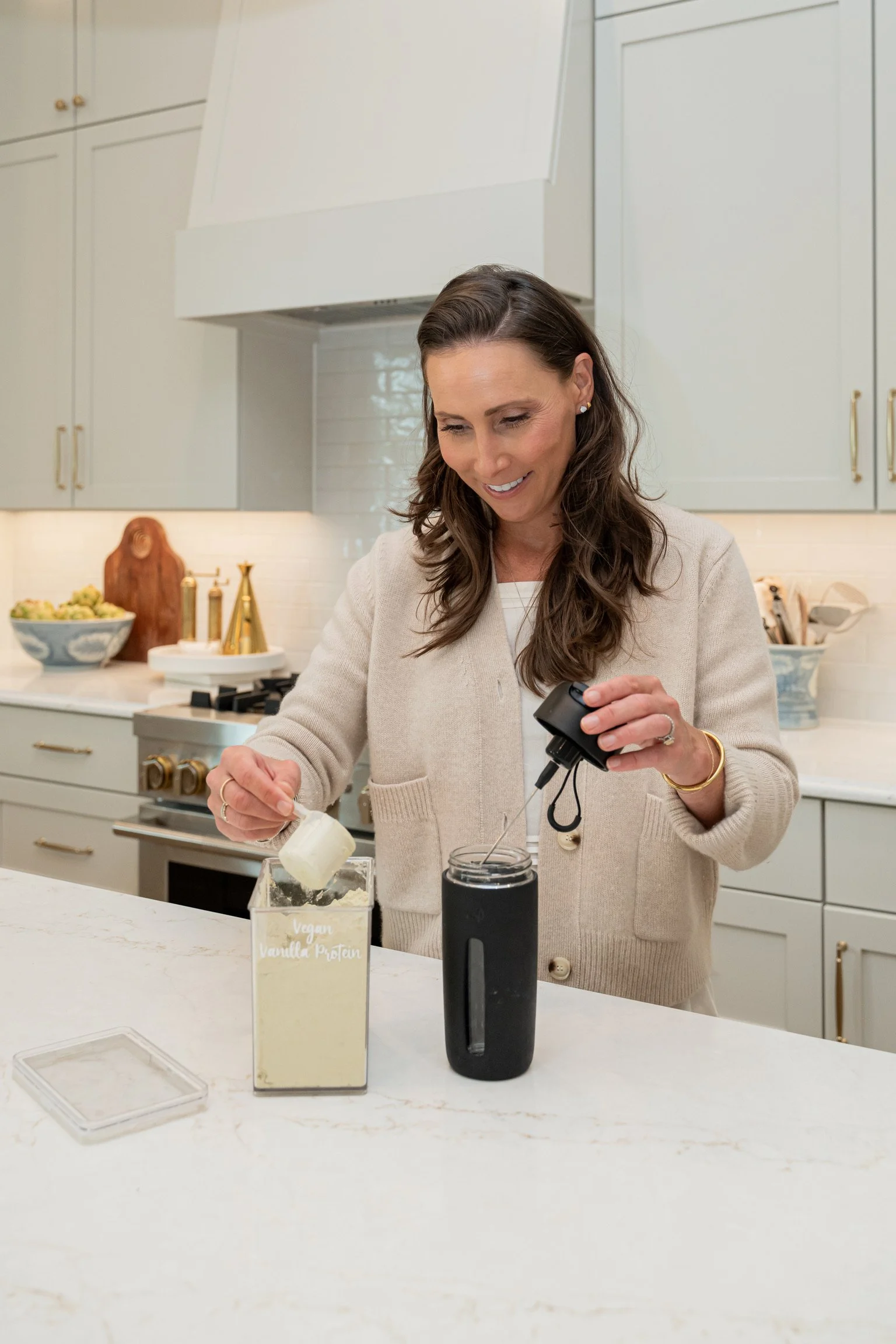
Coffee, supplements, and a routine that makes sense
Christina’s coffee and supplements have a home in the kitchen. Graeme keeps his supplements in the bathroom because that is where the routine works best for him. Both arrangements make sense. This is an important part of the Graceful Spaces approach: we aren’t asking everyone in a household to fit a standard layout. We’re learning where a system will actually support each person.
Sometimes that means keeping similar items in different rooms. A category can be beautifully consolidated and still be inconvenient for the people using it.
Lunch supplies and daily needs, together
For the girls, lunch supplies and daily needs, including their vitamins, live in the same area. Where they make a sandwich is also where they grab their vitamins. The placement connects steps that already happen together, making it easier not to miss part of their routine. When planning your own kitchen, ask: What do we do together that we currently store apart?
Your answer may reveal a more useful arrangement than grouping by category alone. For more ways to carry this approach through the school day, explore our seven zones that support family routines, including lunch prep, breakfast, snacks, and the daily transition home.
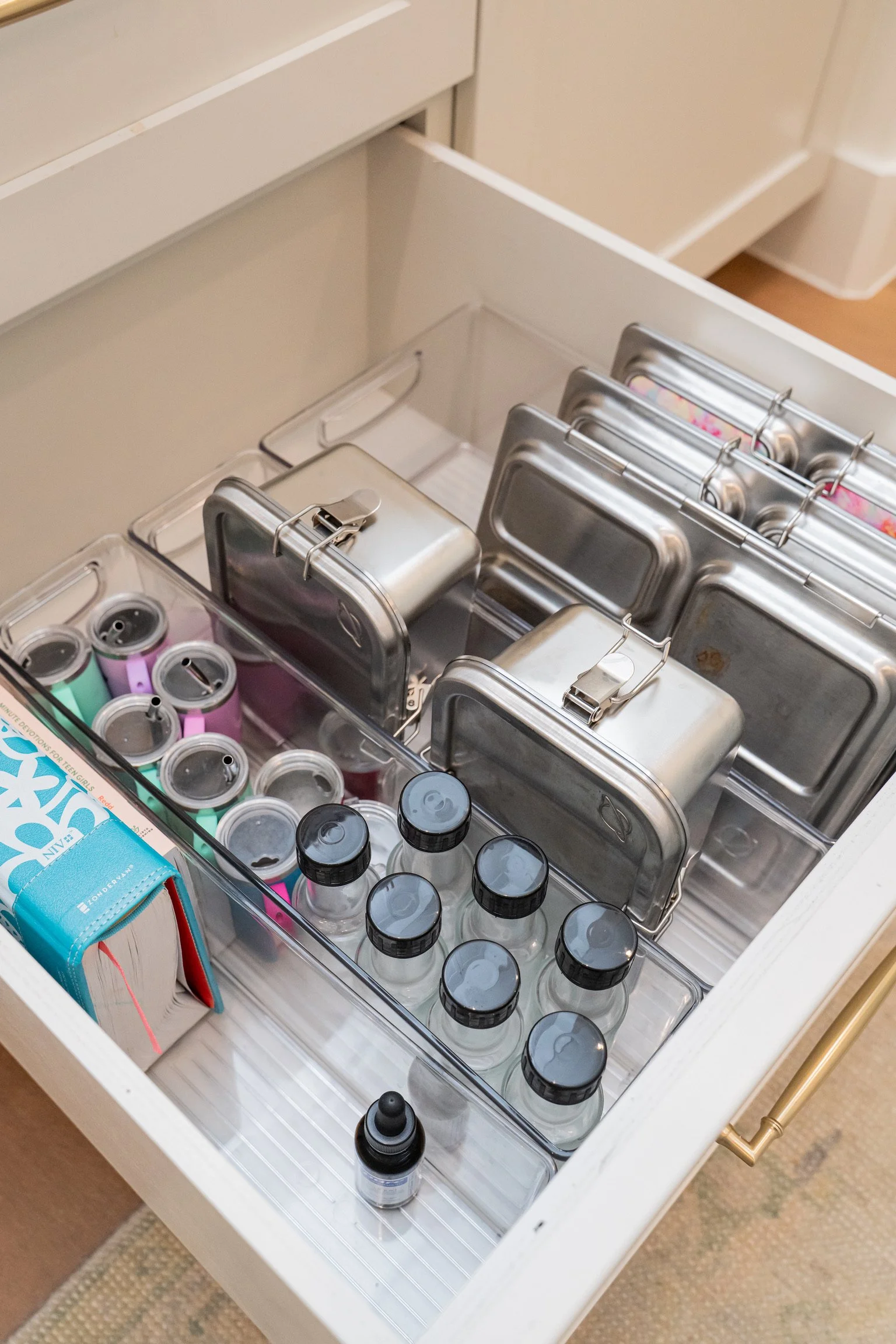
Baking the girls can take ownership of
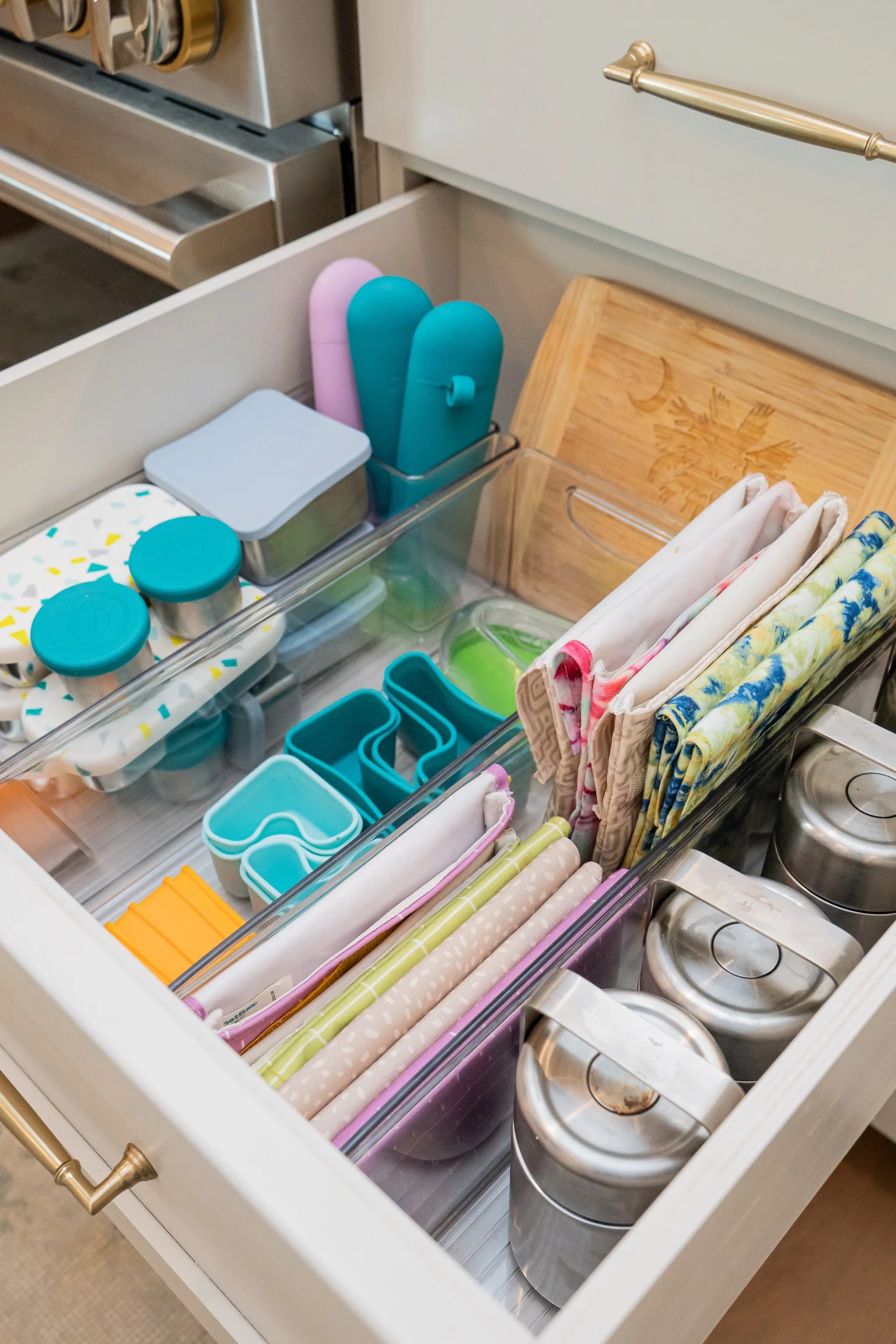
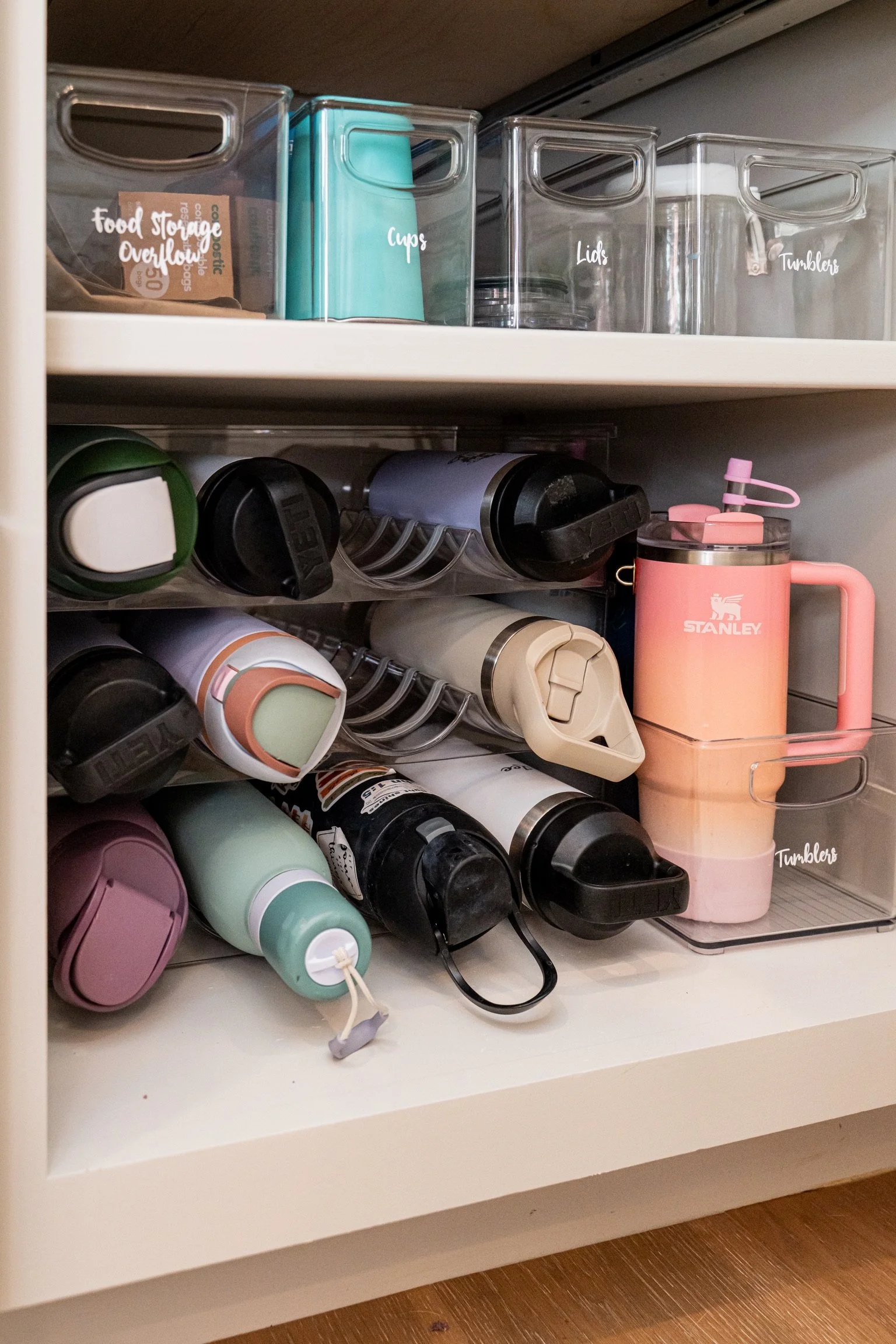
The girls have their own baking supplies in labeled, easy-to-use canisters. Kitchen gadgets live alongside them because the girls are the ones who enjoy those tools most. Christina’s baking supplies live in the butler’s pantry.
Giving the girls a setup that reflects how they use the kitchen makes participation easier. They can identify their supplies, find the tools they enjoy, and understand where everything belongs when they’re finished. The labels have a practical job: they help communicate the system without someone needing to explain it every time.
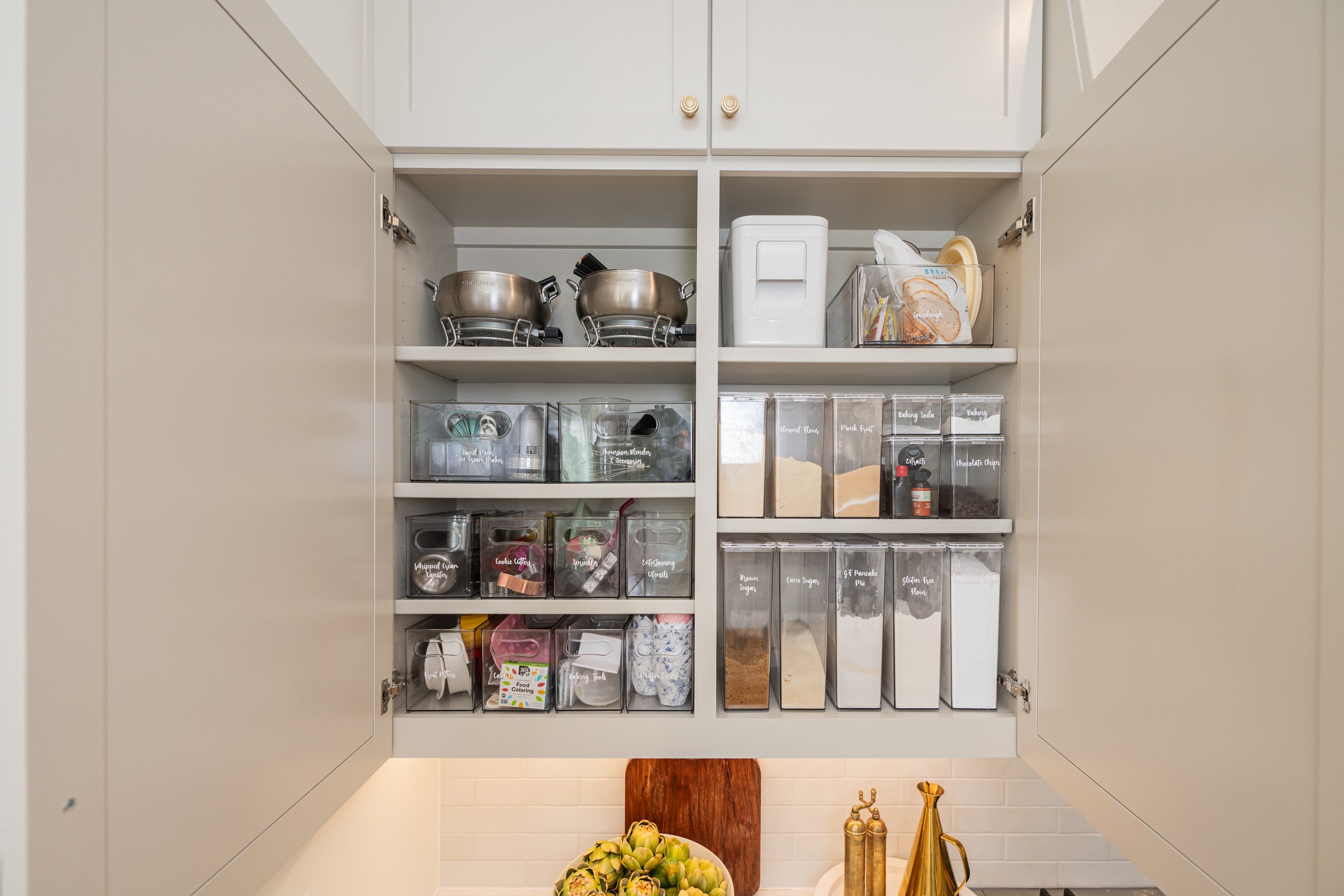
The kitchen is only part of the picture. You can continue into Christina’s pantry to see how a working pantry supports baking, everyday staples, and entertaining while remaining a visible, beautiful part of the home.
Give Everyday Things the Easiest Access
With so much high storage, deciding what belongs within reach matters. In Christina’s kitchen, upper cabinets hold seasonal pieces: party supplies, party vases, and holiday items. Those things have a purpose, but they don’t need the same access as something the family uses every morning.
The team also added custom vinyl labels, made with a Cricut, at the top of the lower cabinet doors to identify what lives in the cabinets above. The family can check where something is stored without first opening a high cabinet.
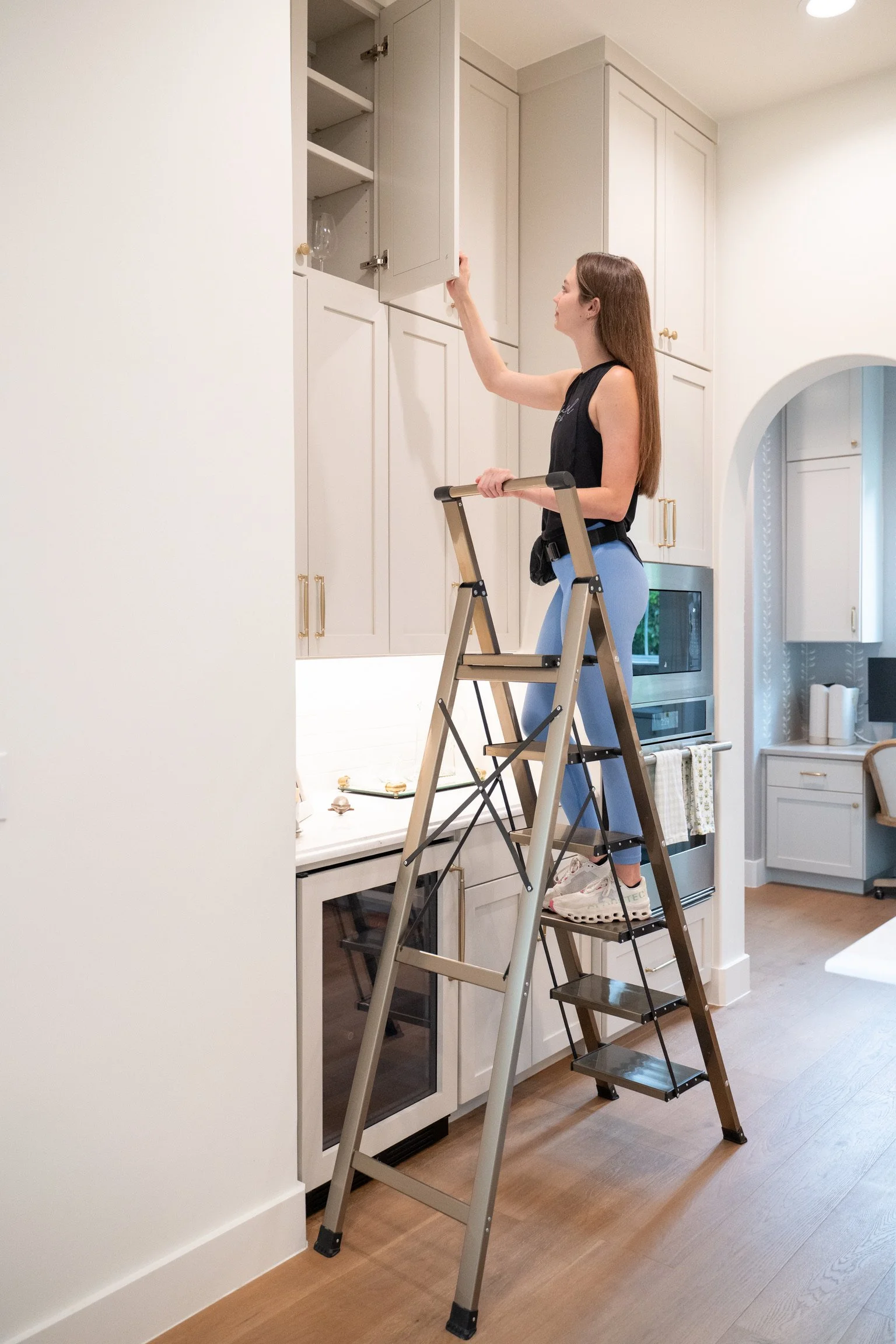
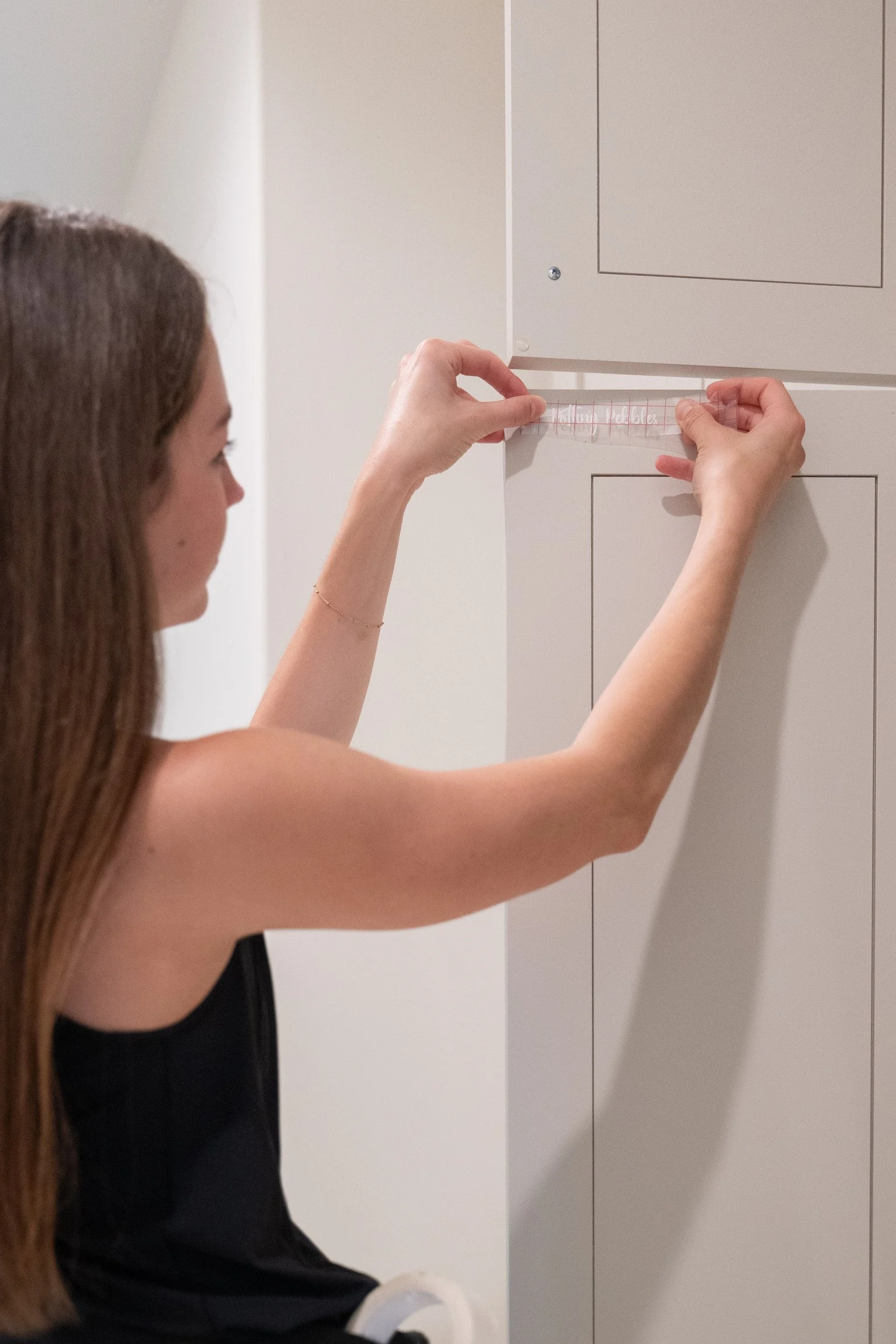
A tall ladder lives in the laundry room for access when needed. Even the tool that makes the upper cabinets usable has a planned place to return to. You can see where it hangs and how the household cleaning supplies are organized in Christina’s laundry room tour.
Deep cabinets need equally thoughtful planning. Their value isn’t just how much they hold; it’s whether you can comfortably get to what is inside. In this kitchen, the goal is to retrieve something without first removing another item. Putting it back should be just as straightforward.
One product Christina would put near the top of the list is the YouCopia pan organizer. Instead of piling pieces on top of one another, it keeps them separate so the one she needs is within reach with one hand. Depending on the model, dimensions, and pieces being stored, this kind of arrangement can work in a drawer, cabinet, or pantry. If stacked pans are the thing you wrestle with every day, this is one small change worth considering.
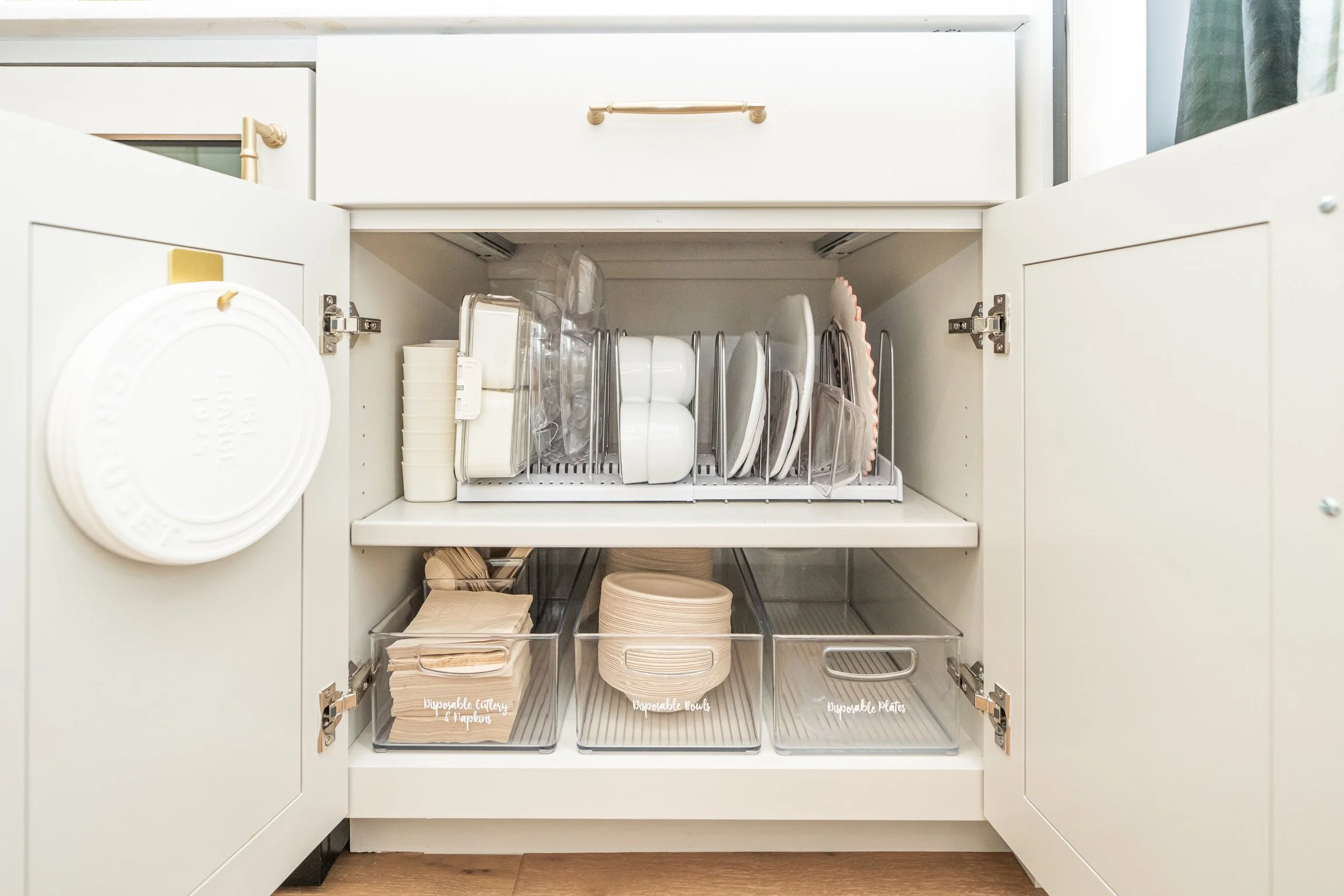
Before selecting a deep-cabinet organizer, consider the full movement: reaching in, taking the item out, using it, and returning it. If the last step requires rearranging the cabinet, the setup needs another look.
Let the Useful Things Be Beautiful, and Make Sure They Fit
Christina loves beautiful things. She also uses them. That combination matters here. The kitchen was designed to support full, everyday use while still feeling connected to the rest of the home.
One update was changing the drawer organizers from light bamboo to a darker finish that flows with the new decor. It’s a detail inside a drawer, but one the family sees and uses daily. Getting there involved more than choosing a favorite collection. Christina initially planned to use inserts from a brand she already loved, whose products had worked beautifully in the pantry. But the drawer inserts didn’t fit this kitchen in the way it needed.
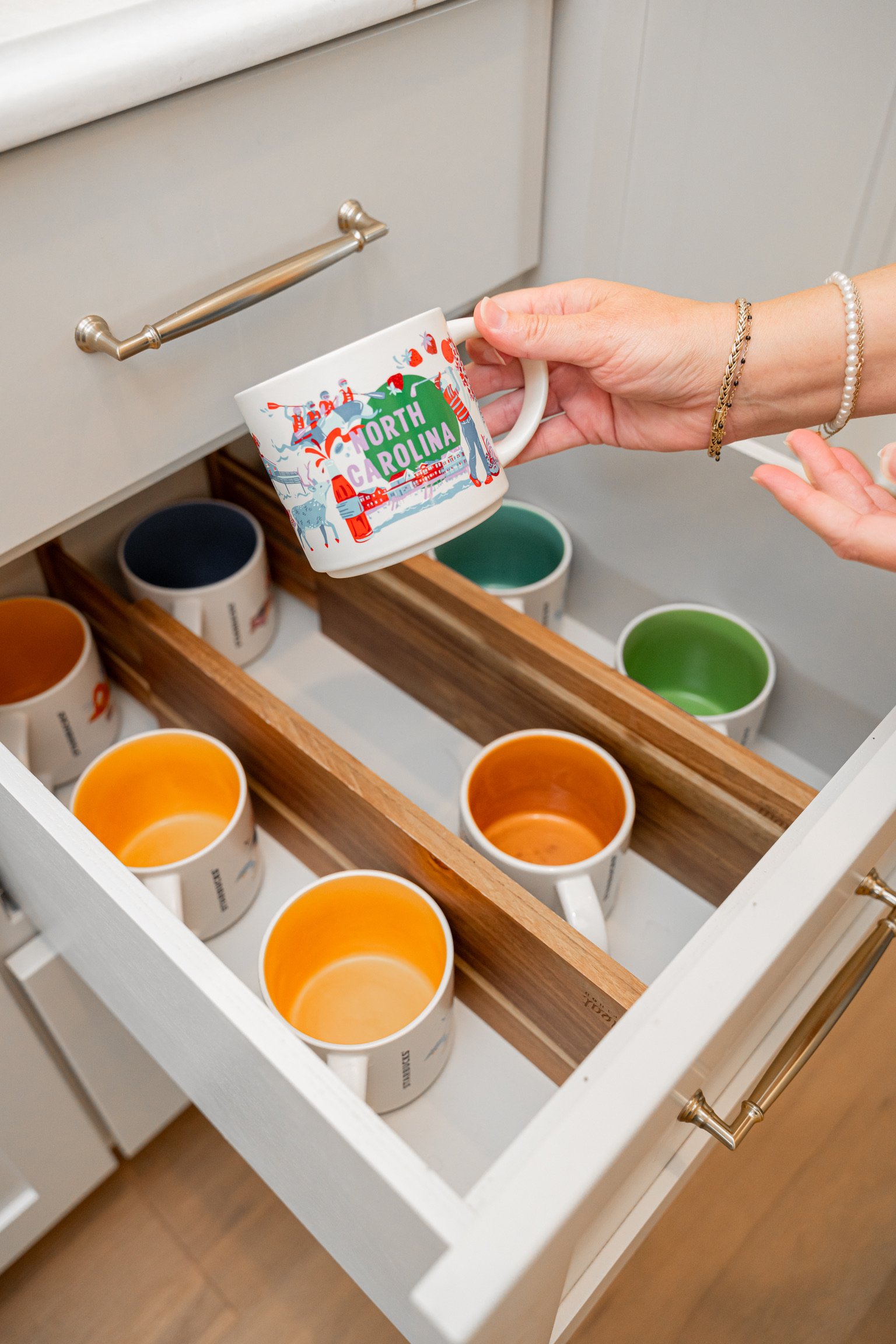
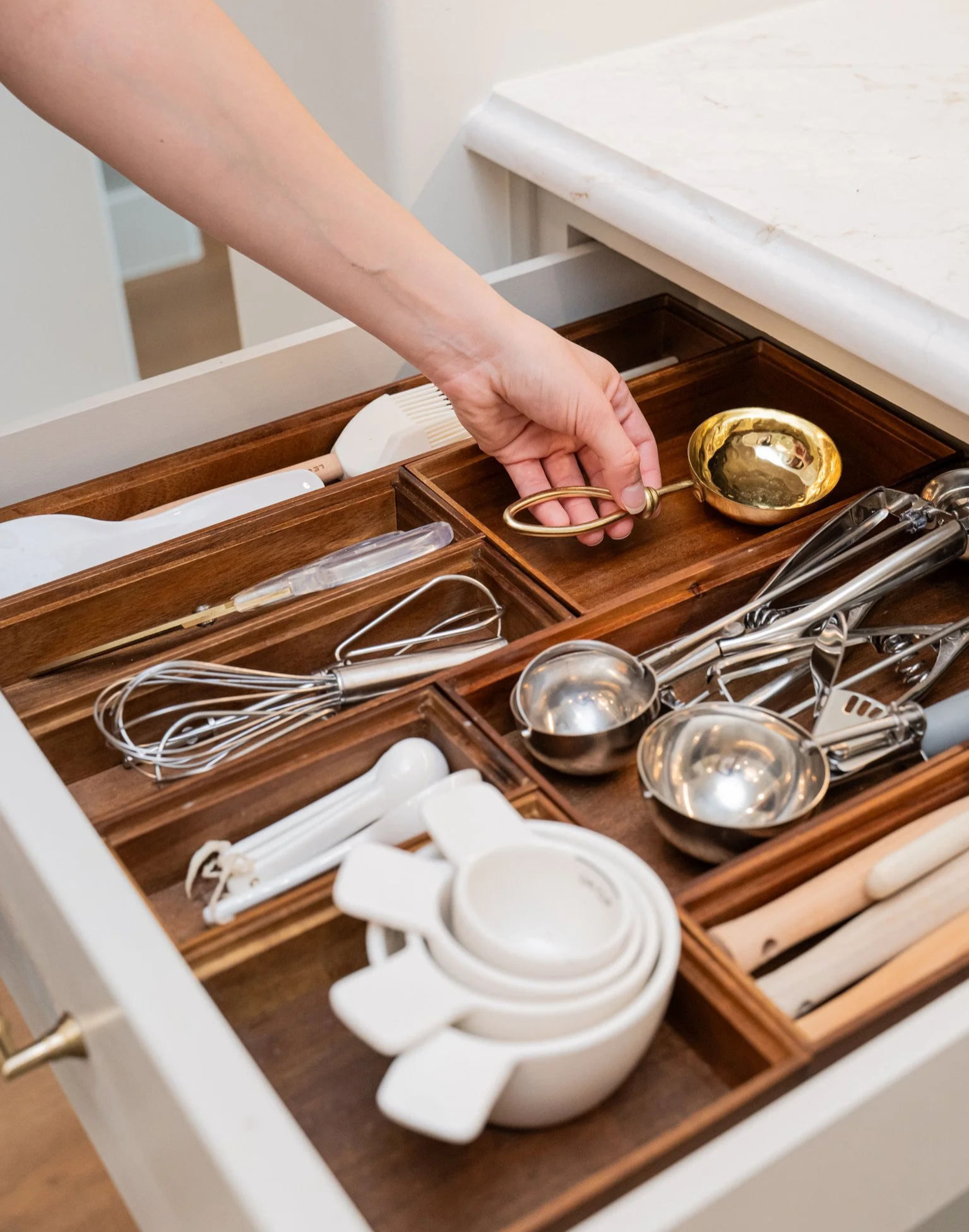
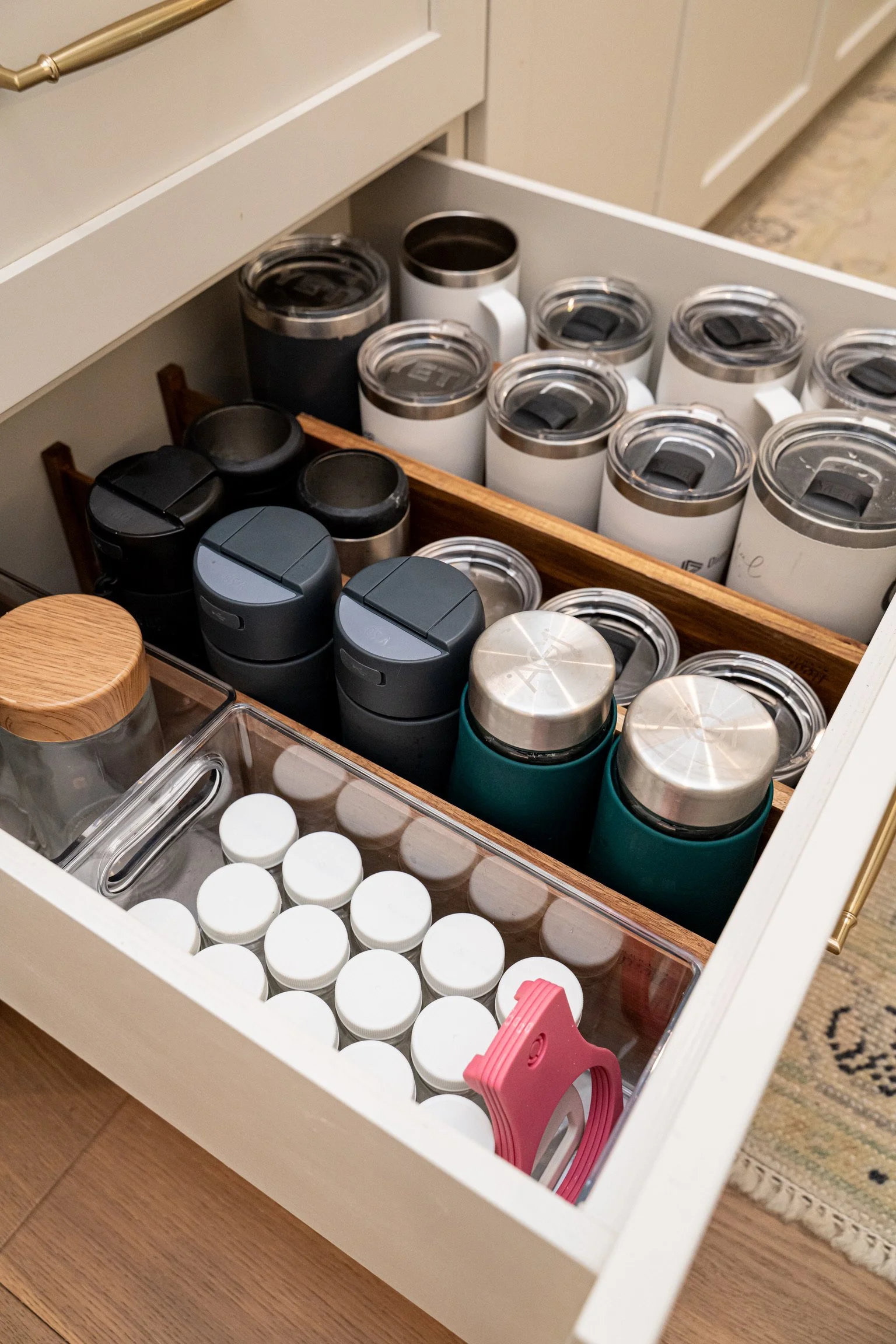
A product can be beautiful, well made, and successful in one space without being the right choice for another.
Drawer organizers aren’t interchangeable. Their dimensions, compartment sizes, and arrangement determine what they can comfortably hold, and whether they make good use of your particular drawer. Measure the usable interior before ordering, then consider the contents. Will the utensils fit inside the compartments? Will the arrangement leave awkward gaps? Can everything be lifted out and returned easily?
You don’t need to replace an organizer that already works. But when you are choosing something new, both fit and finish deserve consideration. If you’d love someone to work through those choices with you, our concierge offering through ShopMy provides personalized product recommendations for your space.
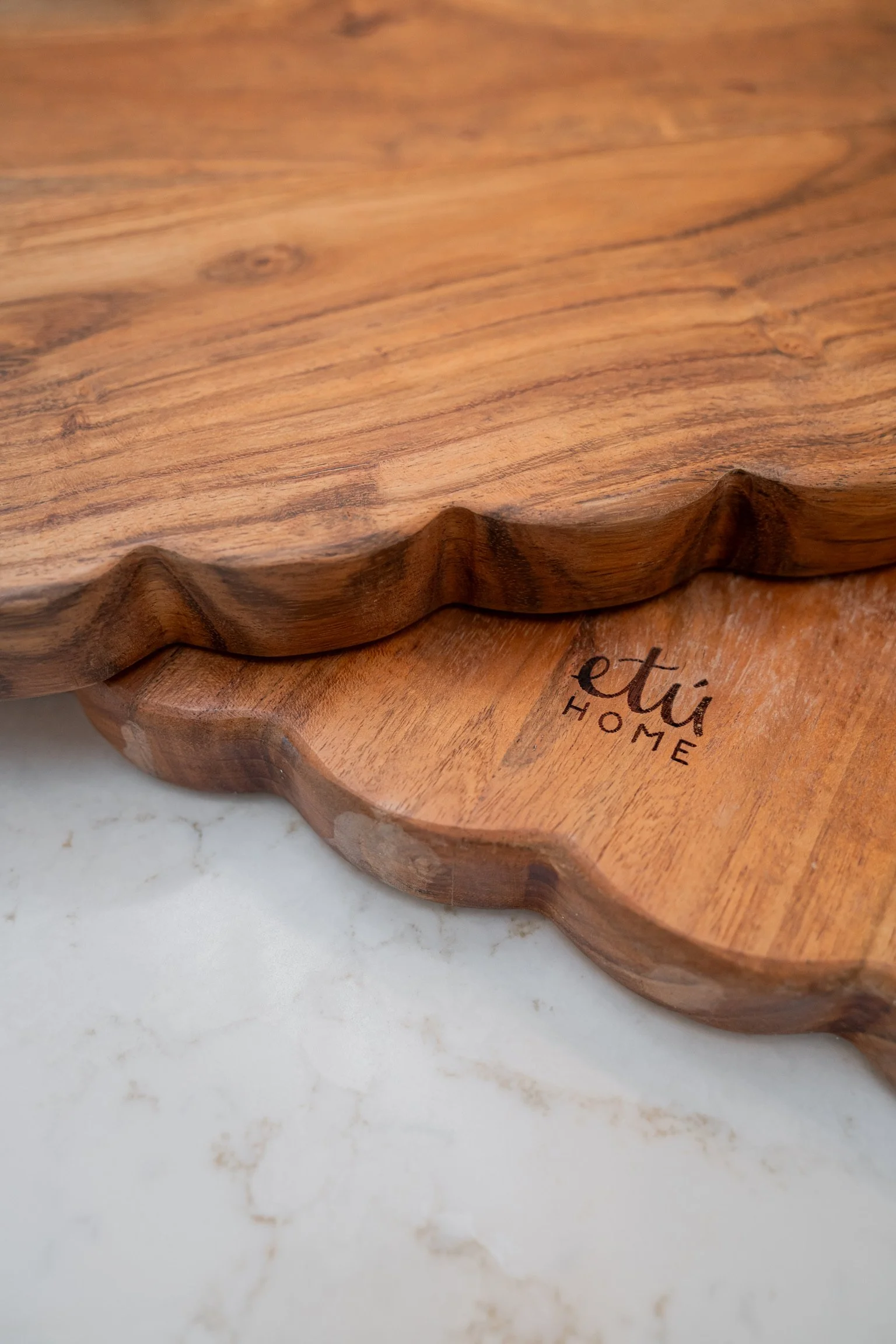
For more everyday pieces chosen with beauty and usefulness in mind, Christina shares her home finds worth buying again, including scoops and cutting boards that earn their place through regular use.
What Earns a Spot on the Counter
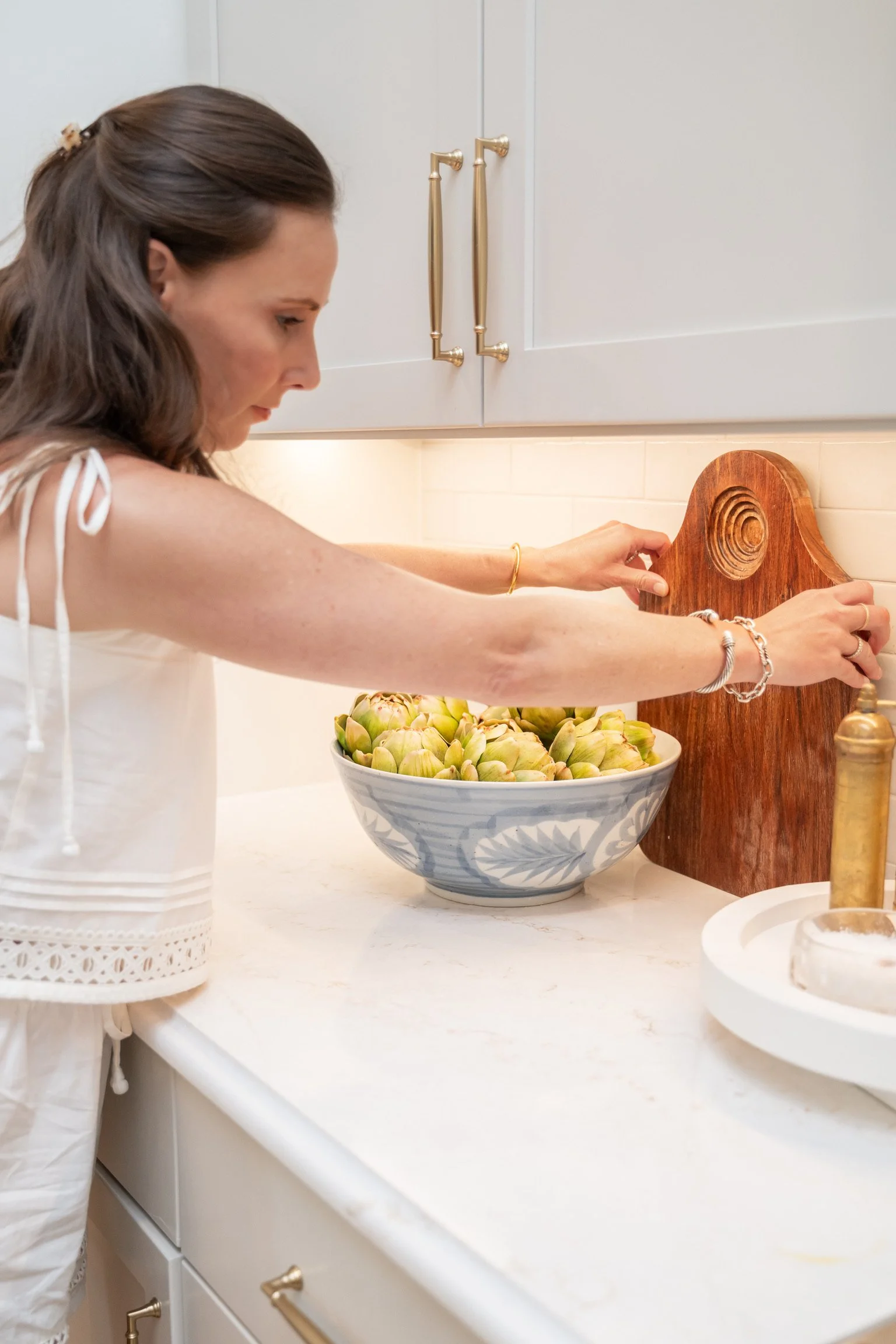
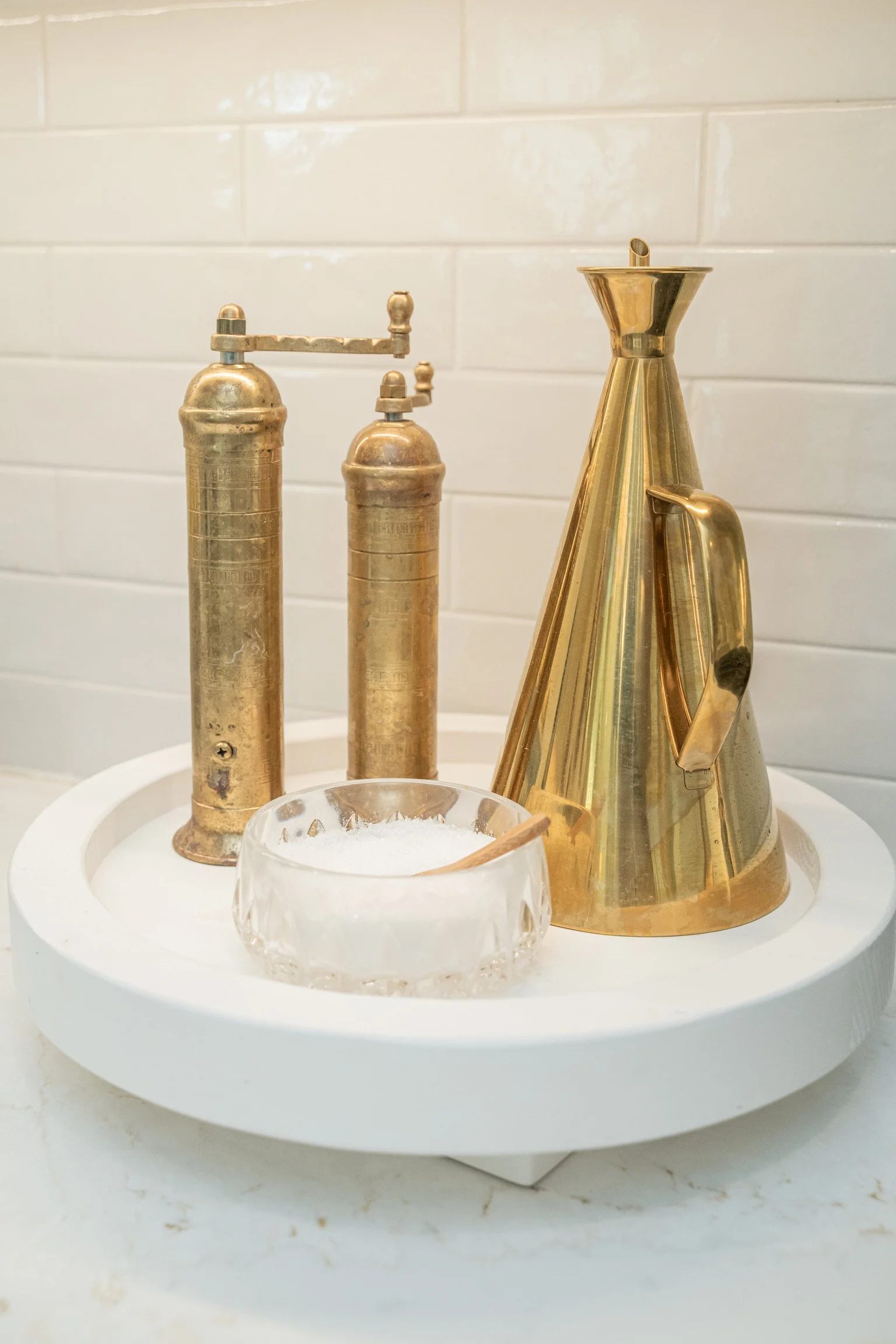
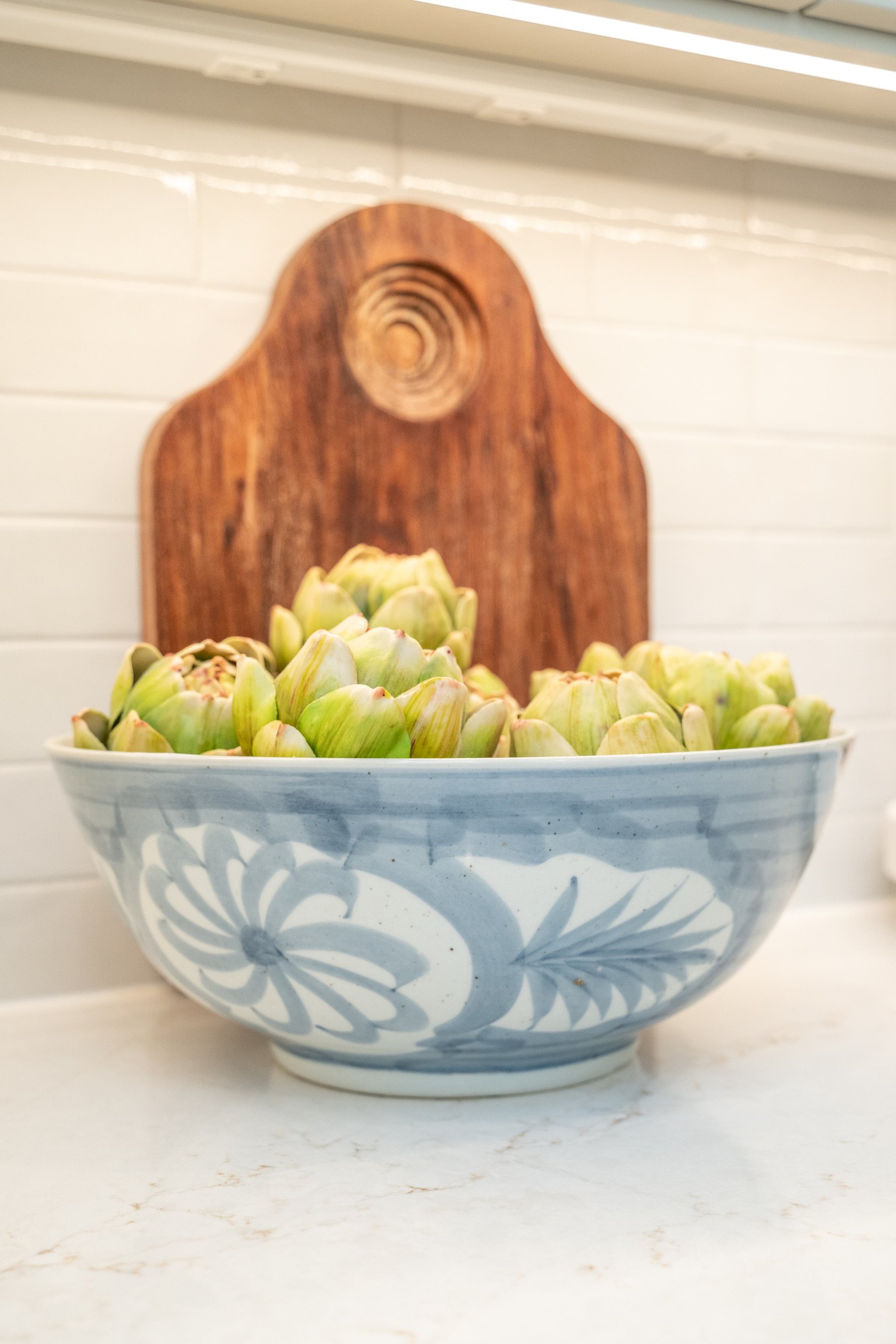
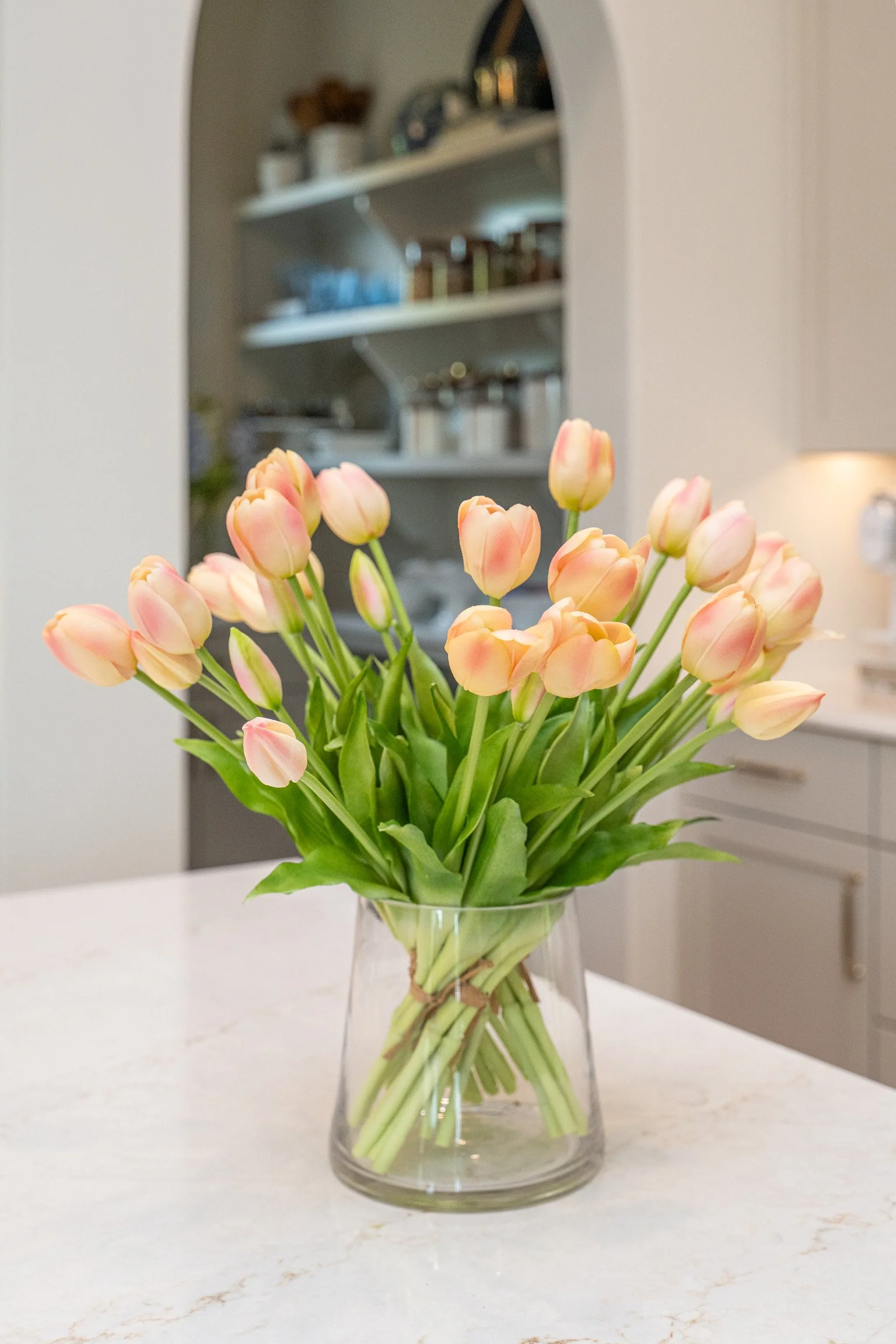
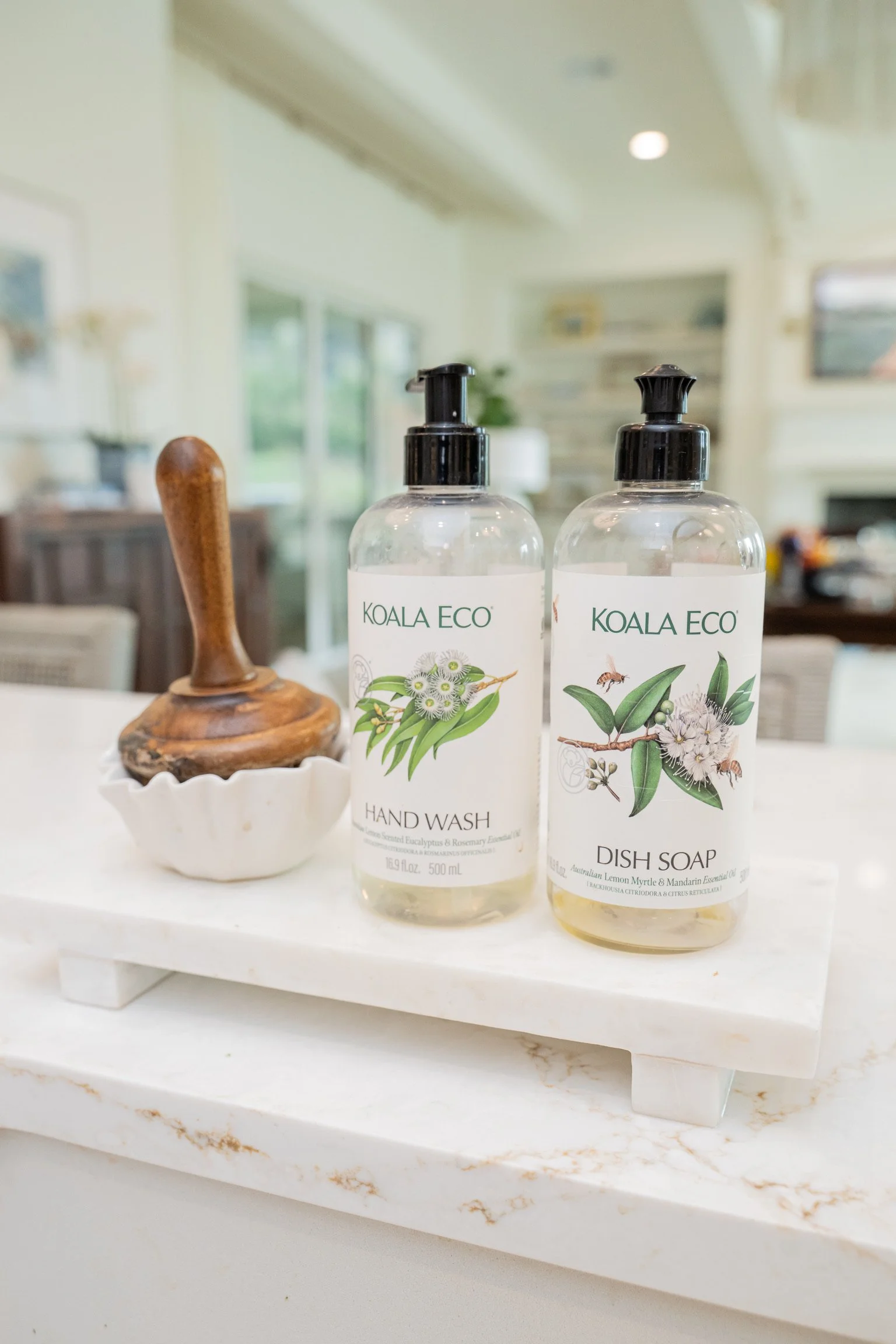
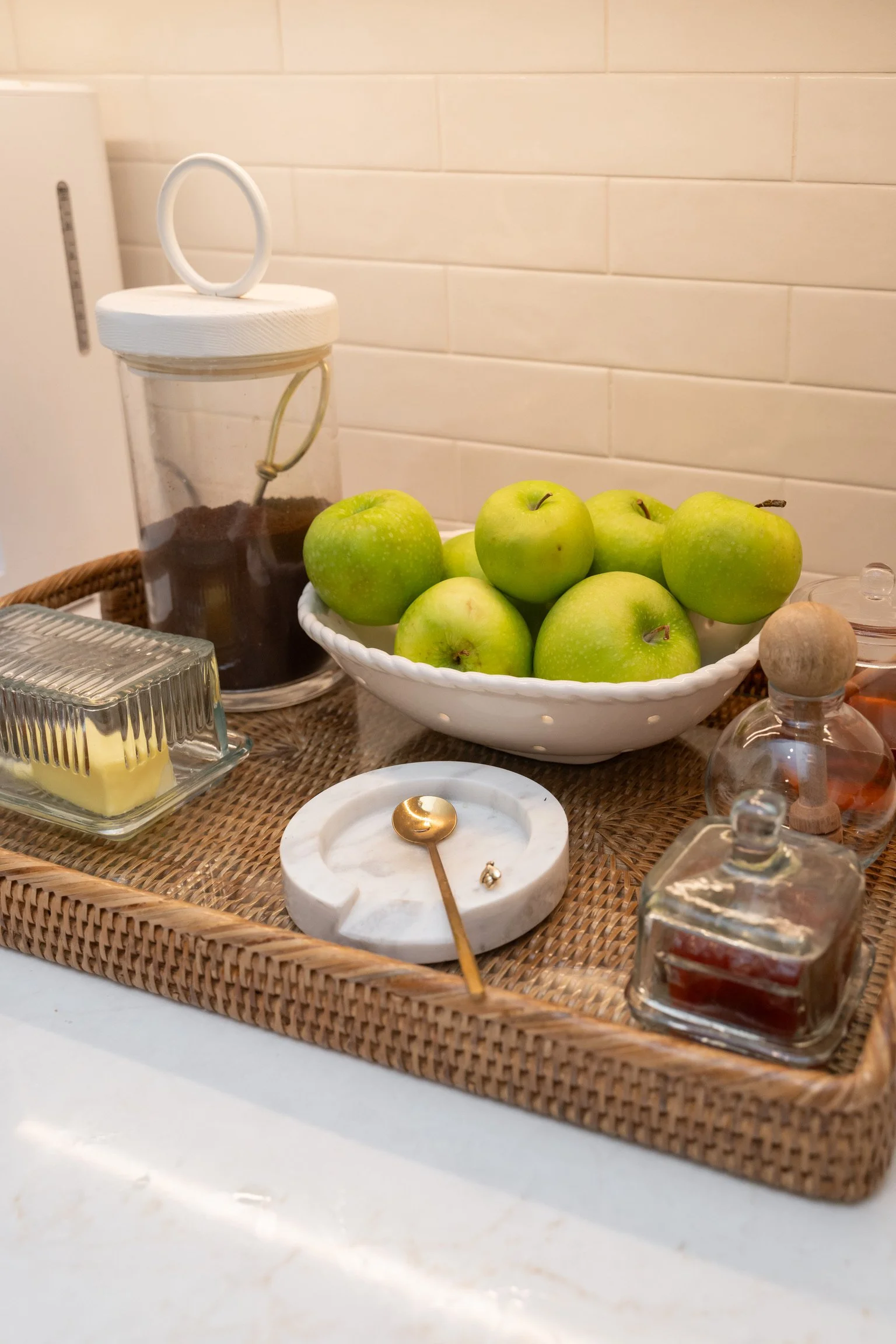
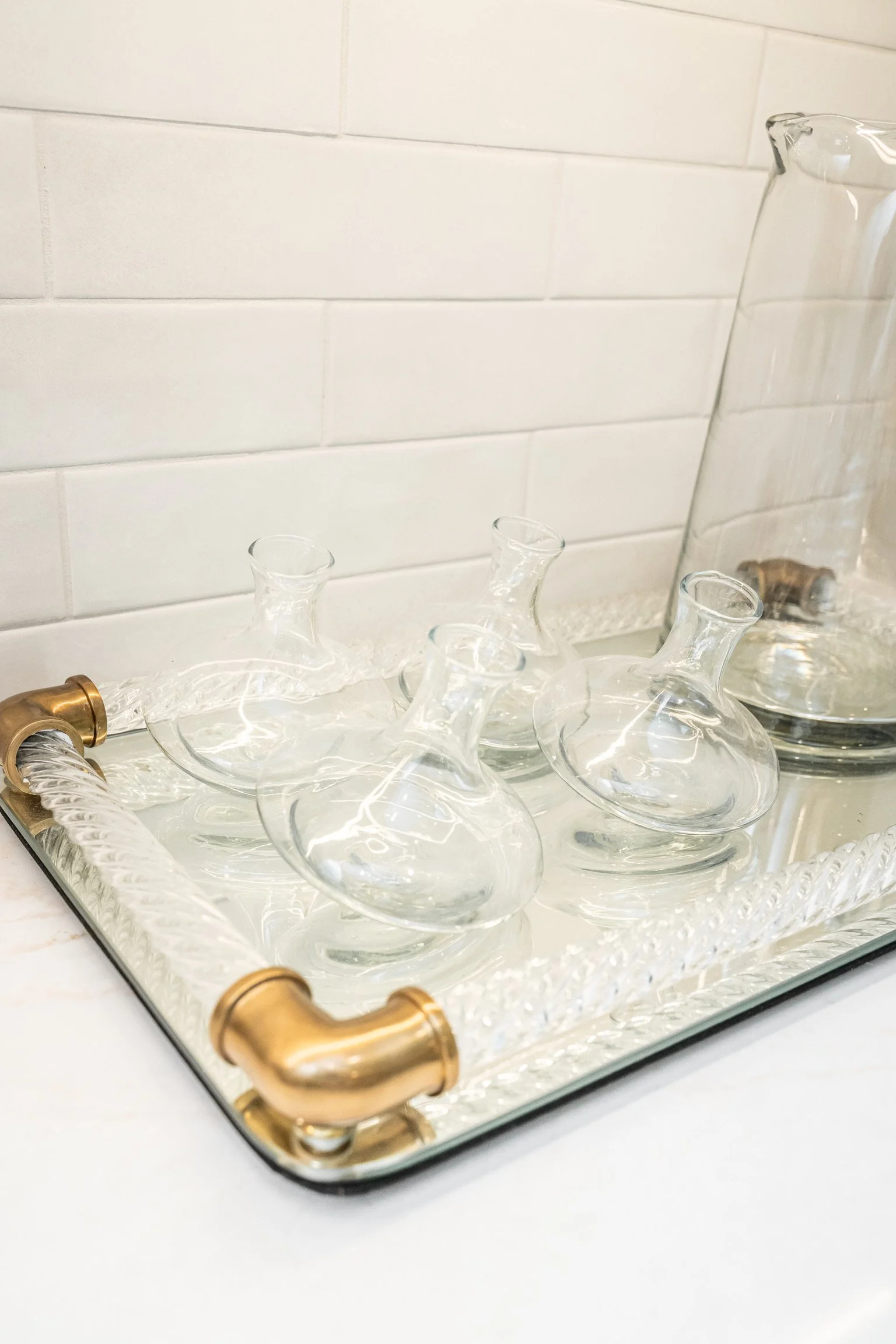
I love a beautiful kitchen, but nothing sits on my counter just to be looked at. The things I leave out are the things we actually reach for, and that one rule is what keeps a styled counter from quietly becoming clutter. If it's out, it's earning its place.
Under the Sink: A Simple Framework, Adapted to Your Space
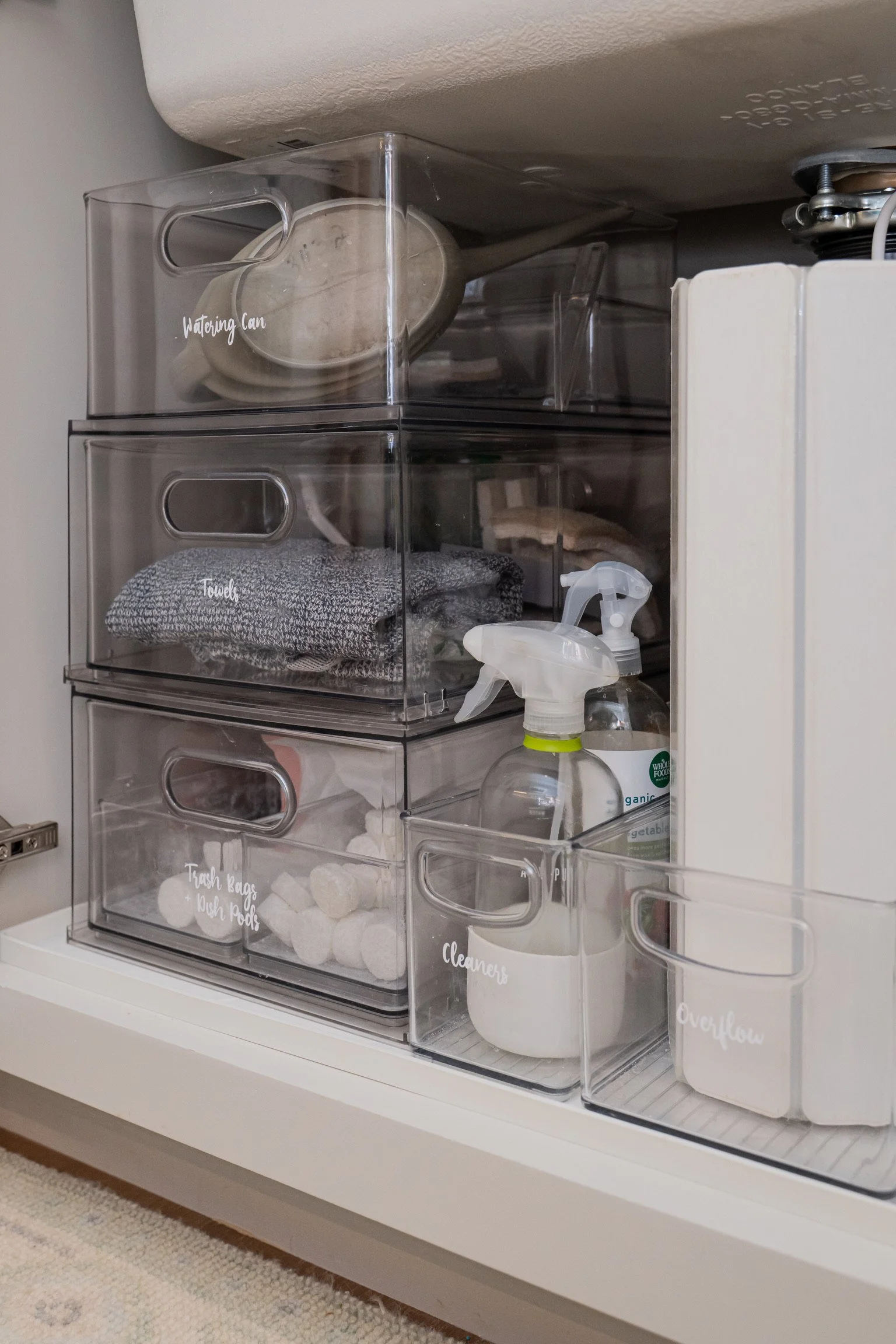
Under-sink storage can be an approachable place to begin. The categories are often familiar, and a few well-fitted solutions can make a noticeable difference. But the layout has to account for what is actually inside the cabinet.
Christina’s reverse-osmosis water system occupies a substantial portion of the available space. It is a family priority, so the organizing works around it. That is part of personalizing a home: understanding what matters to the household before deciding how the storage should function. When clients have clean-living priorities, those choices belong in the planning conversation, too. Our Purely Organized service offers a way to bring those priorities into the organizing process.
Keep the cabinet’s job specific
This cabinet holds cleaning supplies that apply to the kitchen. Other household cleaning supplies live in the laundry room. That boundary helps prevent the kitchen sink cabinet from becoming responsible for every cleaning product in the house. Before choosing containers, decide what this particular cabinet needs to support, and what has a better home elsewhere.
Use drawers and long organizers where they fit
Stackable drawers can create defined places for sponges, dish towels, and trash bags. Dish pods also need a designated, safely stored place; keep them in their original packaging and follow the label’s storage directions. Long organizers help group kitchen cleaning supplies within the available footprint.
The key is measuring around the plumbing and water system, not just measuring the cabinet itself. Leave access for anything that needs servicing, and check that drawers can open comfortably.
Test cabinet-door storage before attaching it
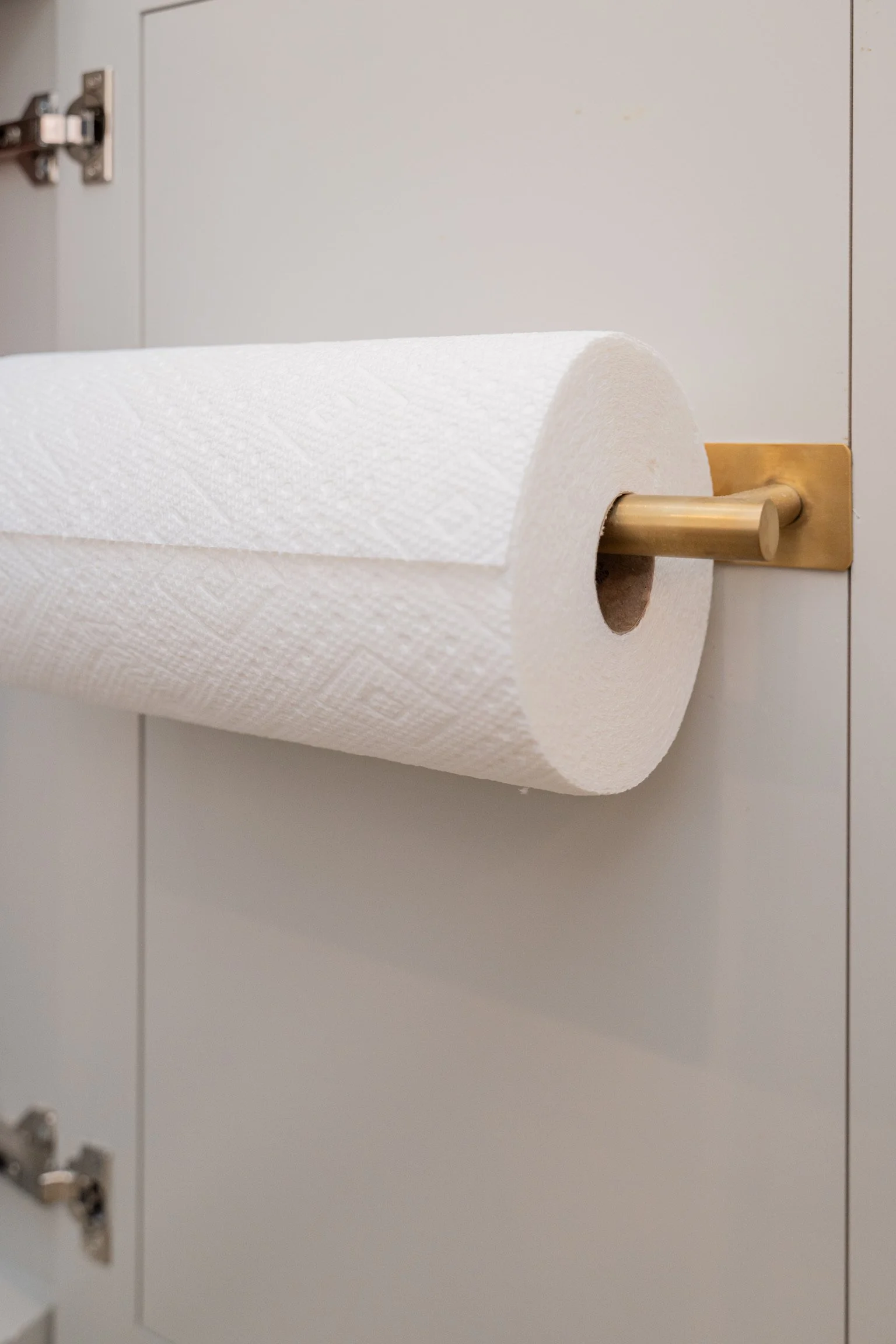
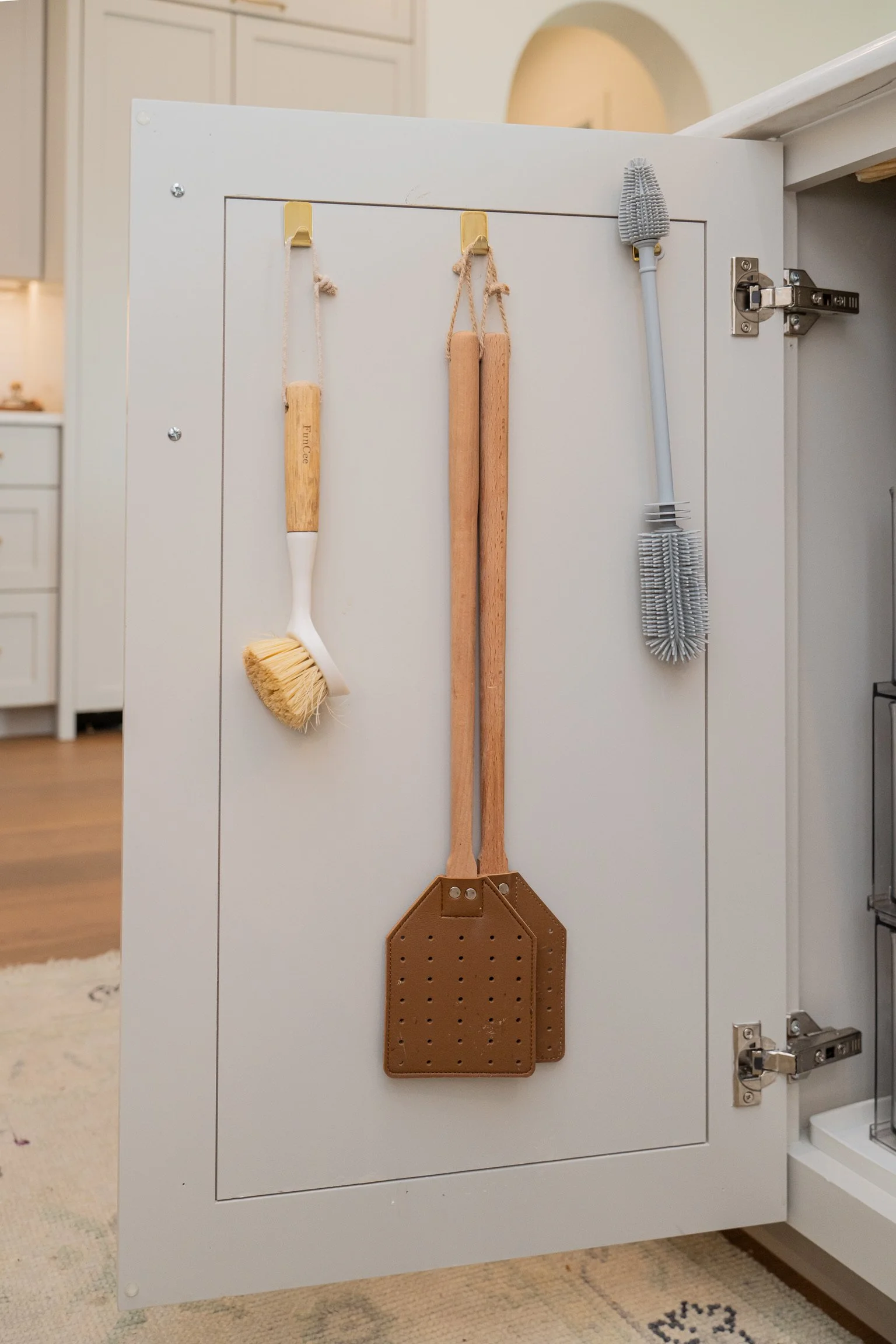
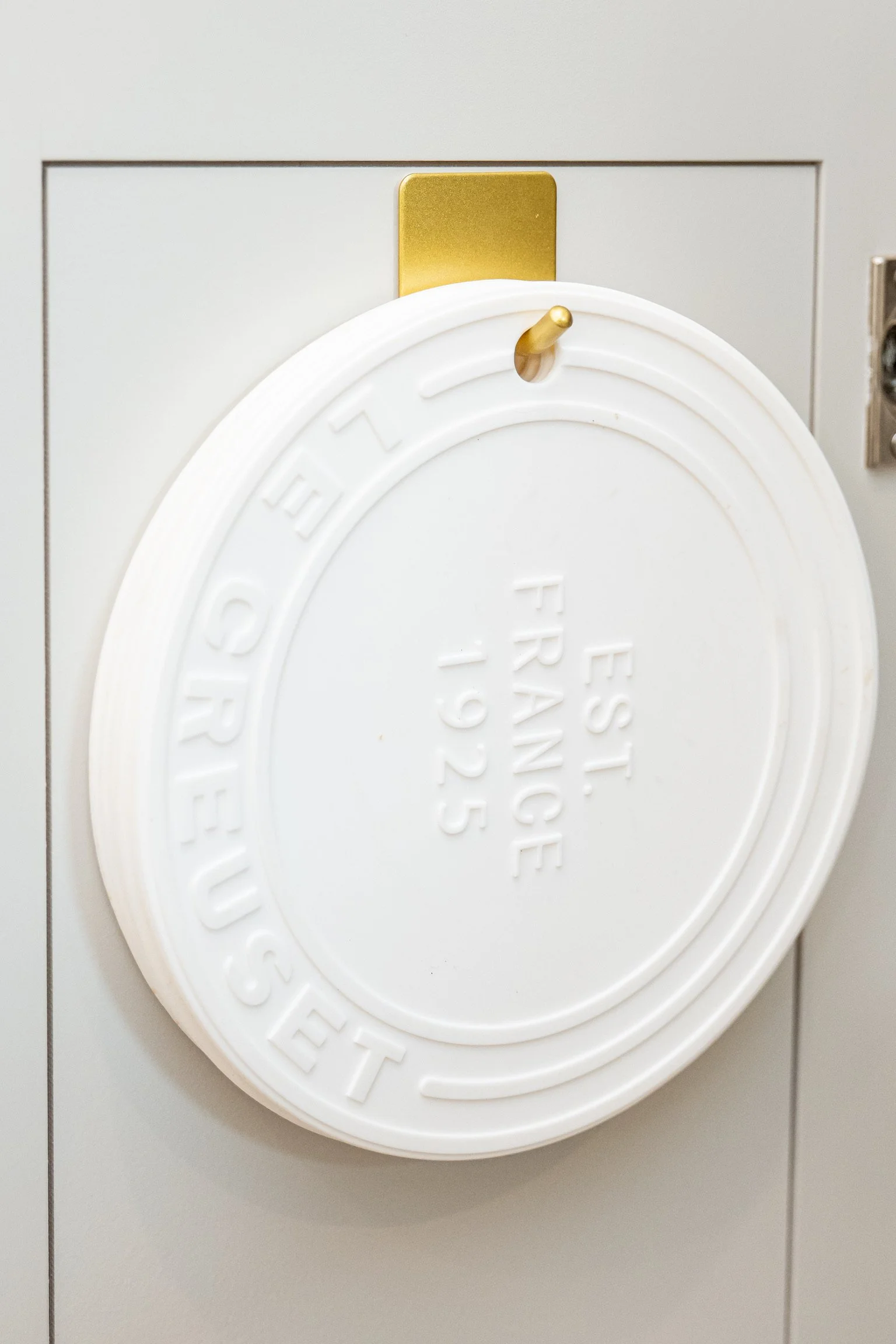
The inside of a cabinet door can provide useful storage, especially when the cabinet itself has limited room. Christina uses a cabinet-door paper towel holder and holders for cleaning items. But there is one step worth taking before sticking anything in place: test the arrangement with the cabinet fully stocked.
Check that the doors close. Make sure the holders and their contents won’t collide with drawers, supplies, or equipment. Something can fit beautifully on an open door and still prevent that door from closing once everything else is inside.
If this feels like a manageable project to repeat elsewhere, our guide to organizing a bathroom cabinet walks through similar decisions around plumbing, product fit, and everyday routines.
Organize for the Putting Away, Too
A pie on the counter or a cookbook open to a recipe isn’t a sign that the kitchen’s organization has fallen apart. It’s the family using the space.
Christina wants to enjoy those moments without feeling that every trace of activity needs to disappear immediately. She also wants to know that, when the baking is finished, putting things away will be straightforward. The girls can bake. Meals can be prepared. Entertaining supplies can come out. A busy occasion like Thanksgiving can ask a great deal of the kitchen, and everything still has a natural way back. Nothing needs to be shoved in to close a door. Putting something away doesn’t require unloading the things around it.
There is still cleaning to do. But the cleanup doesn’t become another organizing project, and knowing that makes it easier to enjoy using the kitchen in the first place. This is where editing, zones, and product selection come together. Fewer unnecessary items make room. Clear zones help everyone understand where things belong. Well-chosen organizers support the arrangement.
Start With One Place You Use Every Day
You don’t need to reorganize the whole kitchen to discover what could work better.
Notice it. The next time you make lunch or put away dishes, pay attention to where you need to move something else first. Is the space holding too much? Or is something stored away from the routine it supports?
Make one shift. Try the editing experiment in a single drawer. Put back what you use, set the undecided items aside temporarily, and experience the difference before buying anything.
Go further. Map the kitchen around the people and routines it serves. Keep everyday needs accessible, assign seasonal items an intentional home, and measure before selecting products.
Let Us Think Through the Whole Home
Perhaps you can see what you want your home to feel like. Still, you don’t want measuring drawers, comparing organizers, and figuring out every cabinet to become another project you manage. That is where our full-service work begins.
We consider the kitchen in relationship to the pantry, the household supplies in relationship to the laundry room, and the entertaining pieces in relationship to how you gather. We look at who uses each space, what needs to move between rooms, and how the entire household can follow the systems once they’re in place. Our team handles the detailed planning, measuring, product selection, and installation, bringing those decisions together into a home that functions cohesively. You share how you live and what matters to you; we take responsibility for translating that into the spaces around you.
The kitchen should work beautifully on its own and make sense within the rest of your home. The pantry shouldn’t become overflow for unresolved kitchen decisions. And maintaining the result shouldn’t depend on you remembering where everything belongs. That is the value of a whole-home approach: thoughtful decisions made together, with the details handled from the beginning.
Ready for a home that supports you at that level? Explore our full-service organizing experience.
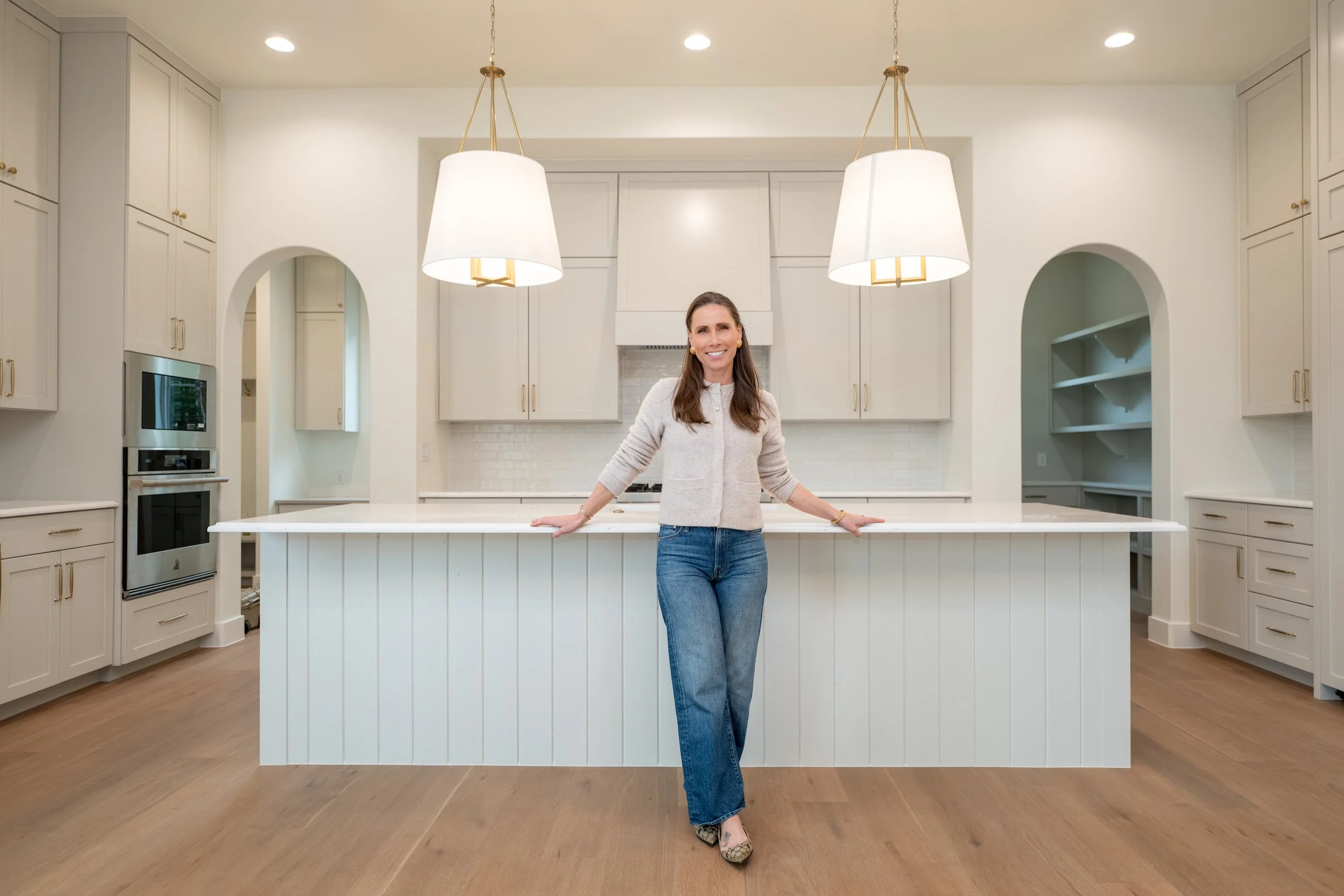
For Christina, loving where she cooks has meant discovering an enjoyment she didn’t expect, and carrying that care into each home, including the temporary ones. For you, it might mean a calmer morning, easier cleanup, or more room for someone else to join in.
Whatever that looks like, your kitchen should help make it possible.
Continue with What an Organized Home Really Gives You for a closer look at the confidence and shared ownership these everyday systems can support.
What would you love to enjoy more in your kitchen, and what currently gets in the way?
Graceful Living is where we share the things that make life feel a little more intentional and a lot more beautiful. From thoughtful ways of living and everyday rituals to style inspiration, favorite recipes, travel moments, and the small joys that elevate the ordinary... this space is meant to inspire a life well lived.
If you love content that feels calm, curated, and life-giving, I’d love for you to be part of our inner circle.
By joining our Graceful Living subscriber list, you’ll receive our newest posts straight to your inbox, so you never miss a story, idea, or inspiration we share: thoughtful living, elevated everyday moments, style, recipes, travel, and joy, beautifully woven together.
Click the link below to subscribe and make sure you’re receiving our Graceful Living emails. I can’t wait to share more with you.

The Things We Use Every Day
And if you’d like to follow along with what Rebecka and I genuinely love, we’ve created shop pages that bring all of our favorites into one place. A simple way to explore what we consistently reach for in our own homes, whether you’re looking for inspiration or ready to try something new.
follow us on shop my
follow us on ltk
More Inspiration
Our Charleston Home Organization Our Purely Organized Service GS Top 5 Pantries Meet Our Team More From Graceful Living